

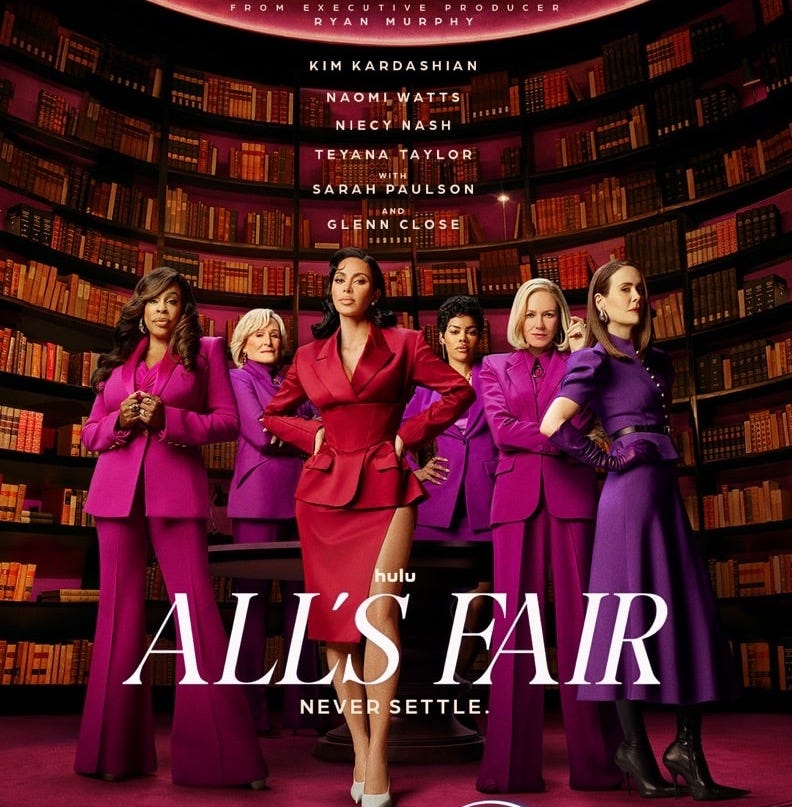
Hulu’s All’s Fair is the love child of every TNT and USA Network legal drama and every obnoxiously luxurious reality tv series…and it revels in it. Starring Kim Kardashian (Allura Grant), Sarah Paulson (Carrington ‘Carr’ Lane), Niecy Nash (Emerald Greene), Glenn Close (Dina Standish), Naomi Watts (Liberty Robson), and Teyana Taylor (Milan), All’s Fair puts its perfectly manicured feet into stilettos and gets right to business. Allura and Liberty leave their male-dominated and sexist law firm, recruiting Emerald along the way, to begin their all-woman-led-all-woman-clientele law firm. This decision is backed by Dina, their mentor and work mother, who was the first woman ever hired in their workplace and protected them fiercely. However, with the open exclusion of Carr, they make an enemy of her immediately.
Fast forward 10 years, Grant-Ronson-Greene & Associates thrives while Carr’s trajectory experiences the same level of success. The ladies come face-to-face once again when Allura’s husband, Chase (Matthew Noszka), files for divorce. This singular decision highlights the fears the women have—high-powered attorney’s looking to be examples for every woman following in their footsteps while traversing their own obstacles and failures within their own relationships. This undercurrent of personal and professional conflict is the fishing line All’s Fair needs—reeling it in just as it begins to swim near the currents of being just a little bit too much.
The Cost to be the Boss
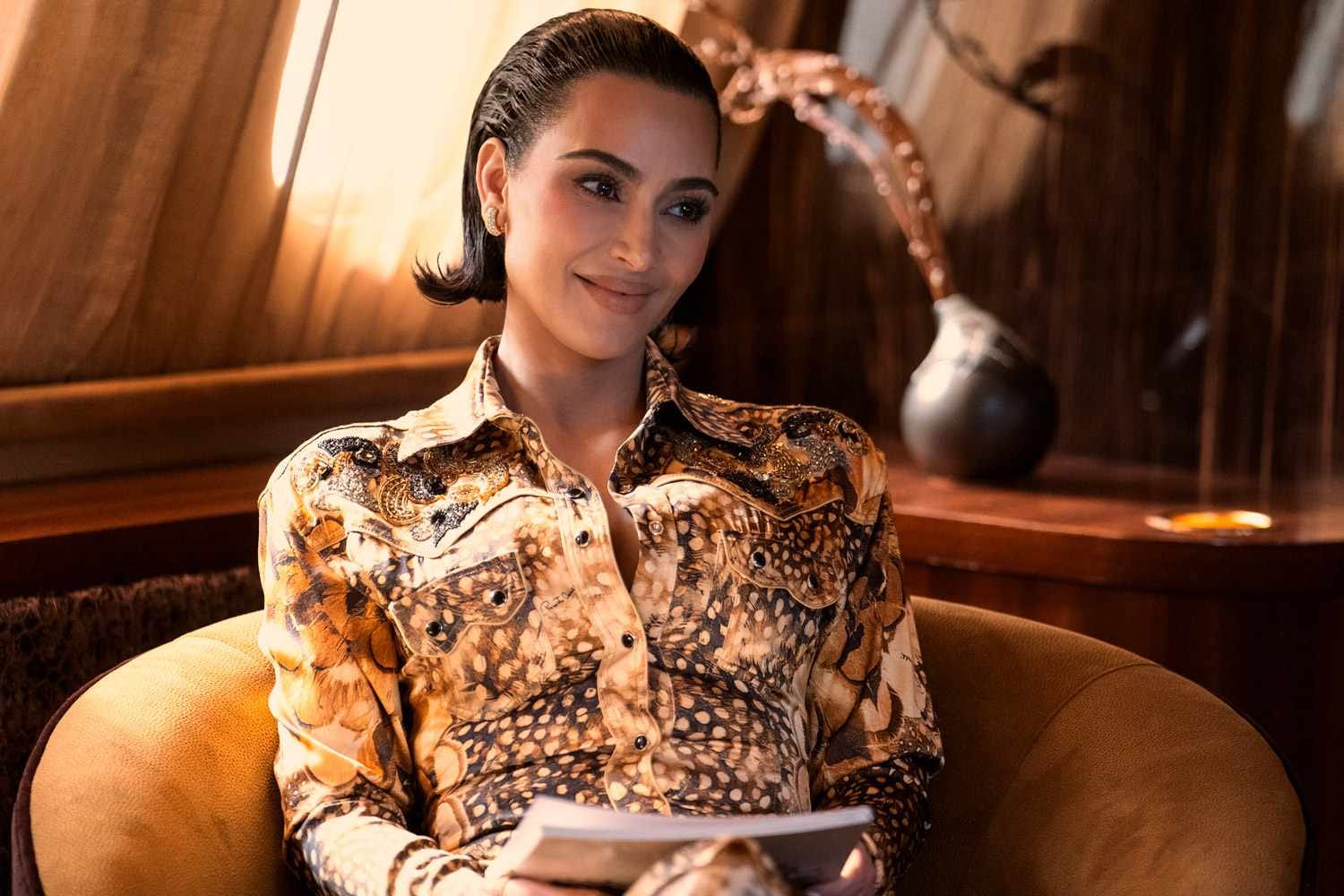
In the 3-episode premiere, Allura views the last 10 years of her life, and her marriage, through a wavering lens. For all the success, the big house, and supportive friends, she questions if she settled when it came to love? This conundrum is one that many successful women face as they navigate between the pressures of being the breadwinner and the doting housewife. In Allura’s case—a successful woman married to a successful football player who feels stunted and hidden by her success—Chase uses Allura’s success as both a weapon and an excuse for his insecurities and his infidelity. And underneath the designer wardrobe, perfect hair, and flawless makeup, All’s Fair somehow manages to explore the complicated feelings women in power manage to conceal every day.
Sisterhood On and Off Set
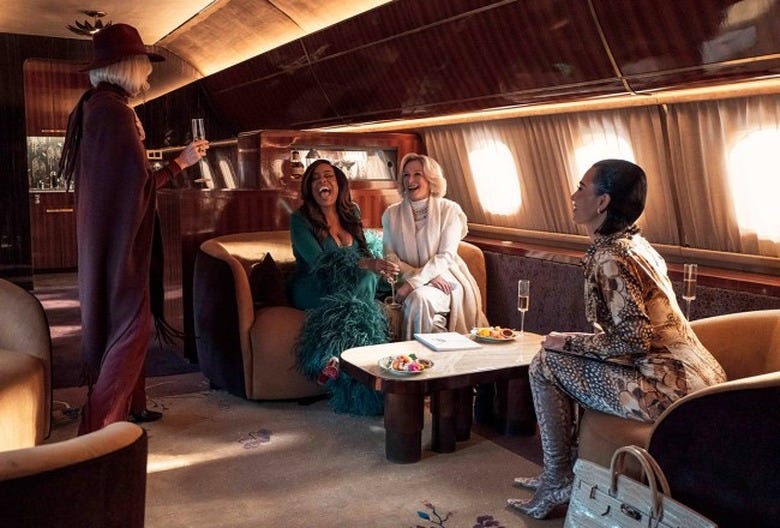
Perhaps, and maybe to much surprise, the best part about All’s Fair are the moments that exist outside the law firm. Between Dina’s marriage to her husband Doug (played by Ed O’Neill)—navigating the complexities of getting older in body but not in spirit—and Emerald’s relationship with her triplet (yes triplets) boys, All’s Fair becomes more than snipes and ruthless clamoring for success. It takes a close examination at the lengths some people are willing to go to maintain a marriage and to maintain the perfect image. And as you continue to peel back the layers, you see a show that focuses on sisterhood and community—women who, despite the mess and the drama, are there to help each other come out the other side better, and wealthier, than before.
This sisterhood and the bond shines in every scene, which is indicative of the friendship the cast developed outside the show. From every picture, every interview, and every promo clip, you see very clearly that the ladies of All’s Fair found a freedom in the extravagance, the cattiness, and the exaggerated portrayals of their characters. On the surface, All’s Fair comes off as a superficial WWE match between rival law firms (it is). And yet, underneath the glitz and glam of it all, it is a story about women helping women take their power back.
The first 3 episodes are available to stream on Hulu. New episodes will drop weekly on Tuesdays.