

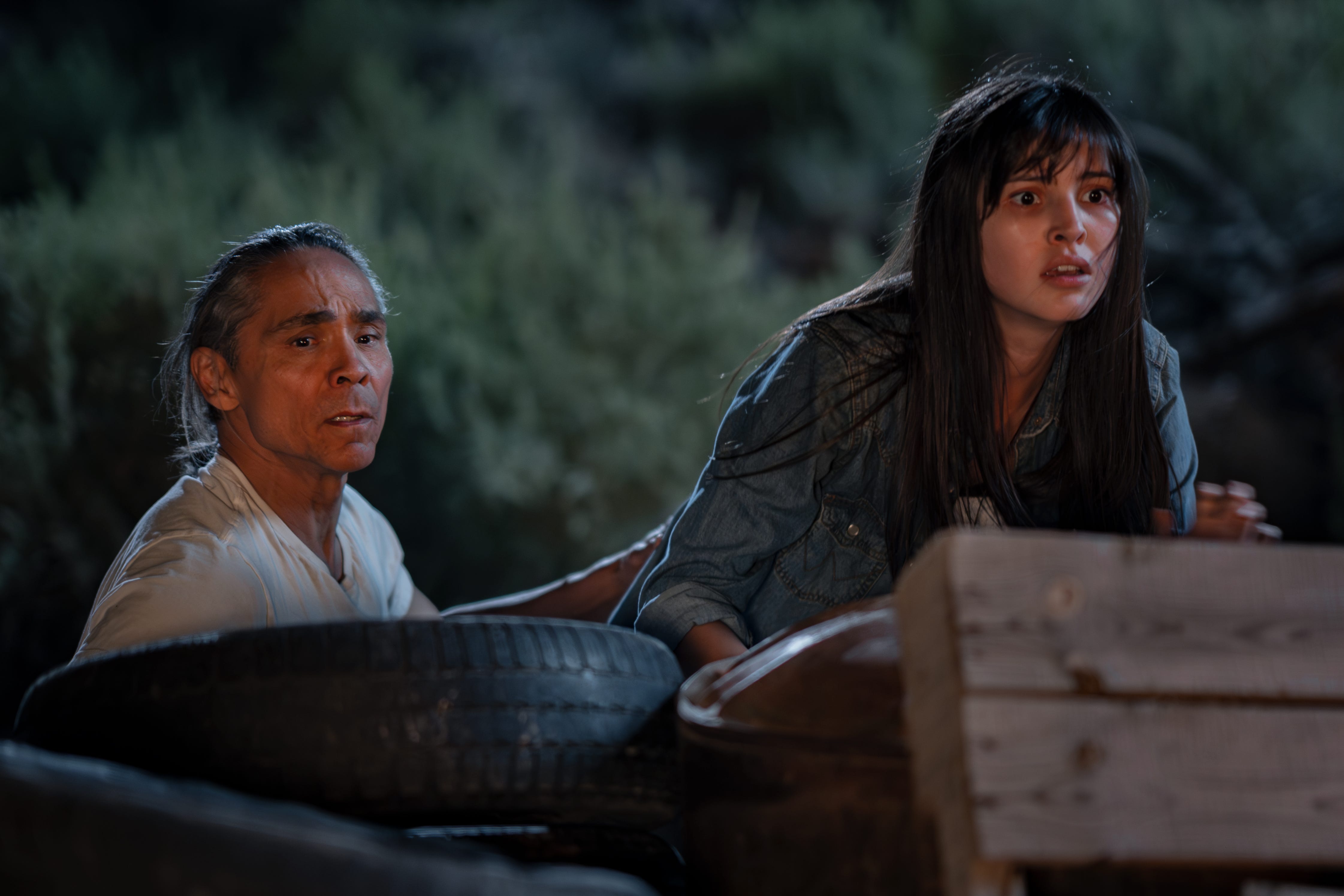
Dark Winds Season 4 Episode 8, “Ni’ Hodisxǫs (The Glittering World),” is one of the most powerful finales in the series’ history—delivering its most gut-wrenching finale yet, beautifully written by Max Hurwitz and Thomas Brady, and expertly directed by Erica Tremblay.
From the moment the episode begins, we are thrust inside Irene’s warped machinations—a reality that exists and thrives on obsession, control, and delusion. This immediately sets a mood that is both disturbing and unsettling, turning Joe’s captivity into a psychological standoff embedded in a distorted world of intimacy.
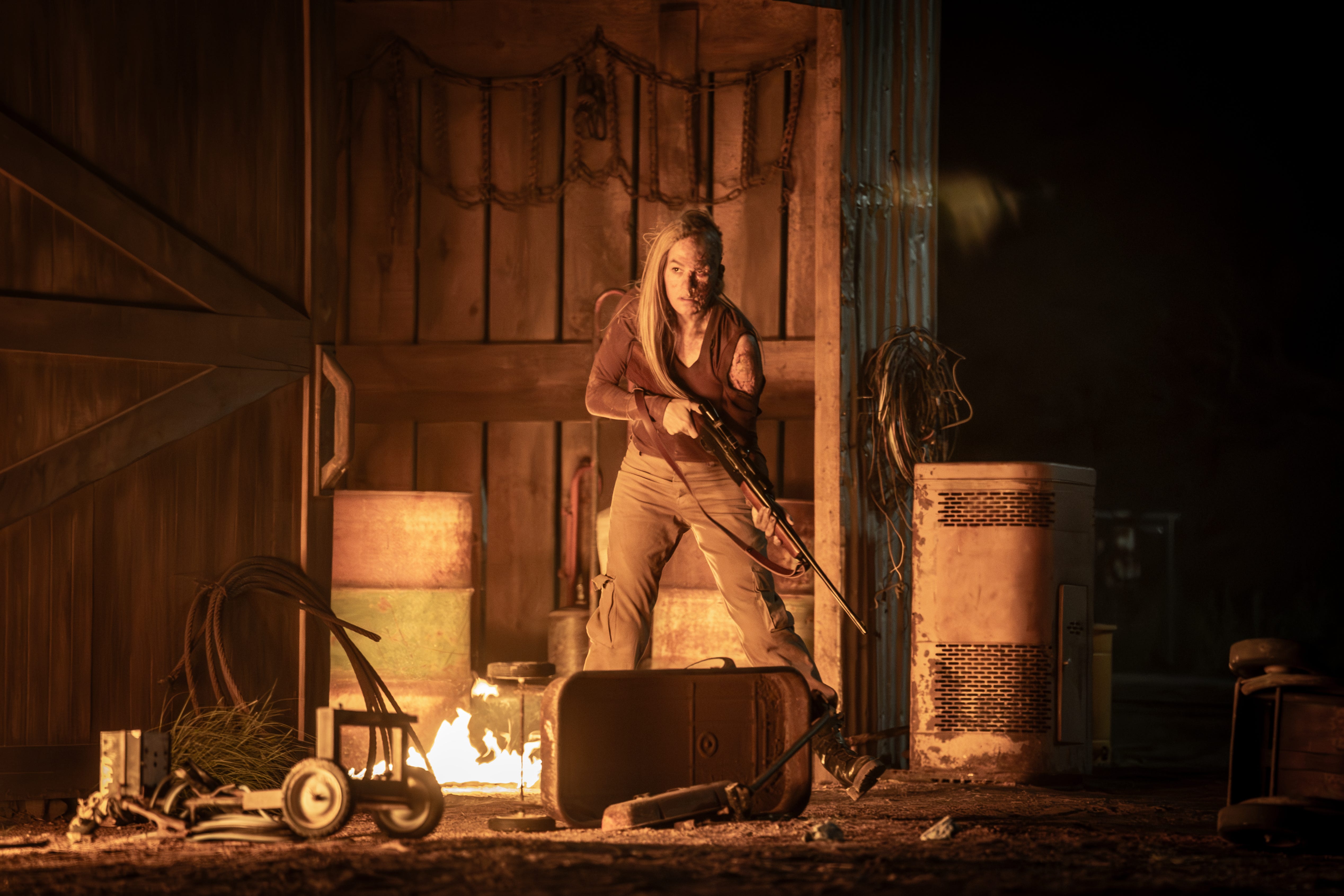
Irene stages a family dinner that is something out of the film Misery (1990), forcing Joe and Billie to participate in a shattered version of reality that directly reflects how she processes love, family, and belonging. And in this unsettling scenario, the dark and twisted chemistry between McClarnon and Franka Potente shines the brightest—creating one of the most salacious hero/villain dynamics the series has explored yet.


Irene does not want Joe dead.
She wants him to submit.
Her psychosexual obsession, layered with a hyper-religious fixation on Navajo culture, creates a villain who is not only dangerous but deeply complex—mirroring Joe in strength, conviction, and purpose, just on the opposite end of morality and reality.
When escape attempts fail, Irene escalates.
Billie becomes leverage, and her pain is the only language Joe understands to keep him in line in order to bend to Irene’s will.
And Joe, faced with the unthinkable, shifts tactics—not through force, but through a level of raw vulnerability that pierces Irene at her core.
“I’d give my life to make an offering to Mother Earth…just to sit down and eat breakfast just one more time”
In this moment, Joe does something unexpected: he humanizes himself in front of someone who has stripped him of everything. And it works.
Even if only briefly, and when Irene suggests they make the offering together, he replies softly, intimately
“you’d do that for me?”
And she responds with the same softness but a resounding “yes.”
That quiet exchange becomes the turning point.
Not because Irene changes—but because Joe understands exactly how to move within her delusion.
Trial By Faith and By Fire
The ritual scene is where everything converges—faith, language, identity, and survival.
Joe insists on speaking in Navajo, grounding the moment in truth while simultaneously using it as strategy. Beneath the surface, he communicates with Billie, turning a sacred act into a final attempt at escape.
And then—
Fire.
Explosion.
And a maniacal Irene who realizes she’s just been used.
When Joe finally gets the upper hand, the moment feels eerily dangerous as he is, once again, faced with ending his tormentor without anyone finding out. The weight of everything Irene has done—all of the lives she claimed—culminates in his hands around her throat.
And yet—
He stops.
Because Joe Leaphorn is still himself, understanding that violence begets a deeply spiritual disruption that claims more than it relieves.
In the end, he chooses law over vengeance.


The Ending is But The Start of Something New
What follows is a quieter, more reflective unraveling of the season’s emotional core.
Joe’s visit to Dominic is not about closure—it’s about accountability. Naming him. Confronting him. Letting him know the cycle has been broken.
But the real healing begins elsewhere.
At Chee’s ceremony.
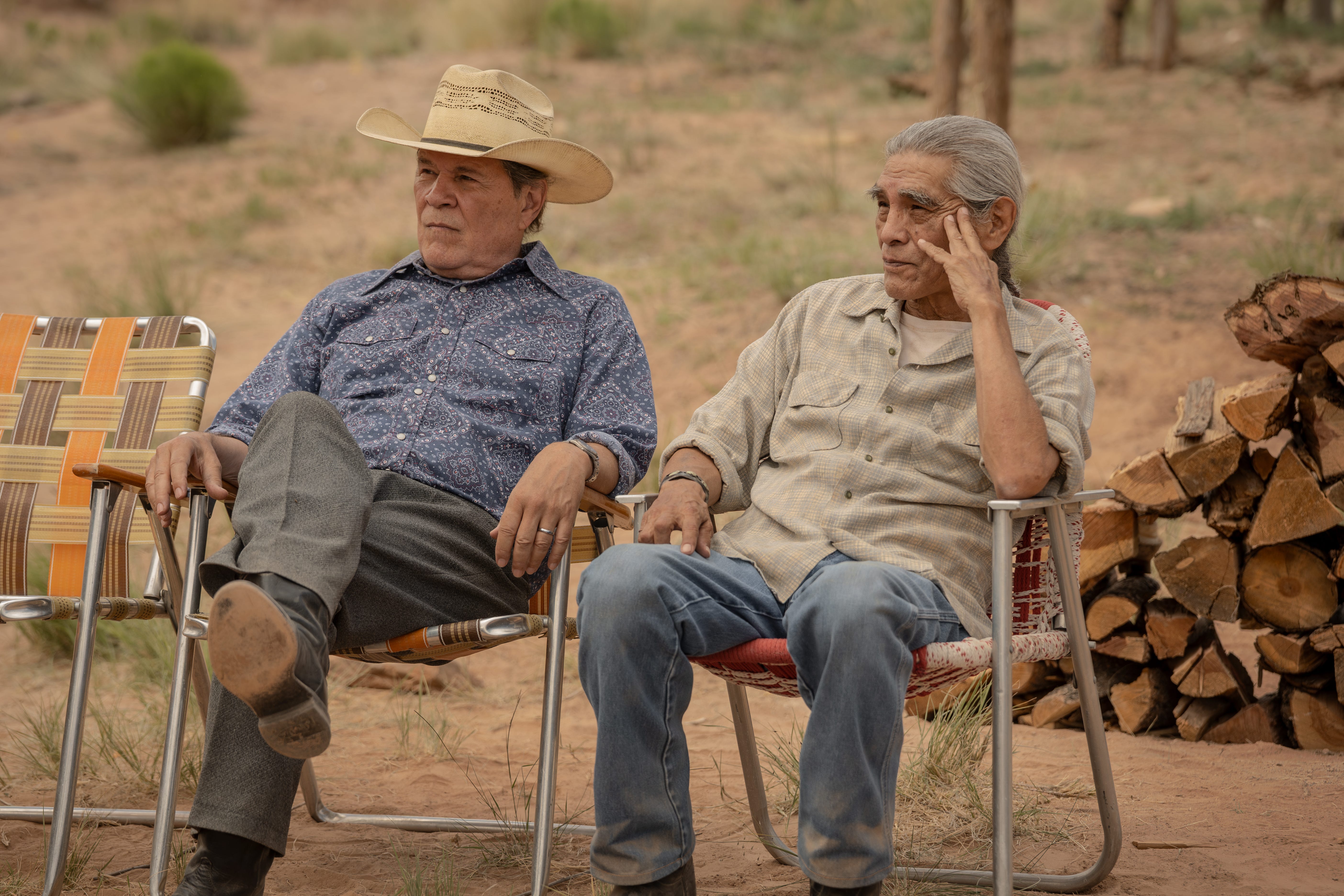
This moment brings everyone together—faith, forgiveness, and reconnection taking center stage. Relationships that have been strained all season begin to mend, particularly between Chee and Bernadette and between Joe and Emma.
Emma’s presence carries weight. Her honesty even more.
And when she asks Joe, “Is this change for you or for me?,” it lingers.
This single question reframes the entire season, as Joe’s pending decision is not just an idea or a mental musing—the time to decide is now.
Their goodbye is not an ending—it’s an understanding.
“you always will be my family”
When One Tragedy Ends, Another Follows
Just as the episode allows space to breathe, hope begins to settle in.
Joe considers retirement. Chee looks toward a future. The team feels, for the first time in a long time, aligned.
Just as a sense of normalcy settles on the reserve, reality sets in to remind the audience of the show they’re watching.
Bernadette checks in to the station just as Joe receives harrowing news.
Gordo is murdered.
This sharp shift from healing to heartbreak is immediate and devastating, reinforcing what Dark Winds has always conveyed:
Peace does not come without consequence.
Related Coverage
Final Thoughts
This season was 10 out of 10, delivering something emotional, healing, and cathartic, while setting up for a Season 5 that promises the sweetness of vengeance.
Season 4 proves just why Dark Winds is a series deserving of its 100% Rotten Tomatoes streak through compelling storytelling, cultural reverence, and powerful performances.
And it only gets better from here.
Stream the full season now on AMC+. Check out the trailer below.
© Kivonshe | So There’s That
Original editorial commentary on film and television. All rights reserved. Reproduction or redistribution without attribution is not permitted.