


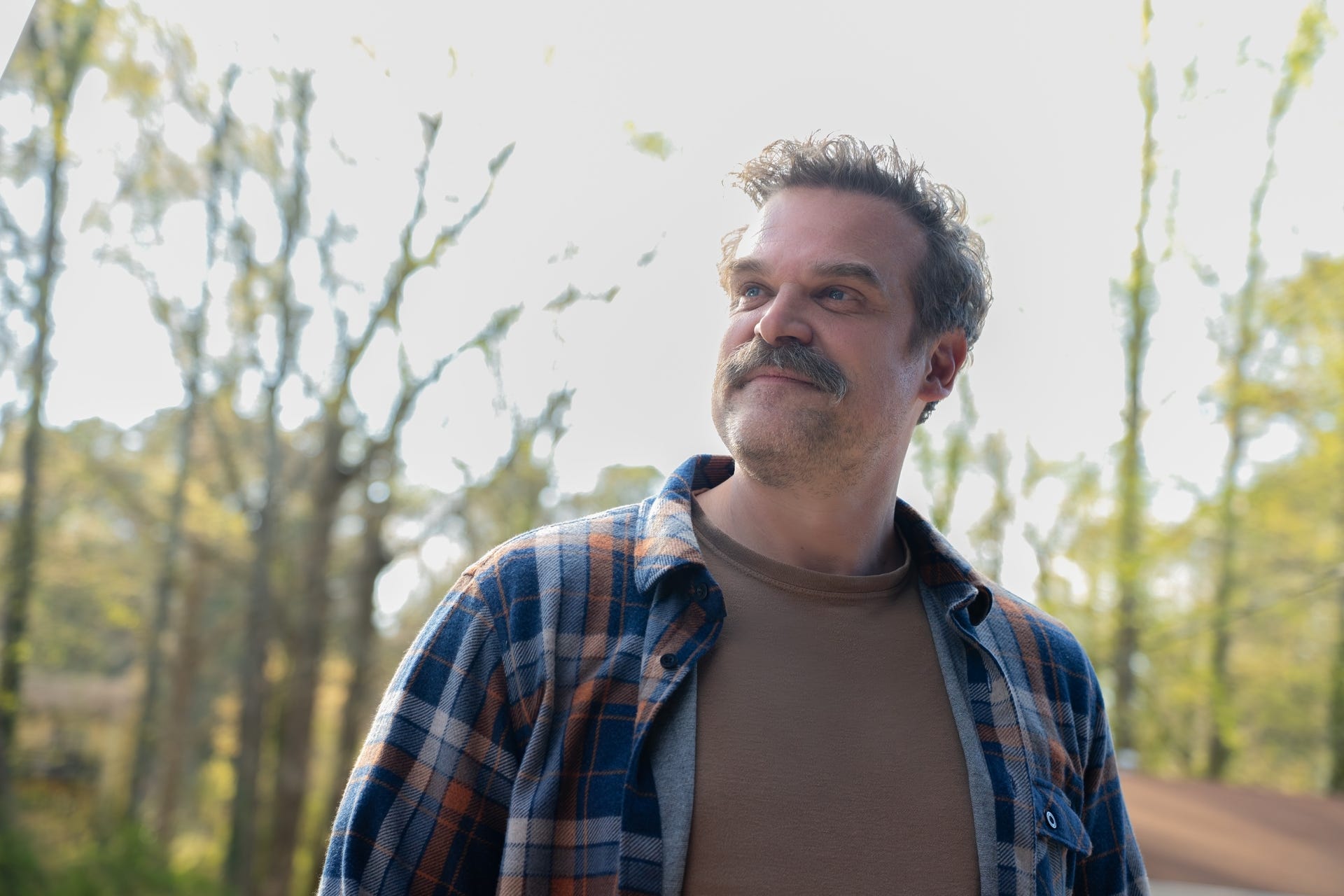
DTF St. Louis closes out its limited series run with Episode 7, delivering a finale that answers its biggest question while leaving something far heavier behind.
In the thick of the investigation, Homer is trying to get the identity of Tiger Tiger from Clark, but to no avail. Carol is still playing the “I can’t hear you” game with Jodie whenever questioned about the day of Floyd’s death, and Jodie, like Homer, is running out of niceties and patience.
As things get shadier (and weirder) by every admission, the more Homer and Jodie believe they can prove both Carol’s and Clark’s innocence.
Kevin Van Der Lonse (Perfetti) is brought in for questioning; his identity revealed as Tiger Tiger—hired by Clark to pretend to be Tiger Tiger and meet up with Floyd. However, Kevin never approached Floyd because he wasn’t into what he looked like, so he left. But even Kevin asks why Floyd still went to the pools if he called off the meeting.
The biggest question of the episode—and the series:
What, or who, got Floyd to the pools?


A Friendship With A Hint of Something More
In more flashbacks, we get a better feel for Clark’s feelings toward Floyd, and they are ones of admiration and adoration, if not even a little bit of envy, telling him, “I’m just a face. You’re a heart.” But as Clark wallows in self-pity, Floyd tells him his sign name is “Sunshine,” to which Clark replies he’s a “Bitchin’ Heart of Gold.”
This exchange in ASL speaks to their inability to say the hard thing, the vulnerable thing, out loud but they found a secret other thing that helps them resolve heavy feelings within themselves.
And it is during this conversation that Clark suggests Floyd go to the pools where a surprise will await him—a moment in the finale that begins to answer questions we’ve had since Episode 1, coloring in the full picture of Floyd’s final moments.
Meanwhile Carol is completely off the suspect list, with Queece (Asher Miles Fallica) confirming she was on her couch asleep when he was delivering papers to her house, and Jodie reveals her sealed conviction when she was a minor (stealing toilet paper for her family)—to which Homer asks, “did we just team up to not convict a killer?”


Homer breaks the news to Clark that he’s a free man, but things don’t feel quite right in his response. Clark then reveals, to everyone’s astonishment, that he was the man on the tri-bike who went up to the pools.
“I wanted to give him something I thought he needed.”
Here is where the melancholy that’s felt all series long bursts—revealing itself to be something far sadder than anything we’ve uncovered so far.
Clark admits his complex “friendship feelings” to Floyd, telling him he admires him, feels safe with him, and loves him.
In a weird but necessary moment of affirmation and validation, they find themselves stripped bare both physically and emotionally, exposing parts of themselves they’ve kept hidden from everyone this entire time—orbiting each other’s gravitational pull until one pulls the other inside.
In the middle of this scene, Homer asks, “What did you want to give him?”, to which Clark answers:
“An arousal.”
Related Coverage
A Secret Discovered. A Life Shattered
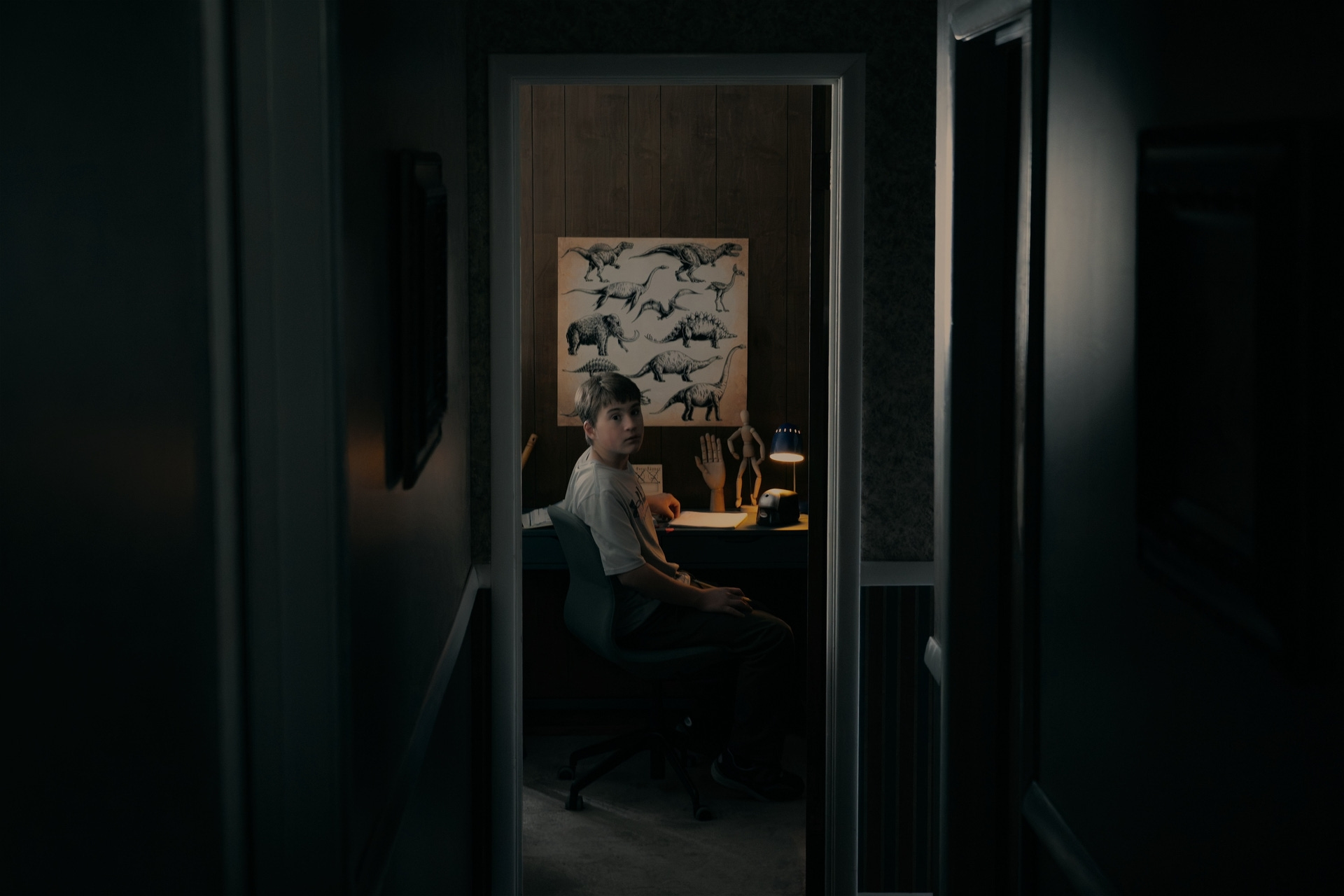
During this state of vulnerability and rawness, Richard (Arlan Ruf) is seen outside the window watching.
As Homer and Jodie release Clark, they go back to the footage to reconfirm his timeline events when they discover there were two different bikes seen in the monitors—the other belonging to Richard.
During the fragile interrogation, Richard goes over the events of the night and speaks with an undertone of anger and embarrassment.
He says Floyd didn’t get angry or upset at his outburst; he simply held up his fingers in a gesture that Richard interpreted as “rock on,” but Carol gently corrects him that it’s sign language for “I love you.”
It is in this moment both Carol and the detectives understand the gravity of what actually happened on that fateful night.
And when we finally see Floyd’s final moments—after all the suspects and assumptions—that devastating truth is confirmed.


Final Thoughts
What this series culminates in for audiences is the depth of loneliness people sink to and the measures they take to climb out of that pool of despair: the lies they tell themselves, the lives they tell other people, and the truths they disperse incrementally within those tales.
DTF St. Louis ends not as a traditional mystery, but as a reflection.
A reflection of loneliness, desire, and the quiet ways in which people are desperate to be seen.
And in the investigation answering the question of “who?”, we are left with something far more unsettling:
Why?
Stream DTF St. Louis now on HBO Max. Check out the finale preview below.