

NOTE: This is a spoiler-free review of both premieres.
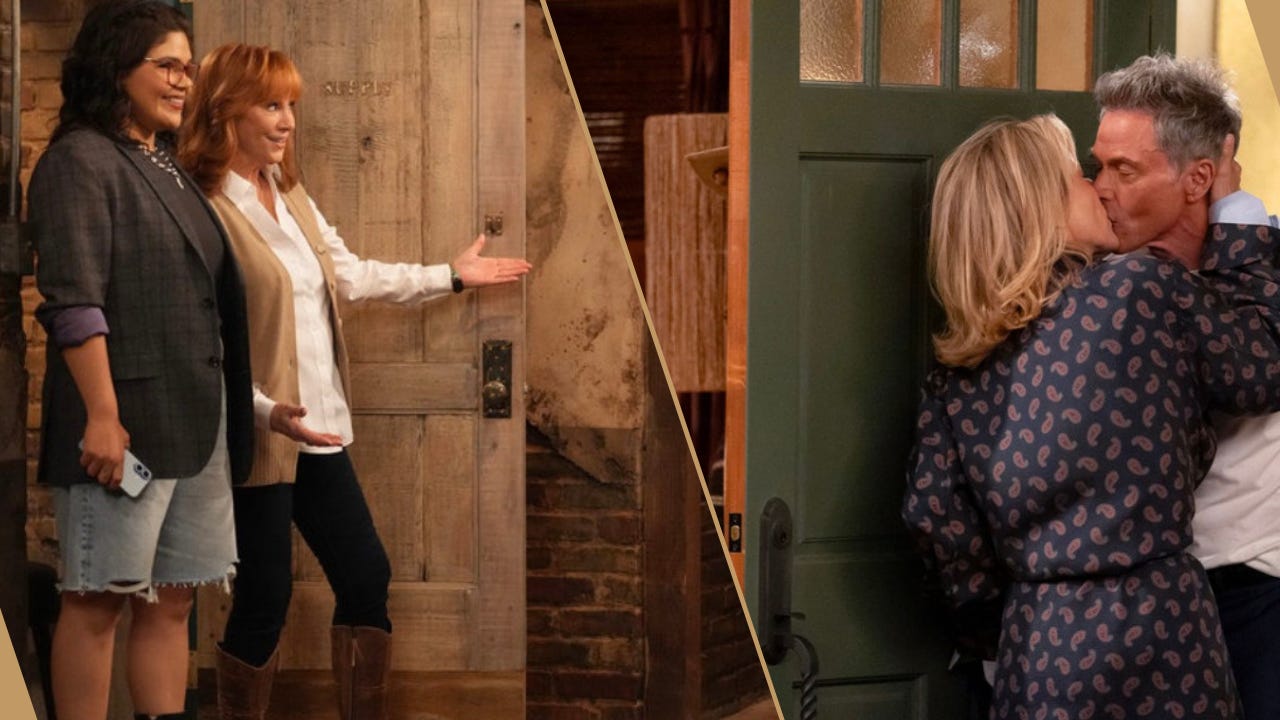
There’s something incredible about vulnerability when you’ve lived long enough to experience disappointment and heartbreak, yet remain open to experiencing love again.
But what seems optimistic and romantic in theory can become complicated rather quickly when dealing with those same experiences while getting older.
What happens when those closest to you become the ones you now struggle to be vulnerable with? Or when you meet someone who makes you feel less afraid about starting over?
NBC’s Friday comedy lineup answers both—bringing you two shows with vastly different approaches to vulnerability: the Season 3 premiere of Happy’s Place and the series premiere of Newlyweds.
Happy’s Place examines what it looks like to move forward when an old relationship loses its flame. Newlyweds explores an entirely different relationship at the start of its spark.
Yet somehow, both find humor in the messiness of it all.
Happy’s Place: Moving On is Hard
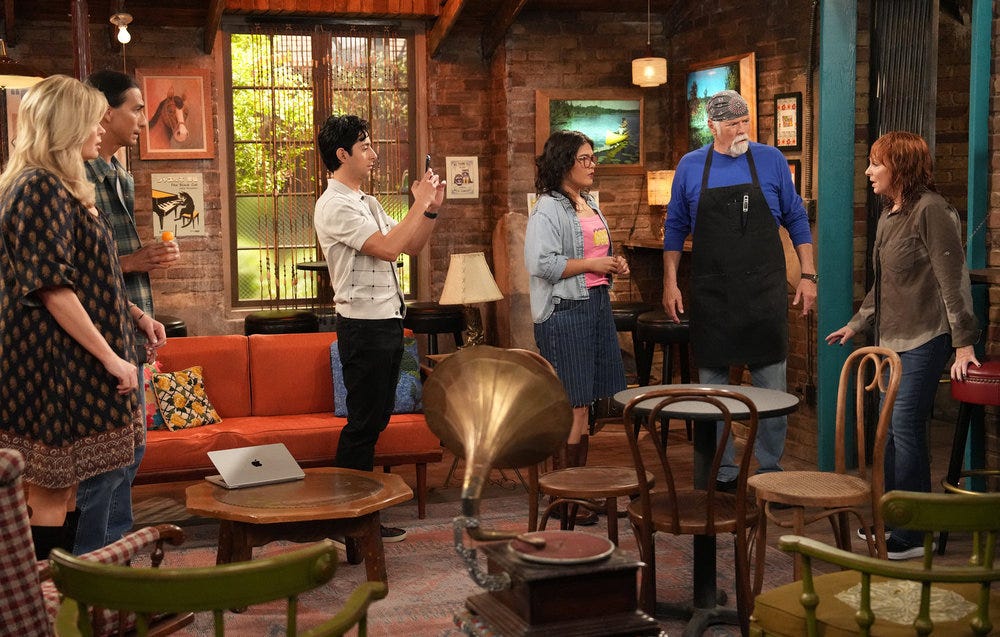
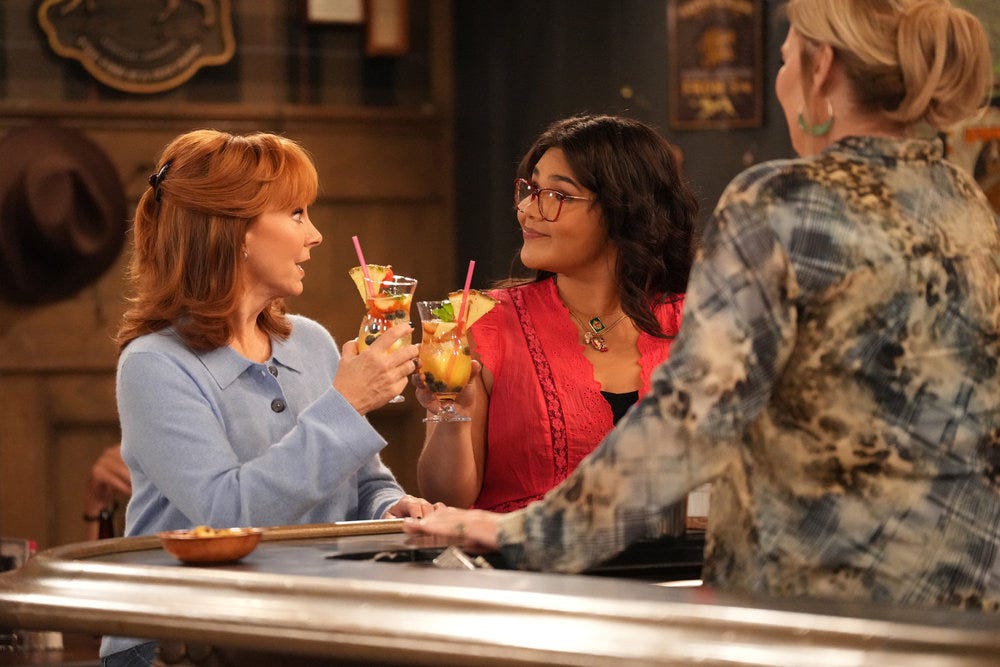
The return of Happy’s Place continues to dive into Bobbie’s (Reba McEntire) relationship with her sister Isabella and her staff, showing just how difficult it is for everyone to see the line between business and personal affairs.
And the ensemble doesn’t miss a beat.
Their comedic rhythm feels familiar and easy—the characters knowing one another enough to poke at each other’s weak spots while also pouring into each other’s cups.
But underneath it all, the Season 3 premiere, “Office/Space,” dives deeper into what happens when those relationships experience change.
Bobbie finds herself dealing with the emotional aftermath of her relationship with Emmett—busying herself with everyone else’s life to avoid her own.
It’s not weird at all…
Her intentions, while good-natured, fill the comedy of “Office/Space,” showing how her desire to help doesn’t always lead to desirable outcomes.
It gets messy.
Literally.
And like all distractions, they only work for so long.
What makes the episode effective isn’t simply the awkwardness or the ensemble’s ability to banter like family.
It’s the loneliness that begins to emerge beneath Bobbie’s attempts to remain involved in everyone else’s business.
There’s history here. Heartbreak, too.
Isabella's growing independence also creates a new challenge for the sisters, as their familiar closeness begins to make room for individual growth.
Sometimes, supporting someone you love means learning when to give them space.
And Happy’s Place understands that history and messiness don’t mean malice—and Bobbie is on the road to understanding that very lesson herself.
Newlyweds: Taking the Risk Before Fear Wins
Where Happy’s Place tackles vulnerability through established relationships, Newlyweds throws all of that out of the window.
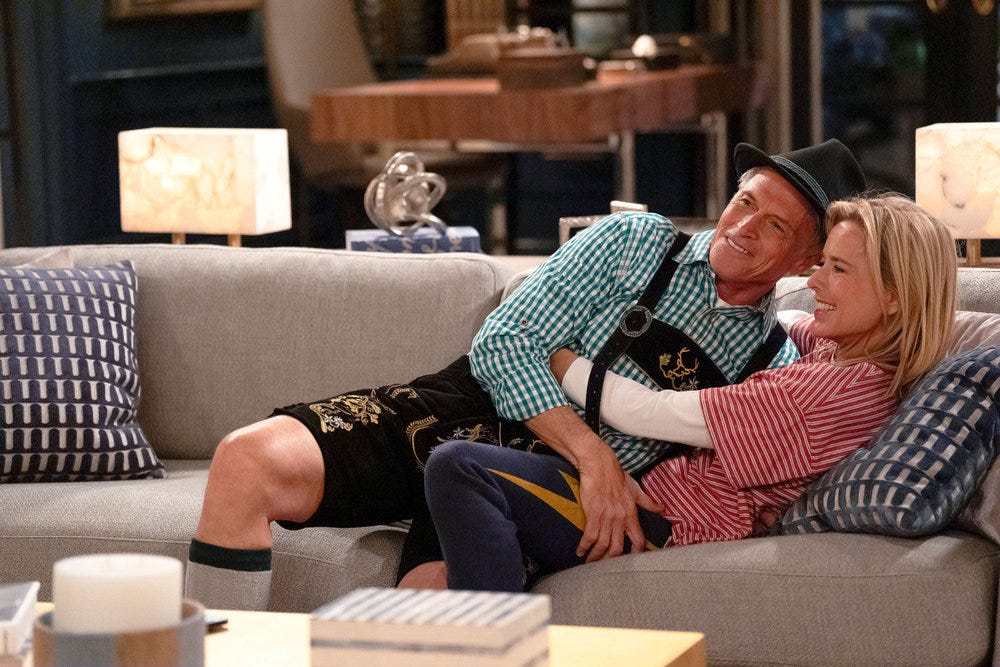
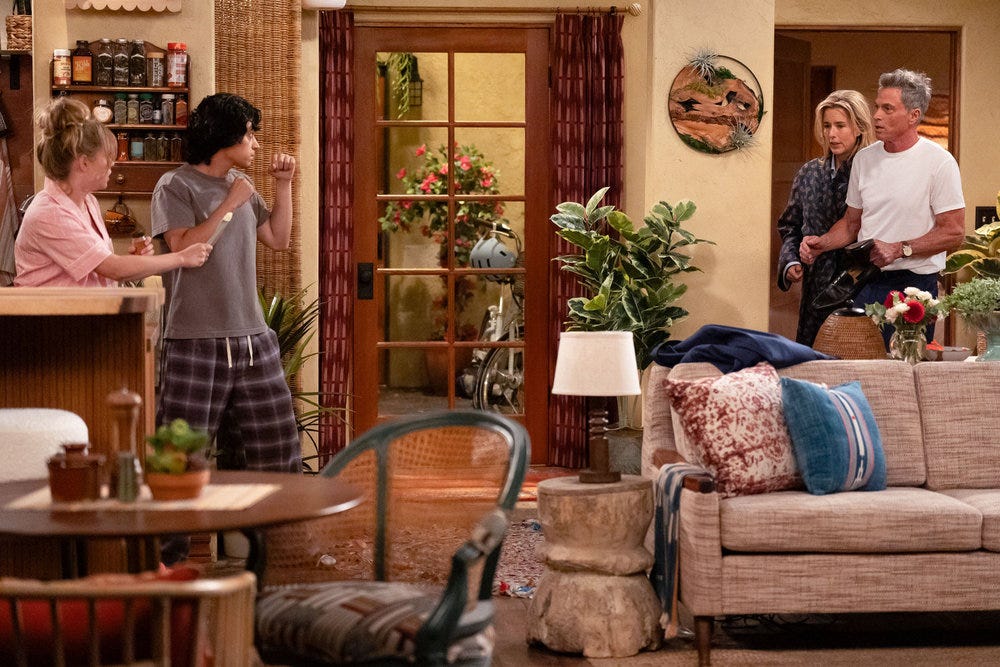
Newlyweds centers on Jeanie (Téa Leoni) and James (Tim Daly), two people whose untraditional whirlwind romance goes from unlikely to a marriage that gives them little time to even think.
From the moment Newlyweds begins, it pulls you into the nerve-wracking feeling of blind dating—especially blind dating after a certain age.
There’s uncertainty, insecurity, and doubt.
But when Jeanie and James decide to be vulnerable, something far more beautiful occurs.
Daly and Leoni are incredible together, wasting no time removing all the preamble that comes with asking about favorite colors, television shows, and food. Instead, they skip right to the part that feels good.
And fast!
While the quick pacing risks sacrificing story depth, the speed earns its place in the pilot.
It’s meant to embody the rash decision-making of someone youthful inside a much older adult who “should” know better…
…but doesn’t.
And that’s okay, for now.
One of the pilot’s most entertaining qualities is how time seems to move their romance into overdrive, turning what might otherwise be a two-year courtship into a frenzied fling that somehow gets away from them.
Think onomatopoeia, but in a TV show.
It’s just as messy as it sounds.
But beneath the chaos is a series that isn’t afraid to explore sexuality, intimacy, and the youthful feelings of “newness” that don’t disappear just because you’ve gotten older.
If anything, “you only live once” becomes the later-in-life official motto.
There’s history, risk, and a reawakening that comes with dating while older.
Newlyweds manages to embrace every complicated and contradictory emotion when starting over in the most refreshing way.
Comedy That Invites You In
Where Happy’s Place has earned the right to move a bit slower with an audience that understands its rhythm, Newlyweds moves with the impulsiveness of a teenager.
One area that could overshadow the humor for Newlyweds, however, is the forced comedy.
Both shows have natural comedic rhythms throughout their dialogue, but in Newlyweds, the laugh track occasionally gets in the way of moments that don't necessarily require a humorous beat.
While the pilot has more naturally funny moments than forced ones, subsequent episodes could benefit from trusting the audience to recognize the humor without prompting.
Whether it’s navigating the aftermath of a broken heart or the beginnings of an impulsive marriage, vulnerability requires facing the uncertainty head on.
Happy’s Place and Newlyweds remind us that getting older doesn’t mean we’ve figured out the ins and outs of love.
In fact, it’s the opposite.
They show that mistakes have no age limit—and neither does the possibility of finding happiness among them.
Sometimes, we’re still learning how to make room for someone else.
And ourselves.
Want more analysis for your favorite shows? Subscribe to get them directly in your inbox. Have a suggestion? Leave a comment.
More Comedy, More Heart
Kivonshe—founder of So There’s That—is a film & TV critic who explores compelling storytelling, fandom relationships, character psychology, and the impact of entertainment media through film reviews, episodic recaps, and in-depth theme analysis.
© Kivonshe | So There’s That
Original editorial commentary, criticism, and analysis. Unauthorized reproduction, republication, redistribution, or adaptation of this content, in whole or in part, is prohibited without prior express written permission from the copyright holder. Attribution alone does not constitute permission.