


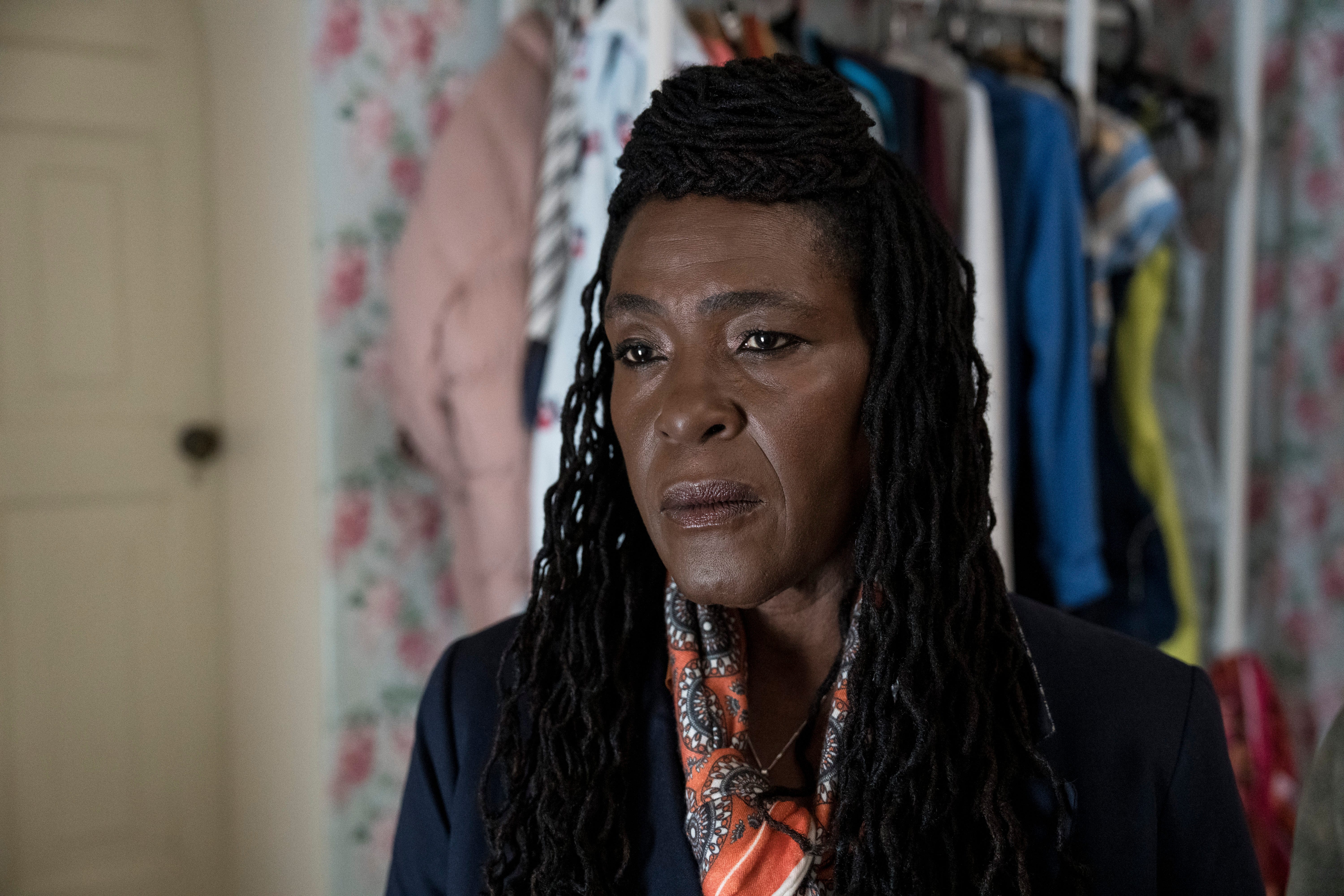
Inspector Ellis Season 2 returns Monday, July 6, on Acorn TV, and Detective Chief Inspector Ellis (Sharon D. Clarke) and Detective Sergeant Harper (Andrew Gower) are back in northern England tackling new cases—proving why they’re one of television’s most compelling crime duos.
Season 2 finds Ellis and Harper on the other side of their initial apprehensive relationship that defined how they worked in the previous season. However, as the cases became more complex, requiring them to set their differences aside, the professional distance began to lessen, and trust took its place.
The Truth Isn’t Always in the Evidence Left Behind
Episodes 01 and 02 center on the Ashenham case, where respected community leader Peter Barron is murdered, but the crime scene is completely stripped of all physical evidence that would lead to the perpetrator. With little forensic evidence to go on, Ellis relies on skills not learned in the police academy to solve the case.
Rather than focus on information that she doesn’t have, Ellis and Harper take a bird’s-eye view of the case, turning their attention to the people left behind—strained relationships, hidden motivations, and resentment that refuse to be buried.
This same approach and instinct carries into Episodes 03 and 04 with the Elmsly case. What starts off as a horrific work tragedy quickly reveals itself to be something far more sinister.
And as Ellis and Harper investigate, bringing in coworkers and members of the community to find answers, they discover that this case extends beyond the death of a young woman.
It exposes a deep network of elitism, intimidation, corruption, and exploitation.


Ellis Finds Clarity Where Others See Chaos
As suspects work overtime to omit facts, conceal potential evidence, and protect their reputations, Ellis works even harder by finding clarity within the noise—seeing patterns within the chaos others dismiss as non-factors or mere coincidence.
It’s the unique quality of examining the psychological environment of these cases that separates Ellis from other television detectives.
Her role as a jurisdictional “fixer” hones peripheral skills in ways that being at a fixed precinct would not, allowing her transience to serve the forgotten cases better because new eyes and fresh perspectives bring in new leads.
And as a Black, female senior officer dealing with institutional prejudice, her ability to feel extreme empathy for the victims opens her eyes to details often overlooked when it comes to crimes committed against someone society deems unworthy to care about—adding to her forensic brilliance rather than becoming a socioeconomic blind spot.
Clarke continues to command every scene with a quiet confidence that never mistakes authority for arrogance—trusting observation, patience, and empathy as much as investigative procedure.
Alongside Gower’s Harper, the relationship feels even more natural this season, allowing each investigation to unfold with greater emotional weight as they continue to grow as partners.
Yet through it all, Inspector Ellis takes care not to simply ask who committed the crime.
It asks why people work so hard to conceal the truth.
And in the hands of DCI Ellis, those truths rarely stay hidden for long.
Inspector Ellis Season 2 airs new episodes Mondays only on Acorn TV. Check out the trailer below.
Explore More Psychology & Human Behavior
FROM Episode 9 Reveals the Truth About Survival & Human Behavior
Netflix’s Wayward Turns Troubled Teen Programs into Psychological Horror
Kivonshe—founder of So There’s That—is a film & TV critic who explores compelling storytelling, fandom relationships, character psychology, and the impact of entertainment media through film reviews, episodic recaps, and in-depth theme analysis.