

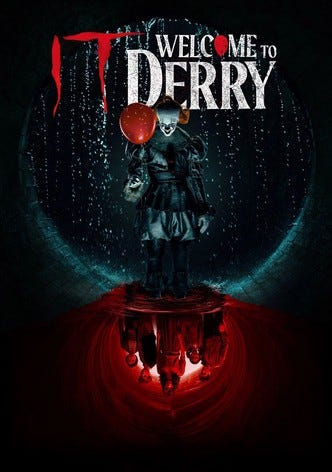
IT: Welcome to Derry premiered on October 26 and made a bloody wave. That wave just got bloodier with an early release of episode 2, “The Thing in the Dark,” on the HBO Max streaming platform. The linear episode will still air on Sunday, November 1 on HBO. The prequel series is set in 1962, 27 years prior to the events of 1989 in the 2017 adaptation of Stephen King’s novel “IT”. The creators—Jason Fuchs and Andy and Barbara Muschietti—developed a three season arc, each season going back an additional 27 years. What does this mean for viewers? Watch the show so it (all puns intended) can get renewed and we can finally get to the beginning of one of the most horrific monsters in cinematic history.
IT: Welcome to Derry stars* Taylour Paige (Charlotte Hanlon), Jovan Adepo (Maj. Leroy Hanlon), James Remar (Gen. Shaw), Chris Chalk (Dick Hallorann), Stephen Rider (Hank Grogan), Clara Stack (Lilly), Amanda Christine (Ronnie), Mikala Karim Fiedler (Teddy)*, Jack Molloy Legault (Phil)*, Matilda Legault (Susie)*, Miles Ekhardt (Matty)*, and Bill Skarsgård (Pennywise).
Not Your Mama’s IT
If you know the story of Pennywise—from the books published in 1986, to the 1990 miniseries-turned-movie, to the 2017 and 2019 updated adaptations—then you know the tale is simple: IT hunts children. But what makes IT: Welcome to Derry different than its predecessors? They take it there (I mean really take it there) and then some. Fuchs and the Muschietti’s take one of Stephen King’s most horrifyingly graphic novels and turns it into a made-for-tv cinematic masterpiece that will be talked about in the horror genre for many years to come. I won’t bore you with a retelling of the story. Instead, I would like to entice you into a newer, more haunting version of a [fictional] tale as old as time.
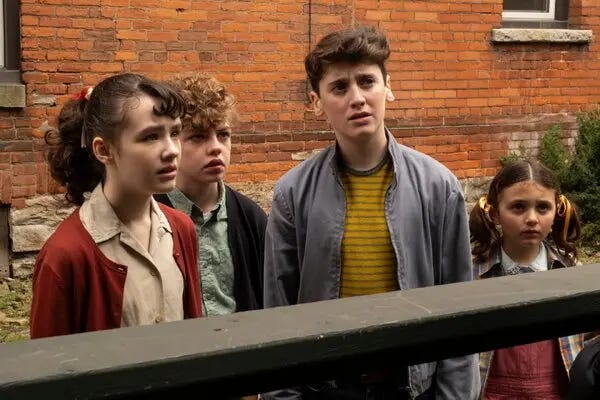
In episode 1, “The Pilot,” we meet the main players: Teddy, Phil, Lilly, Susie, Ronnie, and Matty. Right away, the students of Derry High are all brought together through their relationship, or lack thereof, with Matty. The common factor amongst all of them is how they contributed to discarding Matty, internalizing his disappearance as a direct result of their own actions. This leads them to coming together to conduct their own investigation to retrace Matty’s last moments four months ago, prior to his mysterious vanishing.
Latchkey Loneliness
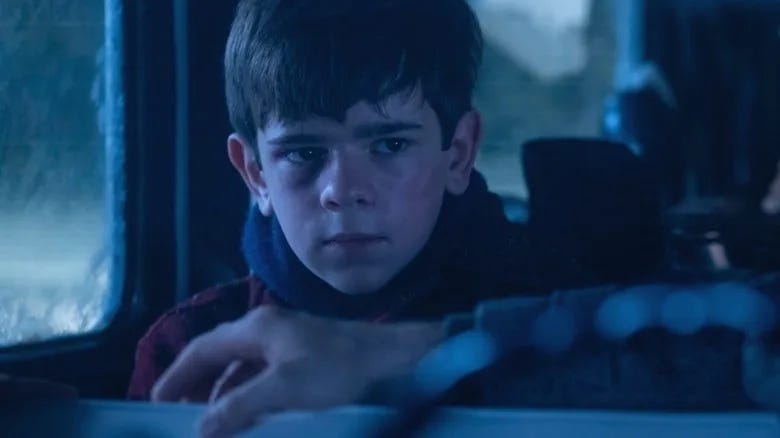
The greatest strength to the fear of IT is not just in his alien abilities and supernatural powers, but in the societal vulnerabilities with latchkey kids being exposed to dangers due to a lack of parental presence and adult supervision. In the 1960s, latchkey kids became more and more common due to mothers entering the workforce as well as increased divorce rates. The combination of events created the perfect opportunity for disaster—academic struggles, psychological and emotional damage, increased risk of accident and injury, and exposure to violent crimes.
Matty is not only a latchkey kid but is a victim of some form of abuse within his own household which makes him the perfect prey for the family that picks him up hitchhiking. Following the investigation—four months with no updates—the tone at school and within the justice department regarding the disappearance lacks urgency and importance. This speaks to how society views kids they deem “troubled” or “weird,” and how easily it is for people to discard someone who looks as if they do not come from a good home.
Although Matty differs from Teddy, Phil, Susie, Ronnie and Lilly—they have at least one person at home who loves them—they are all still connected through forms of parental absence and ostracism from their peer groups. This makes each and every one of them no different in the eyes of the predator hunting them.
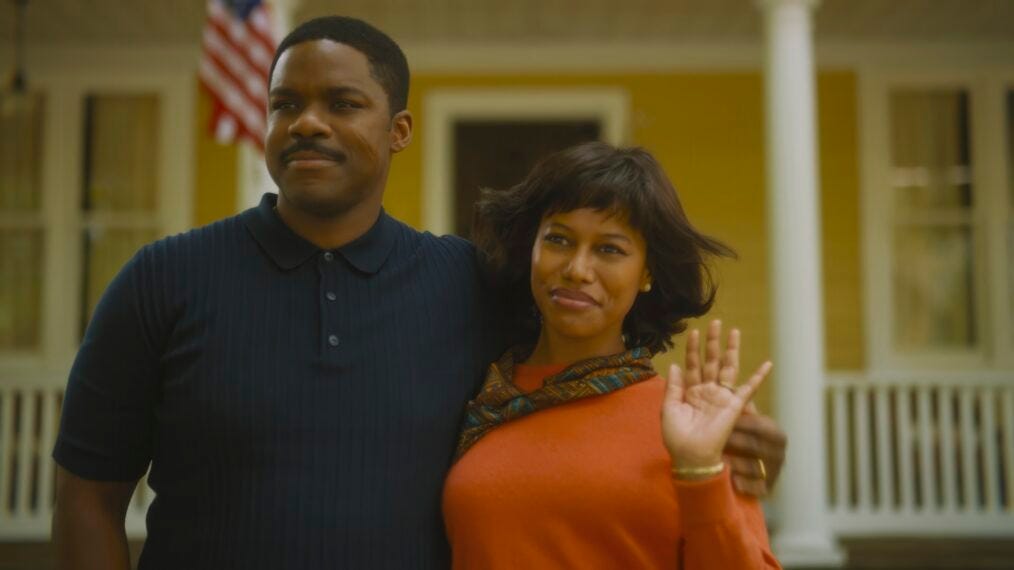
While IT: Welcome to Derry comes from great lineage, the prequel shines the light on the sociopolitical elements from the book, highlighting more of the experiences of Black and Indigenous tribes in Derry—making them a part of the horrific events rather than footnotes or afterthoughts. And while the novel gives you a peek into a life in Derry for Black residents through Mike Hanlon (are you connecting the dots so far), the origin story takes a broader view beyond The Loser’s Club, and the specific torture of a group of kids, to this cosmic alien creature’s impact on everyone in the town, including the residents of color.
The backwards telling of the story also allows the creators to connect characters across the Stephen King universe through the Hanlon’s, Dick Hallorann, and Teddy Uris while peeling back the layers on how fear and silence allow evil to live and grow over time. The choice to reprimand and weaponize children’s experiences against them also show how society—parental and judicial—leaves a gaping hole in their protective barriers for a monster to step right in and pluck them off one by one.
Episodes 1 and 2 are currently available to stream on HBO Max. Tune in weekly on Sundays to continue to uncover the sinister beginnings of the scariest clown in history.
* actors may nor may not be there by the end of the episode…