

Secrets Hidden in Plain Sight
HBO’s Lanterns, Episode 2, “Trust Fall,” pulls us back to 2016 with the investigation into the five deceased aliens, and Hal and his jaded energy are back in training mode with John.
This time the lesson doesn’t involve going over a cliff in a car but a similar act in nature.
Flight.
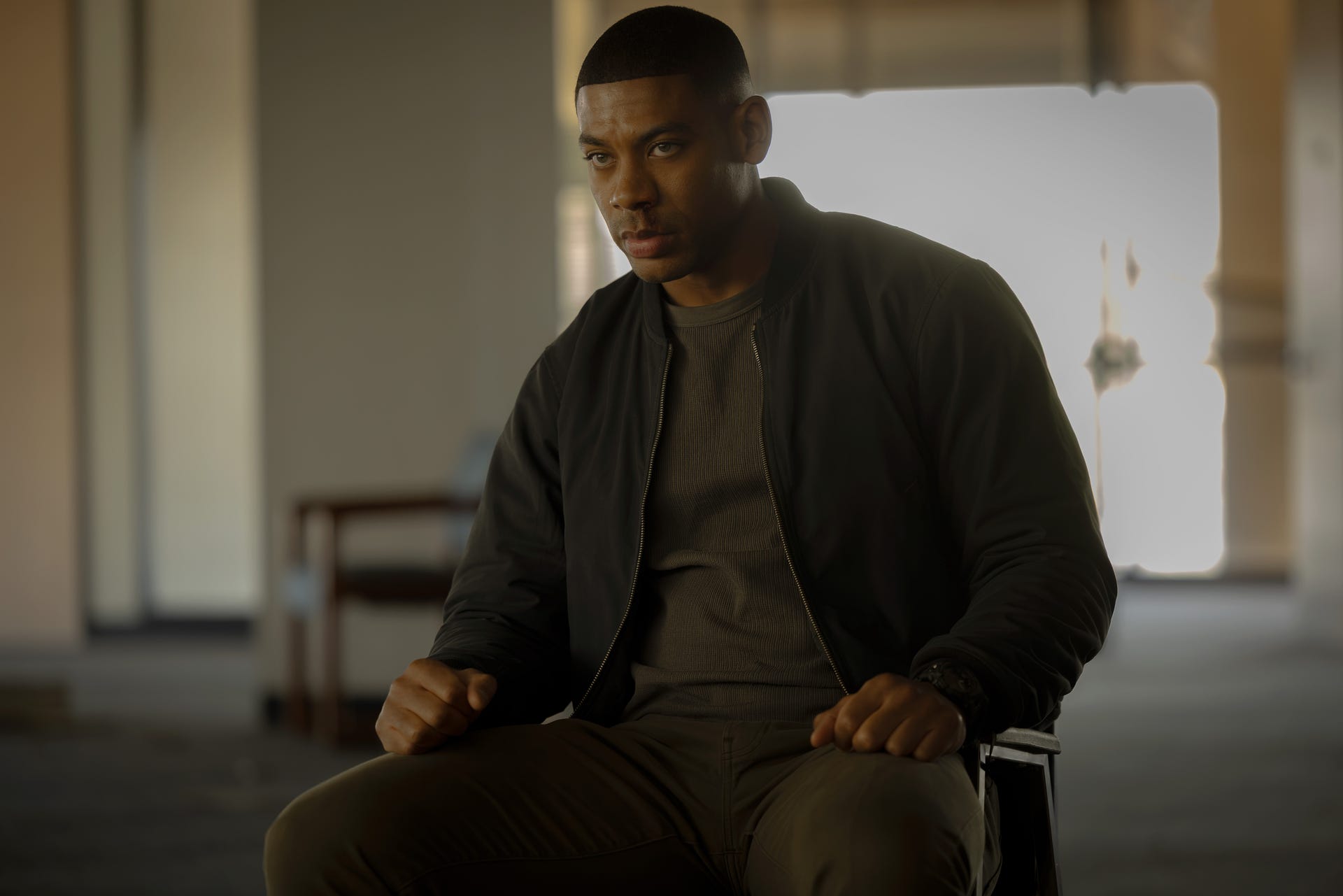
Annoyed, yet determined, John makes an attempt to fly, imitating Hal’s signature flight move, but his feet stay firmly planted on the ground.
However, a bird materializes in the sky from the ring’s power—immediately showcasing John as an architect, even if he doesn’t know the depths of his possibilities at the moment.
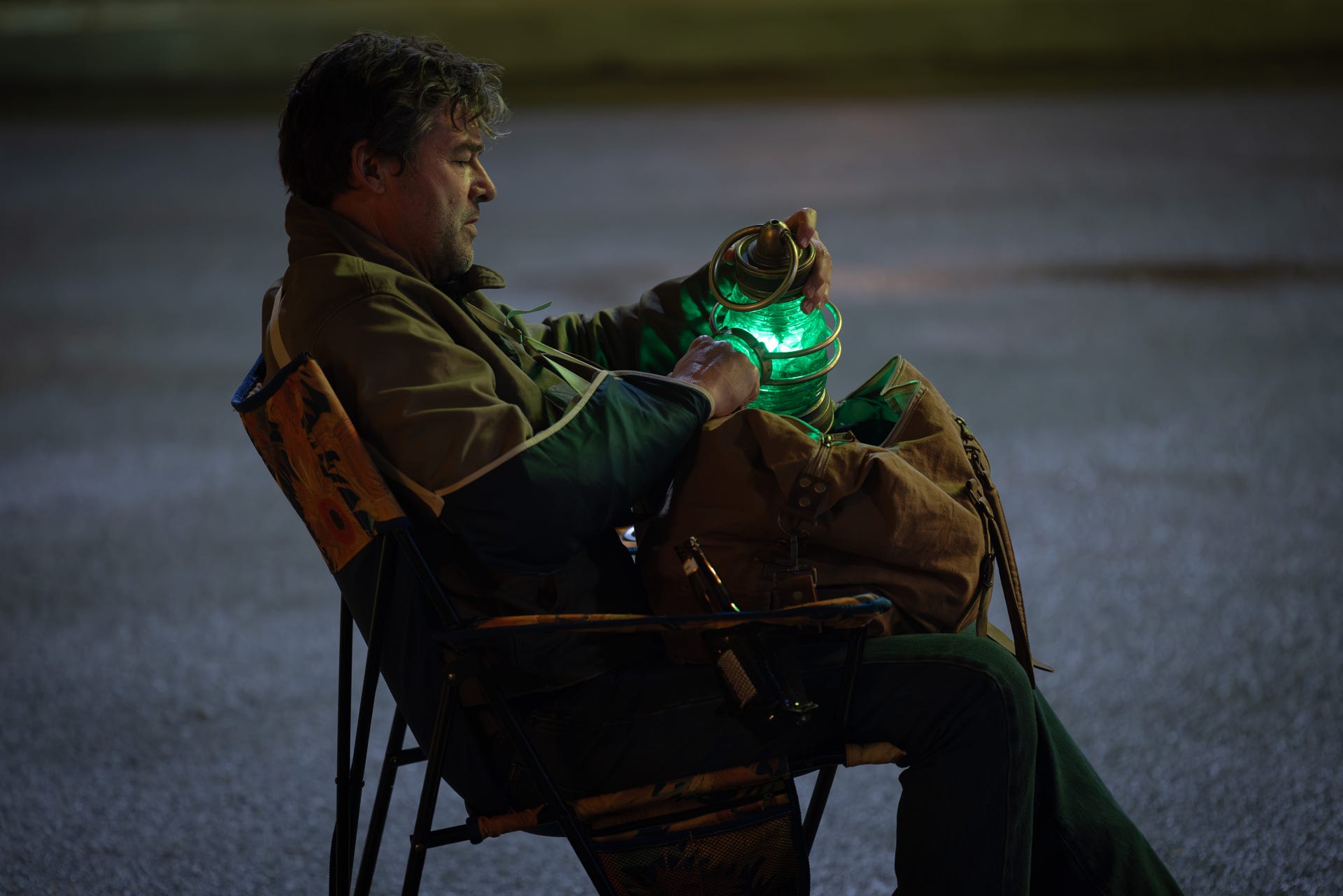
Confused, Hal instructs John to go to his home for the lantern while he continues to investigate just why an alien wanted to blow the city to pieces.
In a cinematic parallel moment to Episode 1, we see Hal in the bleachers—watching, gathering evidence intuitively while searching for any indication that something far more sinister lurks beneath Rushville.
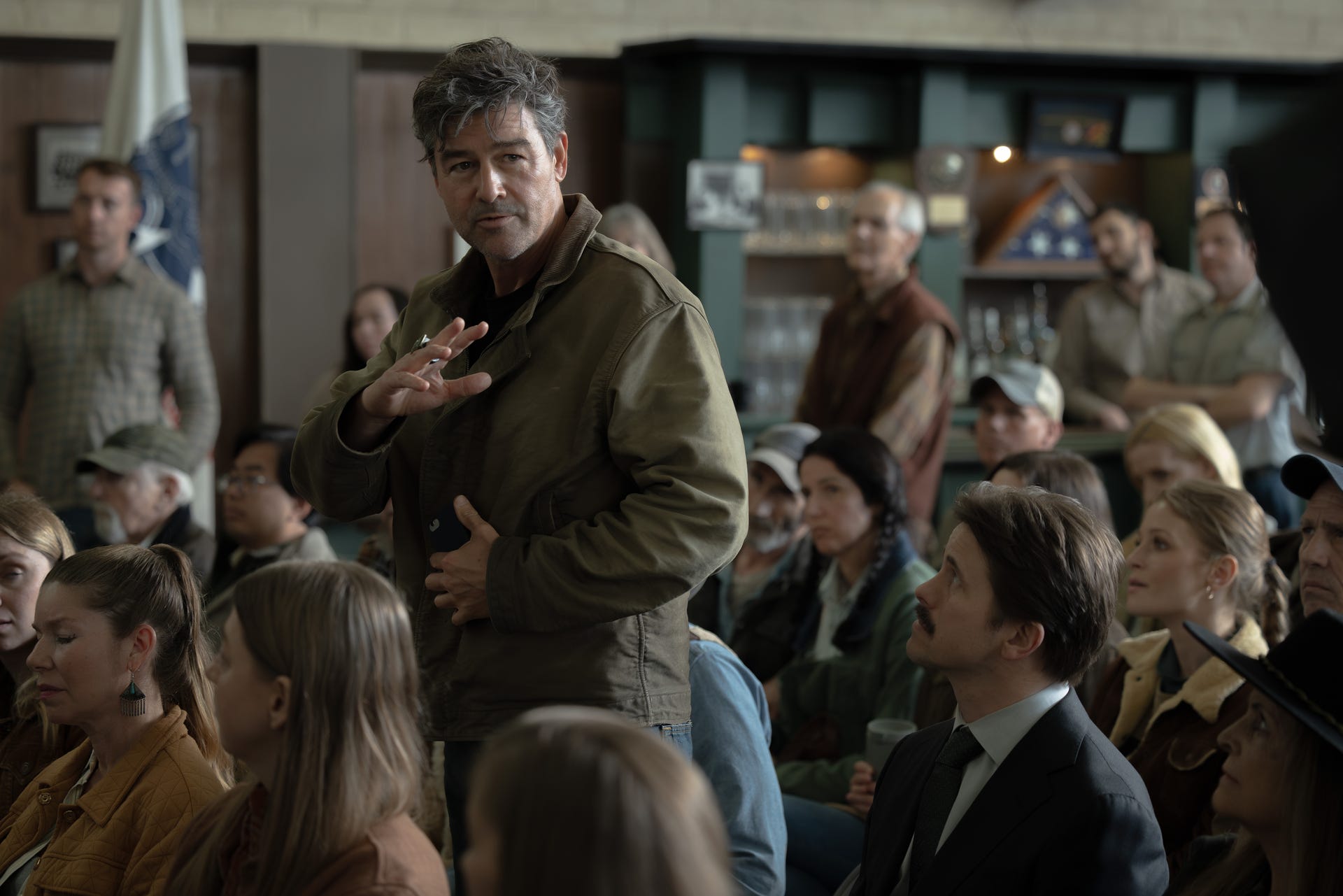
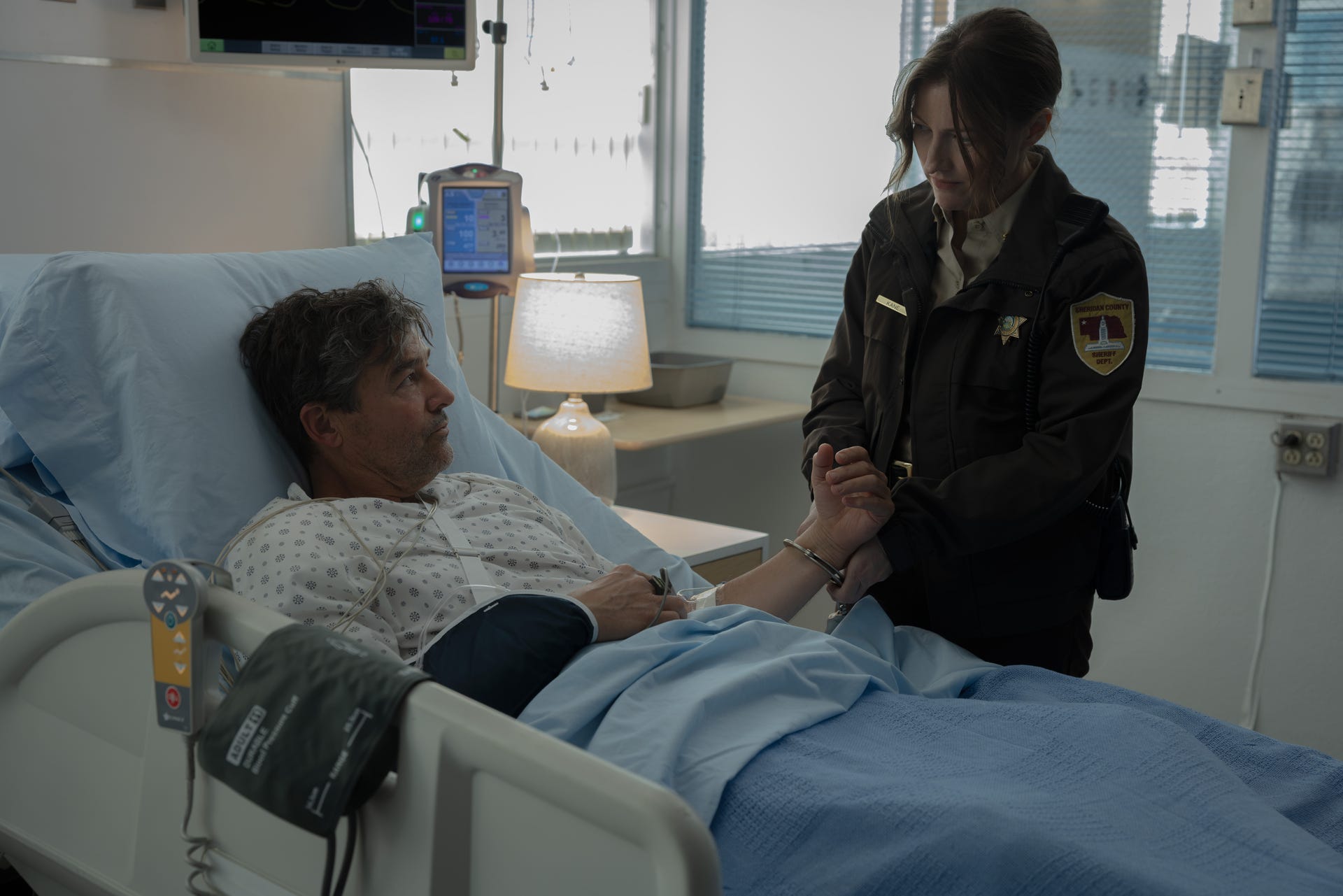
Hal crashes a Town Hall meeting led by Kerry, and it is clear that his presence is unwanted, so much so that Billy urges him to go anywhere else.
But Hal challenges Billy head on, asking if Kerry told him about the alien speaking of vengeance against a town one would miss if they blinked while driving through.
Yet Billy’s silence is the only answer, allowing Hal to plant the seeds of doubt against his father, Macon.
Four people don’t get shot on a hunch, yet Macon made the decision to do so anyway.
Why?
And how close is Hal to finding out the answer?

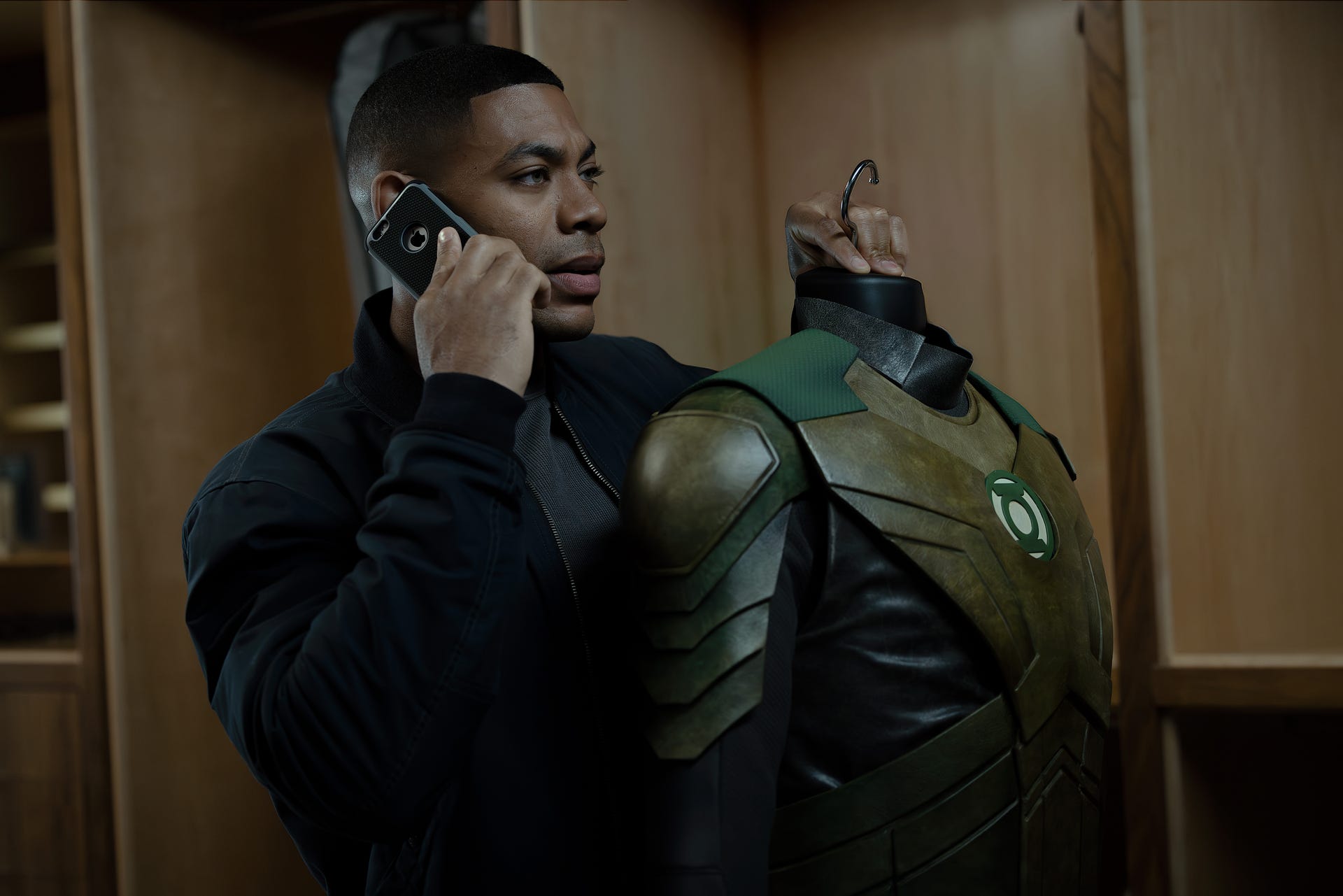
While gathering supplies and searching for the lantern, the infamous suit makes its first appearance—held up in the mirror as John gets a glimpse of who he’s capable of becoming.
But things take an unexpected turn when he gets kidnapped outside Hal’s house, leading to the first true action moment for John—highlighting his natural skills and abilities outside the use of a ring, his bird construct acting as both an extension of his fighting and his very essence.
For the first time in the series, the adrenaline rush of what Lanterns will become settles deep into the bone marrow of viewers, making for a watch experience no one saw coming.
And John didn’t see getting kidnapped by aliens coming either.
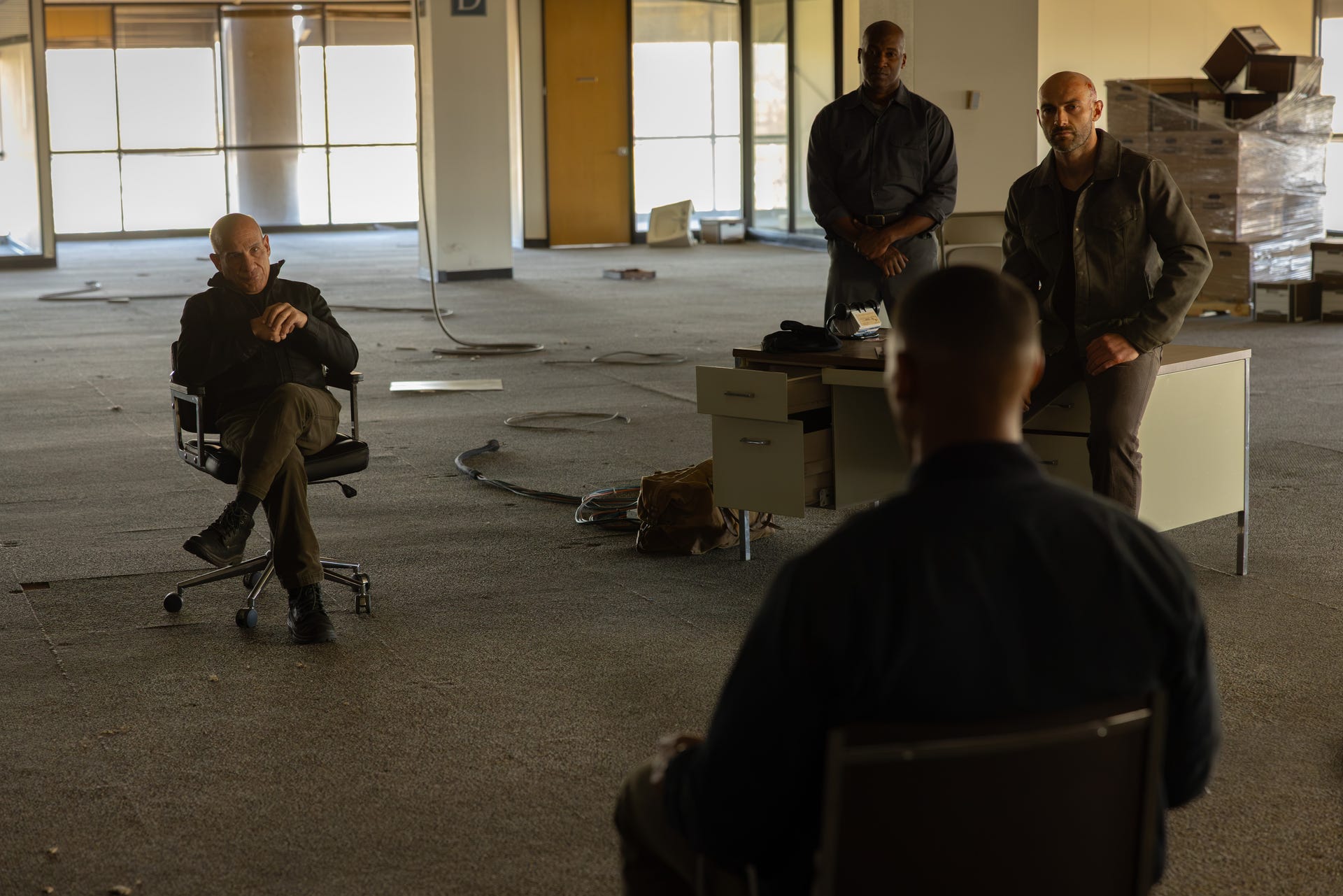
Restrained and pissed off, the leader of the group—an extraterrestrial named Antaan (Paul Ben-Victor)—asks John about Manhunters.
Manhunters are old beings, one of the most dangerous in existence—synthetic creatures able to take on any form of any species, wreaking havoc in the name of “justice” and wiping out whole civilizations.
And now that it’s been discovered, it’s planning a brutal response to protect its identity.
Antaan solicits John for recruitment, turning a hostage situation into one of partnership, forcing the audience to operate in a space of emotional ambiguity—restructuring in real time who we see as the enemy and who we see as an ally.
And if there was any doubt to the truth of Antaan’s tale, he uses a device to force John to experience the pain and destruction of his people, his ancestors.
Then he releases the restraints.
We discover that the aliens who died were a part of this group but were detected faster than expected, slaughtered before they could locate their target.
This makes the beacon of suspicion on Macon brighter and begs two questions:
Is Macon the Manhunter?
Or is Macon protecting the being by hiding it behind his gates?
Whatever the answer, Macon is willing to use violence to keep Hal from discovering anything on his compound.
And just as Hal begins questioning who really controls Rushville, John returns with information that makes the question of trust the center of the entire investigation.

The Greatest Threat May Be the Person Staring You in the Face
Back at the motel, Hal charges his ring, and John confronts him about the Manhunters, confirming Hal’s instincts about Rushville.
But something more hurtful lingers within John.
Being able to project a construct for the length of time he did and without a ring, a near impossibility, went ignored and downplayed by Hal for the sake of his own ego.
Hal never tells John that what he accomplished was, in fact, an incredible feat. Instead, he had to find out from his captor, forcing John to question whether or not he’s right in trusting Hal at all.
Suddenly, Hal’s motives are under scrutiny.
This is further deepened by his insistence on John not reporting any of his findings to Lantern headquarters.
Is Hal going rogue, or is his withholding part of something bigger?
With a fully charged ring, Hal dons his Lantern suit, and we are taken beyond Earth for the first time in the series, expanding the world-building and truly immersing the audience in a cinematic experience.
And who does he go to see?
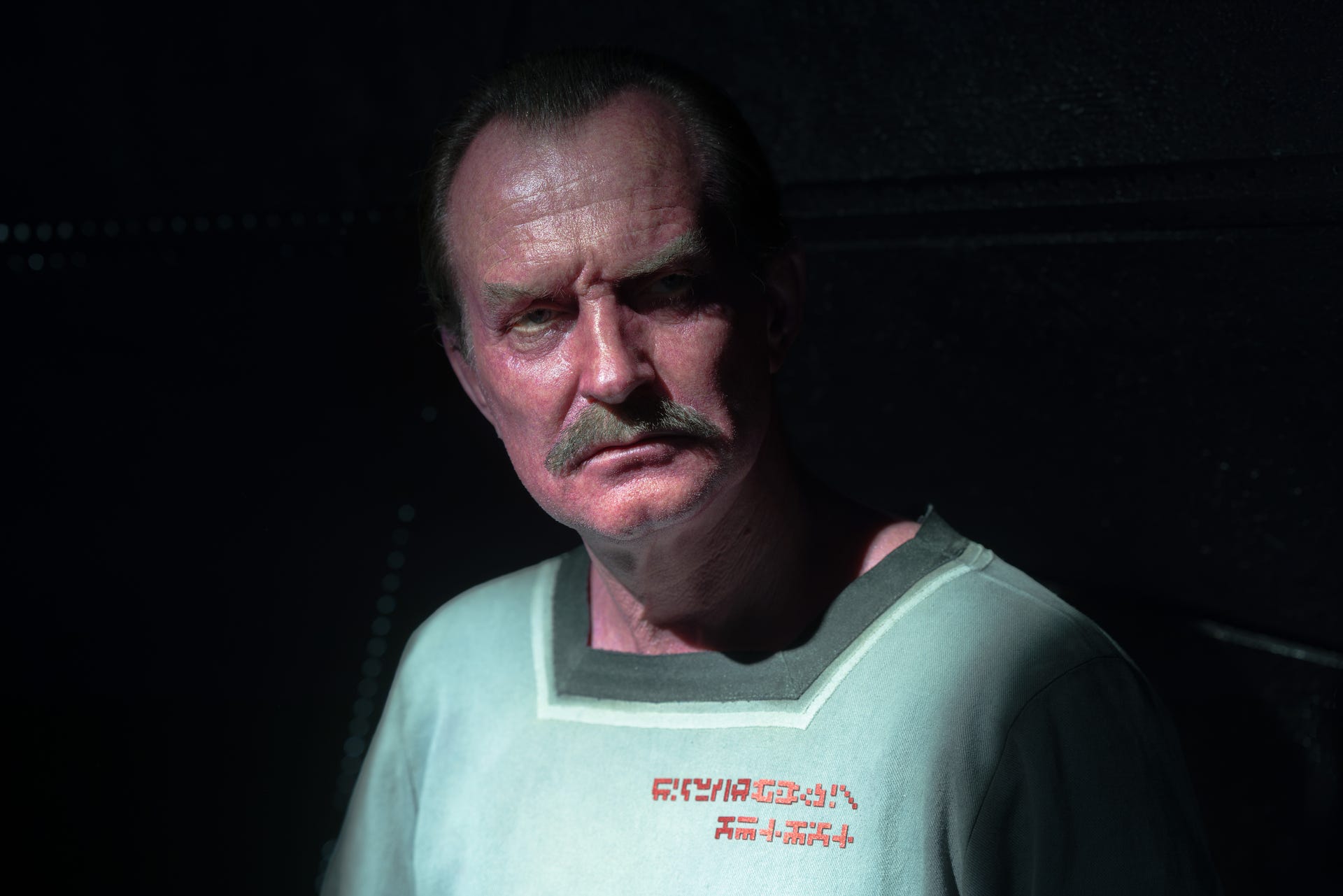
Sinestro (Ulrich Thomsen).
The urgency of gathering more information about the Manhunters causes Hal to put faith into someone he likely thought he’d never have to see again.
And what he learns is cosmic.
If one still exists, it would be the second greatest threat Hal currently faces.
But then Sinestro asks him to tell him about John Stewart, leading to a burning question:
Is John Hal’s greatest threat?
By the end of Lanterns Episode 2, “Trust Fall,” the audience is shattered and catapulted into every corner of the universe.
Who can we trust?
Who is the hero?
Who is the Manhunter among us?
For a series that has only eight episodes, the pacing, the action, the reveals, and the secrets leave you on the edge of your seat, both extremely satisfied and wanting so much more.
This is the type of writing that makes weekly episodic releases worth the wait, bringing back the magic and impact of “watercooler conversations” that expand the story beyond the ending credits.
Lanterns makes us excited to be excited about TV again.
And it’s only just getting started.
HBO’s Lanterns Episodic Journey
Kivonshe—founder of So There’s That—is a film & TV critic who explores compelling storytelling, fandom relationships, character psychology, and the impact of entertainment media through film reviews, episodic recaps, and in-depth theme analysis.
1© Kivonshe | So There’s That
Original editorial commentary on film and television. All rights reserved. Reproduction or redistribution without attribution is not permitted.