

NOTE: This article contains spoilers. Read at your own will.
Ability Isn’t Defined by Legacy
“Probation’s over.”
Line of Fire Episode 4, “Paper Trails,” explodes onto the scene.
Literally.
What begins as an ordinary delivery to the Secretary of Agriculture’s home ends in an explosion on his doorstep, drawing multiple federal agencies into the investigation.
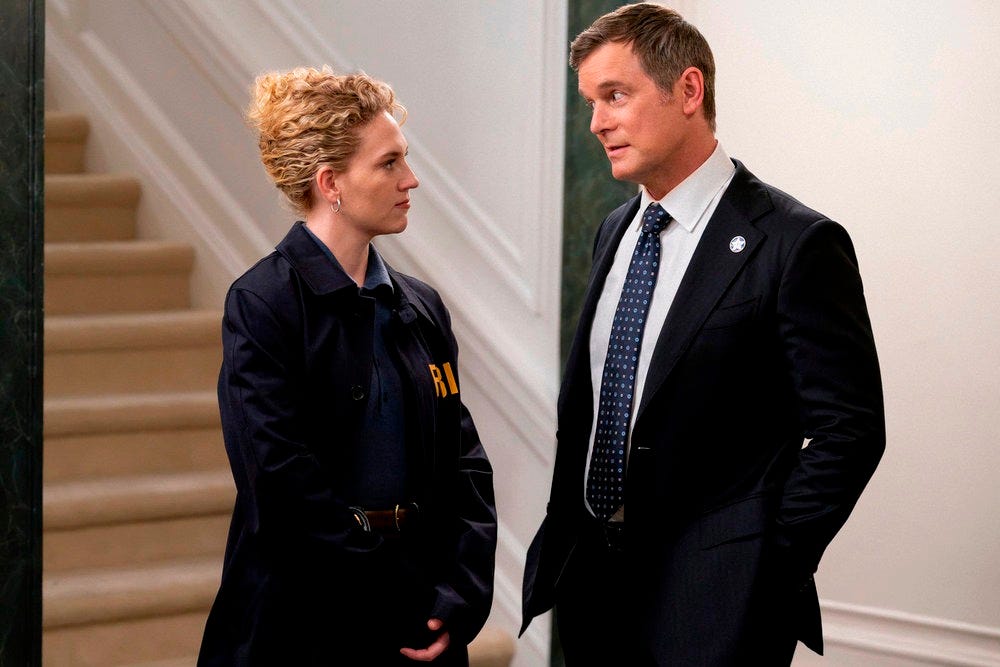
Jane immediately gets pulled in and calls the FBI to ask for Clare to join the investigation.
Their relationship is on the mend since Clare moved back after Logan’s death, and Clare no longer sees herself as her mother’s shadow but as a formidable agent all her own.
But what starts as a mother-daughter investigation quickly turns into a family affair as Mike steps in with the Secret Service now formally involved.
The resulting friction echoes the tension we’ve seen between Mike and Micah, testing Clare’s patience in ways her father doesn’t anticipate.
In Episode 3, “There Are Two Wolves,” Mike’s pride for Clare’s ambition swells, but in Episode 4, it becomes another source of anxiety as she once again feels overshadowed by the Hollingsworth legacy.
“If you’re not going to help me, get out of my way.”
With every piece of information, Clare feels the walls of her lineage close around her as she fights to establish a professional identity of her own.
Having only recently stepped out of her mother’s shadow, Clare now finds herself contending with her father’s.
Her sharp, no-nonsense approach clashes with Mike’s easygoing charisma, introducing an unfamiliar tension between the doting father and his only daughter.
Mike now finds himself on the receiving end of her frustration as she pulls further and further away from her parents’ expectations to perform her job her way.
But what Clare perceives as another expectation placed upon her by her parents may be one she unconsciously placed upon herself.
This insecurity becomes apparent when Mike reminds Clare that her way and his way share the same goal, just different roadmaps to arrive there.
This realization shifts how Clare sees both herself and her parents: her ambitions can exist alongside theirs, adding to the Hollingsworth legacy rather than succumbing to its weight.
Jack’s Absence Reveals Deep Sibling Wounds
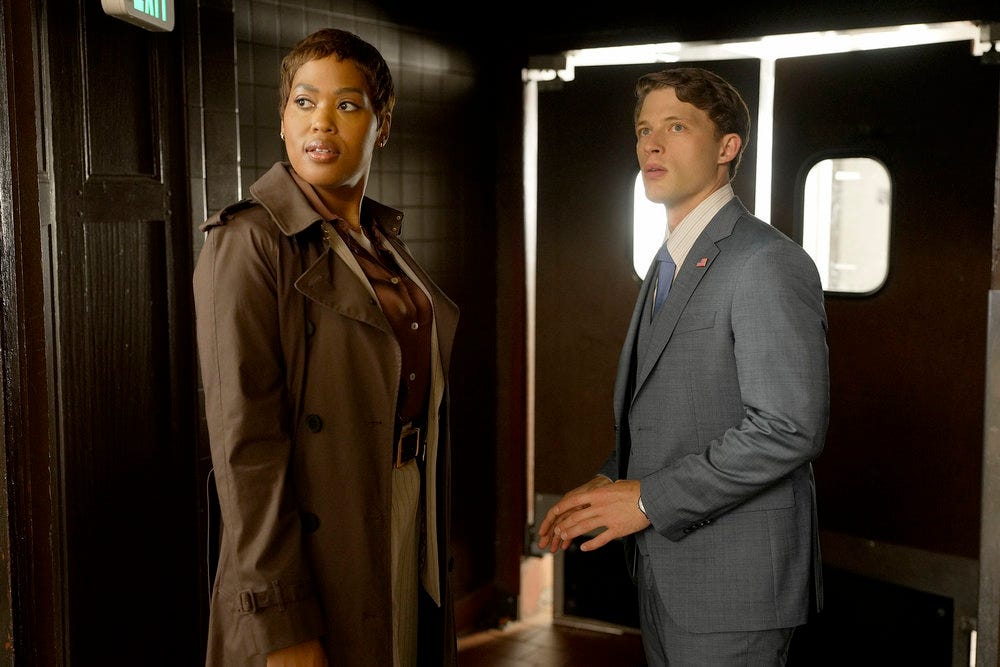
If it’s not enough that Clare finds herself enmeshed in another case with one of her parents, Micah lands on a deposition list that Russ has to conduct on behalf of the DoJ.
The deposition takes the audience deeper into the sibling dynamic between Micah and Russ—the baby brother who shields his life from everyone he loves.
In this case, Russ and Micah are at odds but not for reasons Episode 4 places on the surface.
Yes, the deposition keeps Micah from his dalliance with Sydney, the president’s daughter.
Yes, the deposition keeps Russ from meeting his girlfriend’s parents.
But at the core of both relationships is a reluctance to share their romantic lives with one another. Like Clare, Micah and Russ conceal parts of themselves, perhaps to avoid their family’s scrutiny and disappointment.
But as the brothers confront one another with the hurt they’ve carried, it becomes clear that Jack’s presumed death changed the dynamic of their bond.
Clare had Mom.
Micah had Dad.
And suddenly Russ had no one but himself.
Jack’s presumed death didn’t simply leave the Hollingsworths grieving. It changed how they leaned on each other, who received comfort, and who learned to navigate the loss alone.
Now, as the siblings begin to confront those fractures, the secret their parents kept from them threatens to reopen those wounds.


Throughout “Paper Trails,” each revelation exposes another fracture, and every Hollingsworth finds themselves entangled in situations that force them to look at the other in a new light.
Clare begins to understand her father differently, while Micah and Russ find common ground through pain that once drove them apart.
This begs the question:
Would the family turn a blind eye to the law to protect one another?
For Clare, Micah, and Russ, that choice may prove more complicated than anything they’ve faced professionally.
Their careers have been built around institutions that demand accountability, yet their family’s survival may depend on the very secrecy those institutions are supposed to challenge.
Jane and Mike prove as parents they’re willing to go to any length for their children, as the mystery surrounding Jack continues.
But what happens when the children, now adults in law enforcement, must make the same choices?
Counter to the brisk pace of Episode 3, “Paper Trails” slows us down, focusing the audience on the Hollingsworth family as conspirators to Logan’s death.
This gives us breathing room to look at the entire Hollingsworth family as a unit, as individuals, and as potential suspects.
In Episode 3, Det. Nia Wallace found a clue that made her suspect the family, or at least the parents, knew more than they were letting on.
With her on the case and the entire family in her crosshairs, the answer may come sooner than we expect.
But just as Nia digs deeper into the Hollingsworth family, Jack gathers his own counterintelligence against her and the entire task force.
Where Loyalty and Law Collide
“I had to tell myself that he was dead.”
Jack’s presence grows with each episode, advancing the mystery surrounding his alleged death and his purpose for returning to the edges of his family’s lives.
He moves in next door to Clare, kills Logan, gets a job that puts him close to the investigation of a murdered CIA agent, and then breaks into the precinct to gather intel.
Why?
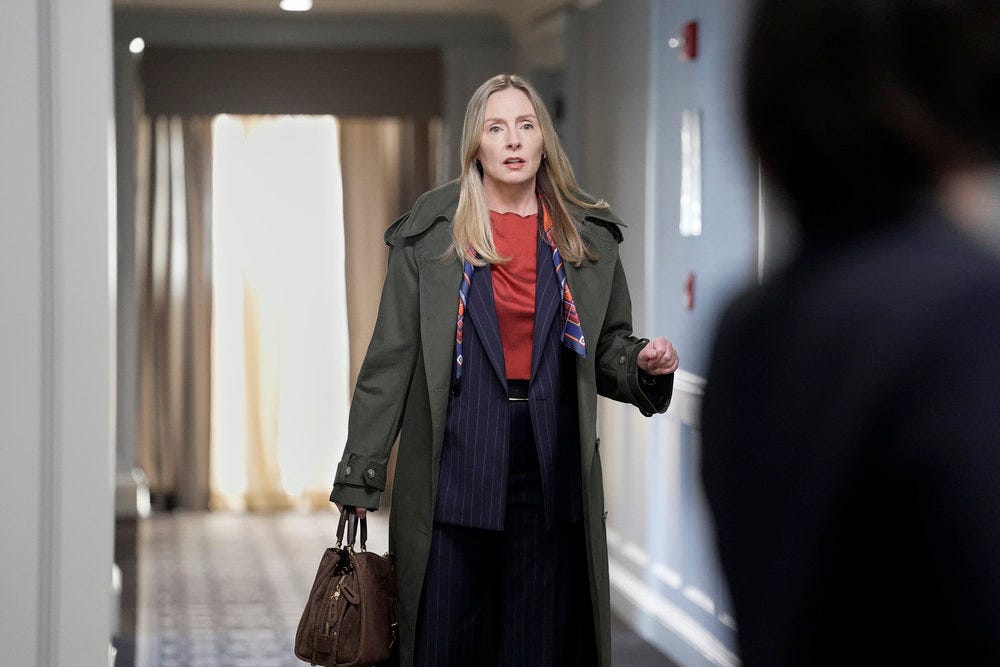
Currently, signs point toward Micah, and Jane goes into mother hen mode to protect him from interrogation.
If Nia asks about the origami birds, Micah will answer freely.
This makes him the prime suspect in the murder of a man who died in his childhood home.
Just as Nia doesn’t play fair, neither does Jane.
When Nia comes to Jane’s house to find Micah, Jane confronts her with the truth—evidence of Nia breaking in to find information that supports her case against the Hollingsworths.
But fire meets flame.
Nia returns the heat by challenging Jane, stating that she may be hiding from her children as much as she’s hiding from the law.
For Jane, the confrontation with Nia brings her two identities into direct conflict.
As a U.S. Marshal, she’s sworn to uphold the law. But as a mother, she’s willing to challenge those boundaries to protect her children—the ones still within her reach and the son whose existence she spent five years protecting.
“How could her parents keep such a horrible secret from her in the name of love? Must’ve been eating them all alive.”
At the end of Episode 4, Jane confides in Mike that Nia is onto her, and Mike suggests they tell the kids the truth.
Jane changes the stakes of Jack’s disappearance when she decides to tell Nia what she knows—that five years ago Jack was offered an undercover assignment.
For life.
And to take the job, he would have to die.
Jane takes a risk by exposing her and Mike’s secret to the authorities while still choosing to conceal the truth from Clare, Micah, and Russ.
Jane and Mike decide to keep their secret and face the consequences together, but the truth threatens the one thing their children are struggling to rebuild.
Trust.
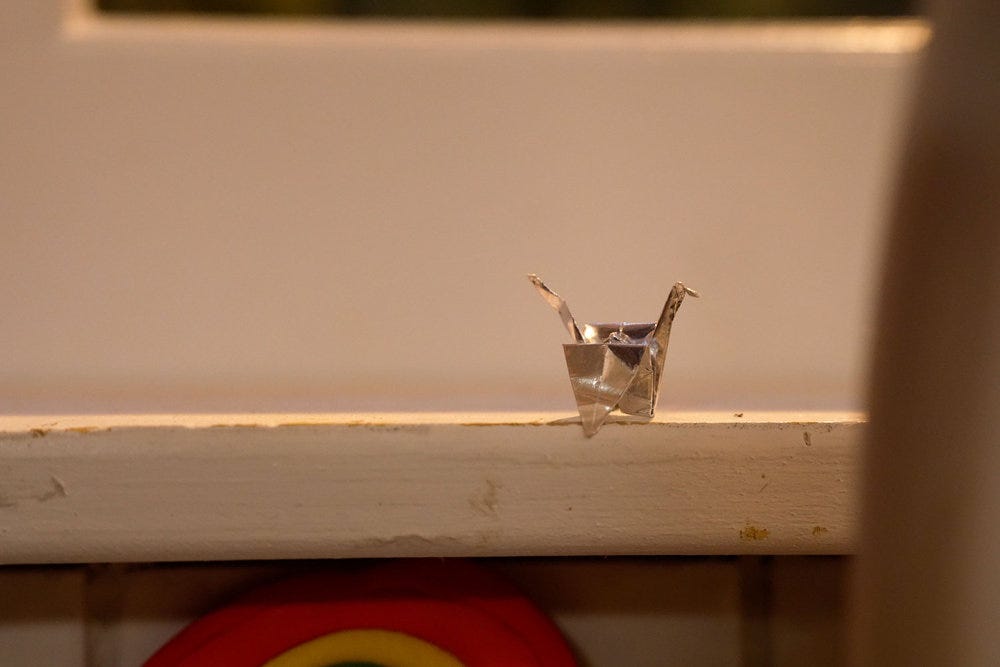
But Jane’s admission threatens the entire family as she also tells Nia about Jack’s origami.
His calling card.
The one Nia found at Logan’s crime scene in their family home, the one she discovered in Jane’s house on the windowsill, and the one Jane gave her—taken from a crime scene to protect his identity.
By removing evidence, Jane risks more than her career. Her actions could trigger an internal investigation, expose her to potential criminal charges, and increase suspicion about her involvement in Logan’s murder.
However, the truth comes at a cost.
While Jane’s cooperation may temporarily protect her children from Nia, it can’t protect them from the truth.
And with Jack operating beyond his parents’ control, the Hollingsworths may soon discover that protecting one another will cost more than any of them is prepared to pay.
Want more analysis for your favorite shows? Subscribe to get them directly in your inbox. Have a suggestion? Leave a comment.
The Hollingsworth Family Secret
Kivonshe—founder of So There’s That—is a film & TV critic who explores compelling storytelling, fandom relationships, character psychology, and the impact of entertainment media through film reviews, episodic recaps, and in-depth theme analysis.
© Kivonshe | So There’s That
Original editorial commentary, criticism, and analysis. Unauthorized reproduction, republication, redistribution, or adaptation of this content, in whole or in part, is prohibited without prior express written permission from the copyright holder. Attribution alone does not constitute permission.