


NOTE: This article contains spoilers. Read at your own will.
Heavy is the Crown Upon a Hollingsworth
In its premiere, NBC’s newest crime drama Line of Fire introduced audiences to the Hollingsworths as a complicated family with identities deeply rooted in service to the community, duty, and family legacy.
Mike and Jane Hollingsworth—a Secret Service Agent and U.S. Marshal, respectively—raised their children within a unique world, where protecting others is more than a profession.
It’s a lifestyle.
An expectation.
But beneath the prestigious titles and the Hollingsworth career accomplishments were unresolved conflicts simmering in the pressure cooker of their chaotic lives waiting to explode.
In Episode 1, Line of Fire laid the foundation for its central premise—or in this case, competing storylines through each member of the family.



Mike was troubled by an assassination attempt involving former President Barnes (Sam Waterston). Jane carried the grief of losing Jack. And the children were caught in the middle—navigating personal ambitions and the weight of carrying the family legacy with them.
The series established many premises, but by Episode 3, I began to question whether the pacing and competing storylines would maintain audience attention. With so many characters involved in separate cases, not to mention dealing with personal relationship issues, Line of Fire risked spreading its emotional stakes in too many directions.
Mike and Jane’s relationship, in particular, provided an opportunity to explore a thirty-year marriage shaped by the challenges of balancing their personal careers and parenting.
But rather quickly, their marriage felt secondary to the procedural demands of the episode.
In Episode 5, “Cul-de-Sac,” we were offered a compelling response to the initial criticism—not by abandoning the procedural mysteries, but by bringing Jane and Mike’s relationship and their investigations to the forefront.
Finding Common Ground
As a filmmaker, I understand the urge to keep a story progressing through constant revelations, mysteries, new conflict, and new investigations. And momentum is absolutely necessary, especially in a procedural drama where audiences expect suspense and episodic cliffhangers.
But momentum doesn’t always equal adequate story development.
Sometimes, the most important narrative decision is recognizing when to let characters breathe—inhabiting their environment fully while dealing with the consequences of decisions made offscreen.
Episodes 2 and 4 of Line of Fire devoted a large portion of their attention and storytelling to Clare, her struggles to find her own professional identity, and being centered among the secrets surrounding her family.
While those developments help establish the audience relationship with Clare through her headstrong nature and complicated relationship with Jane, the series’ broader narrative vaguely touched the parents’ marriage, the work-life complications and secret relationships that Micah and Russ were involved in, and Detective Wallace’s investigation into Logan’s murder.
All of this alongside personal cases.
This created an extensive tree—one whose branches didn’t quite appear to connect to the central identity from which it was born.
That is, until “Cul-de-Sac” returns the series to its foundation:
The family.
Instead of treating each family member as its own destination, Episode 5 brings the story into focus with a clear relationship from one case to the next.
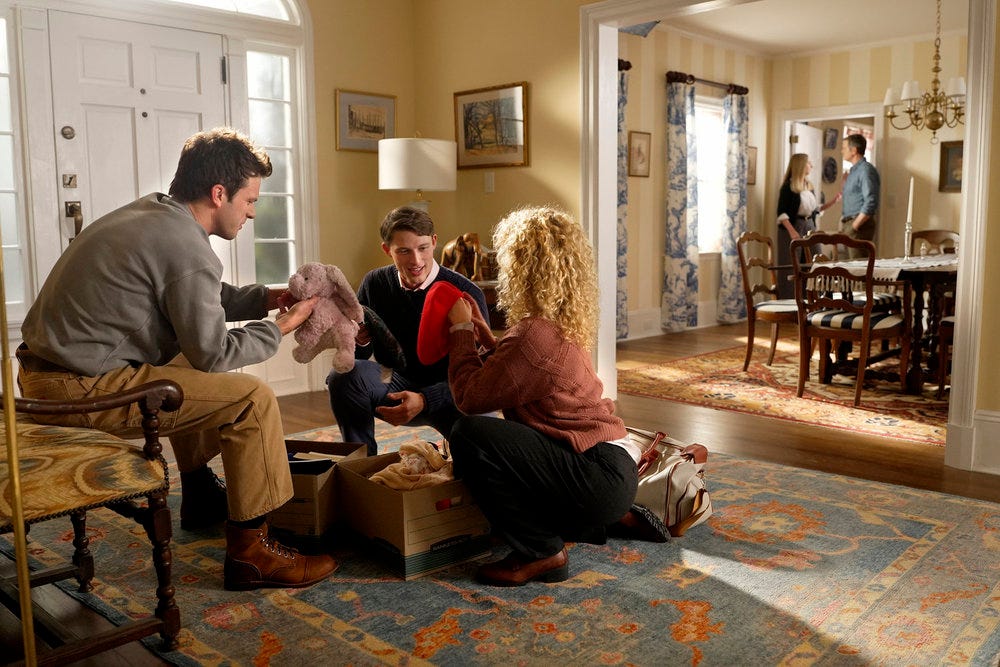
The primary narrative centers on Episode 1’s epic cliffhanger, Jack, whose presumed death has shaped the family’s emotional reality. Clare’s assignment intersects with Nia and Jane’s investigation, while the origami cranes connect cases we have yet to uncover.

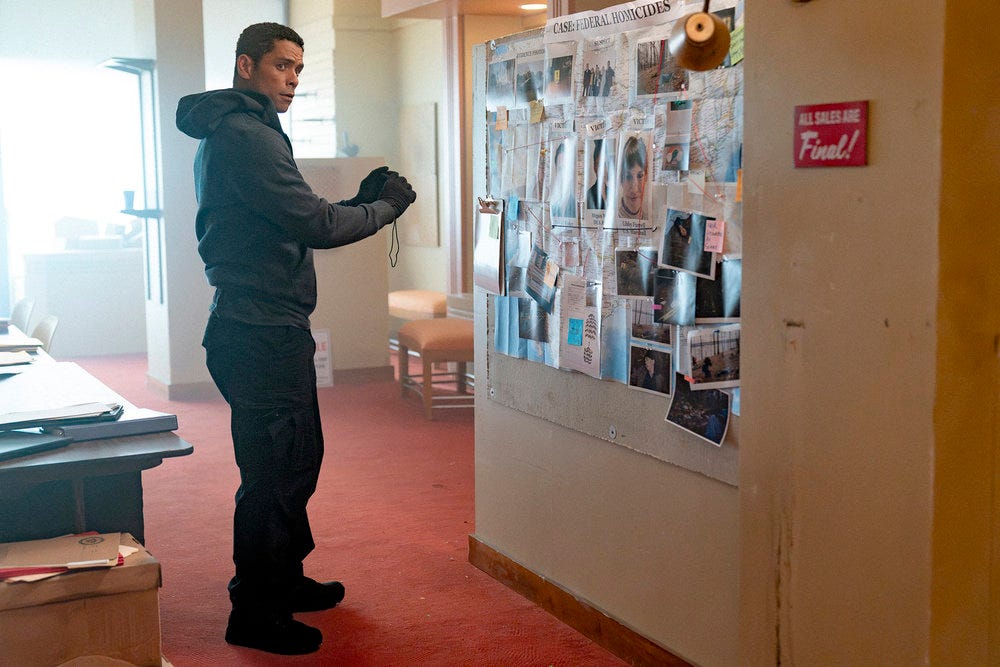
The secondary narrative also focuses back on Mike’s unresolved questions about the assassination attempt, the very reason he postponed his retirement.
Micah and Russ set out to investigate the six-year-old case to prove their father wrong, finally gaining a “leg up” in the Hollingsworth household, especially for Micah, who is following directly in his father’s footsteps.
What begins as an “I told you so” turns into something far more sinister that proves their father might be right.
But it isn’t the revelation itself that makes the assassination a compelling and focused B-story; it’s the fact that it puts the focus on the dynamic between the men of the Hollingsworth family—affording the audience an opportunity to build a relationship with them just as we did with Clare and Jane.
They represent the other side of the Hollingsworth family, embodying its legacy, expectations, and moral weight of responsibility, and they finally have an opportunity to be explored.
While Jack’s absence exposes the consequences of Mike and Jane’s conflicting decisions as parents, Russ and Micah’s investigation reveals how deeply their father’s convictions shape their own investigative instincts.
Finally, the pacing and the storylines feel more purposeful, and the audience can begin to see exactly why these stories should be told alongside one another.

Where Momentum and Storytelling Unite
The most impactful storytelling decision in “Cul-de-Sac” was allowing Jane and Mike’s marriage to take up space.
The flirtation and secret rendezvous offer something the series previously explored only through glimpses, but Episode 5 allows us to understand their marital rhythm and where it becomes slightly offbeat.
Peter Krause and Hope Davis inhabit their characters with an intimacy that is not only believable but also one that carries the weight of the history that exists beyond the audience’s view.
And that’s a great thing.
It allows Jack’s storyline to take root, even though he has yet to fully fill the frames with his own story. But through his parents, we can ask questions about Jack’s life and motives by examining the history and pain surrounding their disagreement over his career.
Mike believes he honored his son’s wishes while Jane believes he let their son go. All the while, Jack skates along the edges of everyone—unable, currently, to speak for himself.
But his story highlights the very values that brought Mike and Jane together and how those same values are the ones that rocked their foundation, creating great distance between them.
This is the type of procedural conflict that can cement Line of Fire for multiple seasons.
The conflict and consequences have been there since the premiere, and Episode 5 finally gave them room for emotional payoff.
Now, Episode 5 doesn’t eliminate every concern I have about Line of Fire’s pacing, nor does it resolve any questions surrounding Jack or the assassination conspiracy.
That’s okay.
It does, however, demonstrate how effective the series can be when the narrative threads reinforce a shared pattern rather than leaving them disconnected.
That is the storytelling opportunity that I wanted to see in Episode 3 after spending so much time building the audience’s relationship with Clare, and patience afforded me the opportunity to see the narrative come into focus.
“Cul-de-Sac” doesn’t just move the plot forward. It forces the audience to return to every decision preceding it and interrogate each character with new information.
And sometimes, that’s what makes family procedural dramas thrive.
Not just by becoming another mystery show, but by creating space for characters to confront the pain, secrets, and consequences they’ve been carrying all along.
Want more analysis for your favorite shows? Subscribe to get them directly in your inbox. Have a suggestion? Leave a comment.
The Hollingsworth Family Legacy
Kivonshe—founder of So There’s That—is a film & TV critic who explores compelling storytelling, fandom relationships, character psychology, and the impact of entertainment media through film reviews, episodic recaps, and in-depth theme analysis.
© Kivonshe | So There’s That
Original editorial commentary, criticism, and analysis. Unauthorized reproduction, republication, redistribution, or adaptation of this content, in whole or in part, is prohibited without prior express written permission from the copyright holder. Attribution alone does not constitute permission.