

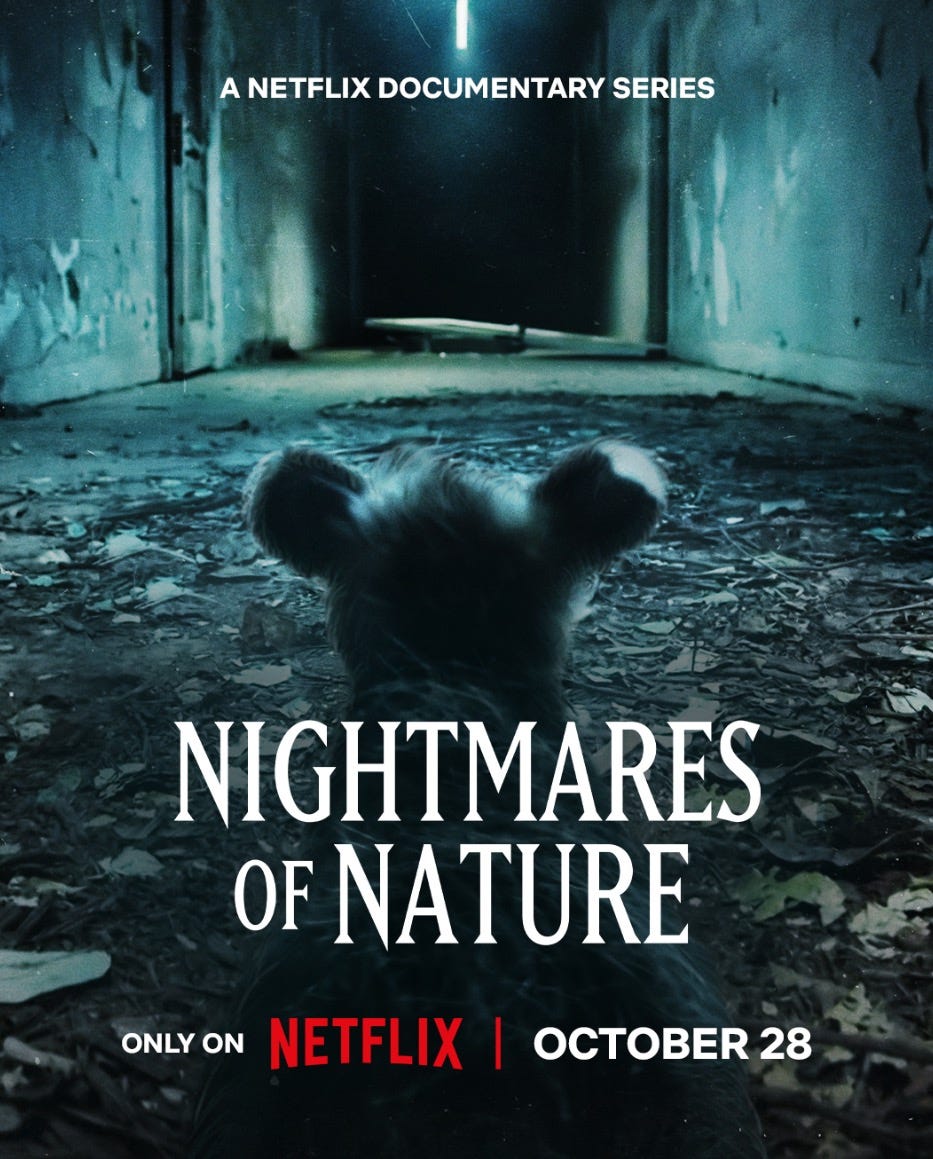
Nightmares of Nature is back with a new season, Lost in the Jungle, that is set in the creepy rainforest of Central America, a place that puts 1000 Ways to Die to shame—hailed as the place with more creative ways to die than anywhere on Earth. Lost in the Jungle focuses on three new stories with three new creatures: a young opossum, a newly-hatched iguana, and a fiery jumping spider. Their waking nightmare of staying alive in the unforgiving jungle is escalated when they each take refuge in an abandoned laboratory, a seemingly safe harbor from the elements, until their predators locate their prey. These creatures of the night are in for the survival story of their lives, evading their personal monster at every corner, hoping to escape before it’s too late…
Season 2 is more frightening, charming, and full of jump scares and plot twists that only a horror and history production company collaboration can bring. Such as life, not every story has a happy ending. In this unforgiving landscape, danger is insurmountable and resurrection impossible. Nightmares of Nature: Lost in the Jungle is the Netflix horror series you didn’t know you needed to see and the one that will keep you coming back for more.
Where Horror Meets History
Nightmares of Nature is a new and pioneering collaboration, effectively blending horror and history through the lens of the animals who inhabit the Earth. Blumhouse Productions, known for their horror lens and incredibly frightening visuals in film, aimed to explore the struggles of the world using an approach from the animals’ point of view as a dramatic plot—making the three animals each season protagonists in their own stories against the vicious antagonists that dwell in those the areas as well.
Plimsoll Productions, a UK-based company, specializes in unscripted factual content, natural history, and adventure. Combined, both companies create the perfect series that brings together both horror and history buffs alike. Alan Eyres, head of Plimsoll, stated
“we could not hope for better collaborators than Blumhouse. Combining the world’s greatest horror filmmakers with some of the world’s best natural history storytellers is a unique opportunity to create a more visceral, emotional point of entry to nature than anything we’ve seen before.”
What makes this series unique is that it centers the question “what if Planet Earth itself was a horror movie?” How Nightmares of Nature answers this question is by offering a grisly component to the brutality of nature, forcing the audience to take a deeper look at the lives of the animals they cohabitate this Earth with—creating room in the human heart to express empathy toward all creatures (and perhaps treat Planet Earth better).
Horror Filmmaking x Nature Documentary
Season 2 is executive produced by Jason Blum (Black Phone), directed by Charlotte Lathane, and narrated by Maya Hawke (Stranger Things). As you would expect from a Blumhouse Production, Lost in the Jungle focuses on cinematography, directing, and sound design to offer the scariest exposure for viewers—balancing the watch experience just shy of the edge of too much while using those three components of filmmaking to deliver a powerful, and deadly, reality.
Traditional nature documentaries offer bright filmmaking elements that make you feel hopeful, even when watching animals confront dangerous situations. The view from the lens and directorial approach is often birds-eye, broad, and away from the personal emotional experience of the creatures being watched and hunted by their predators. Conversely, Nightmares of Nature takes the opposite approach. The cinematic composition is up close, personal, and purposely invasive. This technique puts the horrors of nature directly in your home, making you incapable of distancing yourself from the realities of the dangers the protagonists must battle night in and night out.
Another contrast to traditional nature documentaries and what Jason Blum brings in this series is the presence of narration in the visual storytelling. Traditional documentaries use narration like an accent mark—taking time to emphasize a creature or event taking place—allowing the imagery to unfold for the viewer to make their own assumptions and choose what emotions to apply to the scene. In Nightmares of Nature, Maya Hawke’s narration is just as prevalent and present as the animals across the three episodes. This presence serves to guide the viewers’ emotions, leading them down the path of horror and trapping them in the same nightmare as the creatures before them. While many may value and seek the distance traditional nature documentaries bring, Blumhouse and Plimsoll Productions make it very clear that you will not be able to escape.
Nightmares of Nature: Lost in the Jungle, premieres Tuesday, October 28 only on Netflix. Check out the trailer below.