


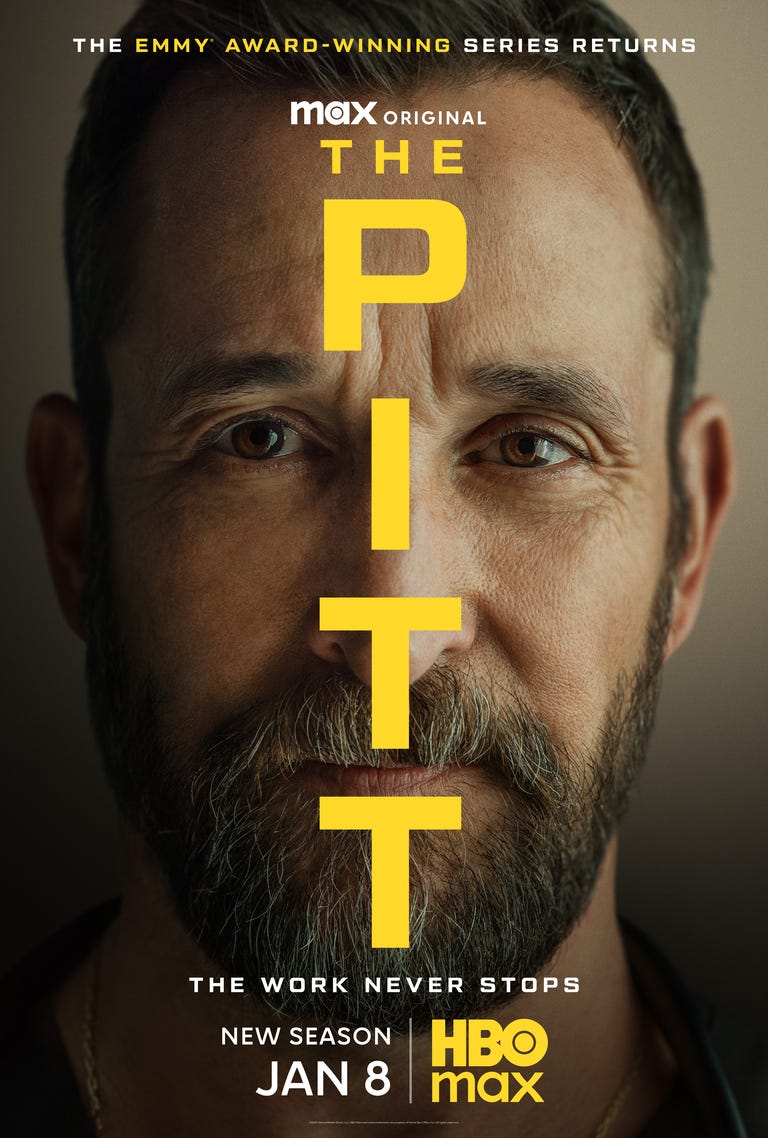
Season 2 of HBO’s critically acclaimed medical drama—fresh off Critics Choice Award wins for Best Drama Series, Noah Wyle for Best Actor in a Drama Series, and Katherine LaNasa for Best Supporting Actress in a Drama Series—returns with the familiar hum of fluorescent lights and the promise that nothing about this shift will be normal.
There is a particular electricity inside an emergency department during a holiday shift. It’s not excitement. It’s anticipation layered with dread layered with muscle memory. Season 2 of The Pitt walks us right into this feeling—not with a crash cart or a siren, but with the quiet understanding that the bodies will come, the stories will follow, and no one will ever truly be ready for the spectrum of chaos that ensues.
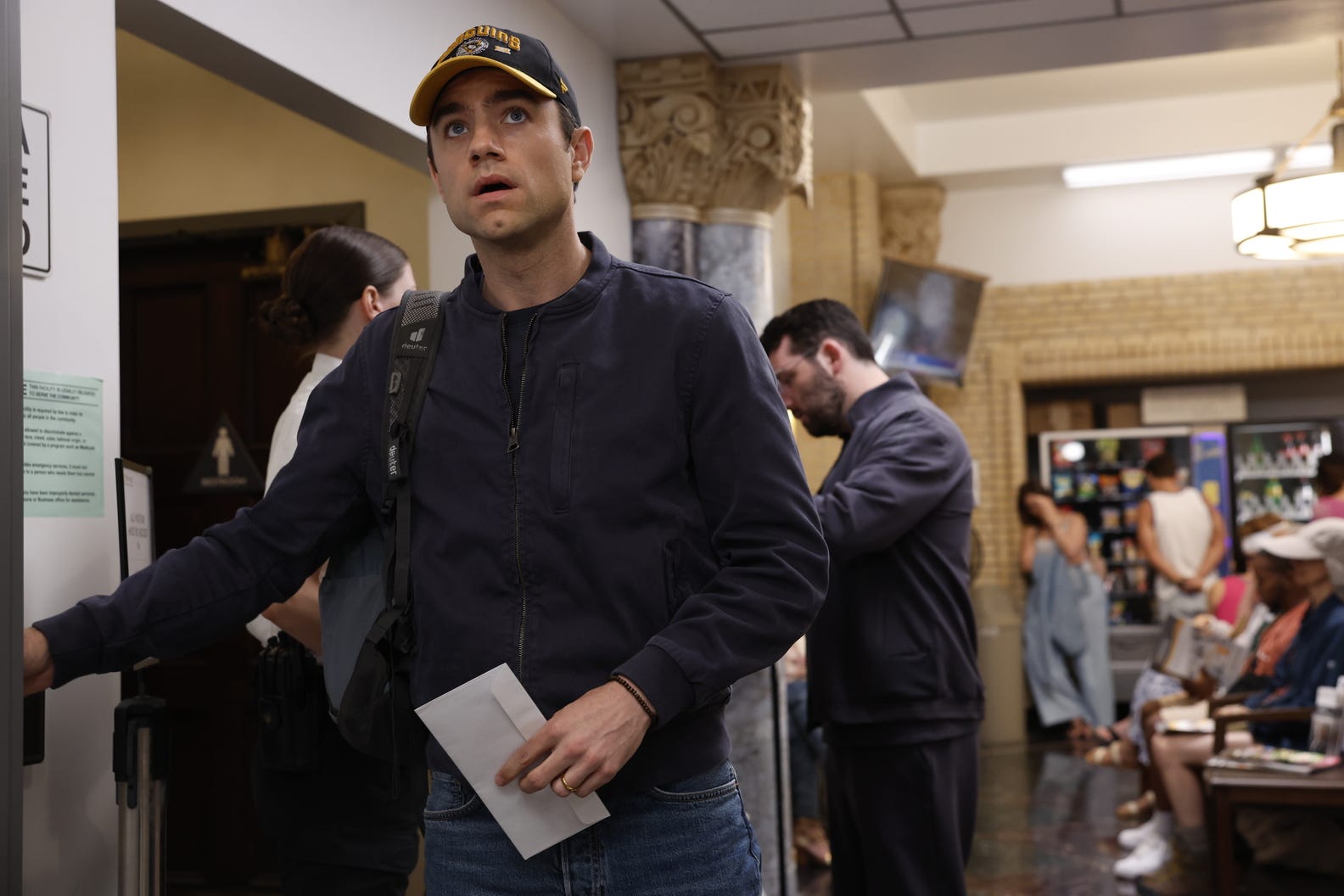
We are 10 months removed from everything that broke, healed, cracked open, and refused to be resolved in Season 1. Time has passed but healing has its own schedule. The new season unfolds across a chaotic Fourth of July, beginning at 7:00am. As many shift workers know, never bet on a normal day of clocking in and clocking out on time. We know better by now and so do they.
Within the chaos is the return of Dr. Langdon (Patrick Ball) after his rehab treatment for prescription drug misuse—a secret discovered in Season 1 by Dr. Trinity Santos (Isa Briones) that shattered any possibility of denying the truth, forcing him and the team to confront the issue instead. His return is everything but celebratory as he walks into:
a department that knows his history
a job that requires administering the very drugs he abused
colleagues who love him, resent him, worry about him, and need him—sometimes all at once
He comes back different and also painfully the same. Recovery isn’t a finish line—it’s something you carry into the room with you while being asked to save lives. His friendship with Dr. Robby (Noah Wyle) also carries a fracture that hasn’t healed, and the complicated, blocked-off tenderness with Dr. Santos sits in the entire emergency department, whether they acknowledge it or not. Watching Dr. Langdon navigate his new normal feels unbearably human as he attempts to act casual when nothing about his return is casual at all.
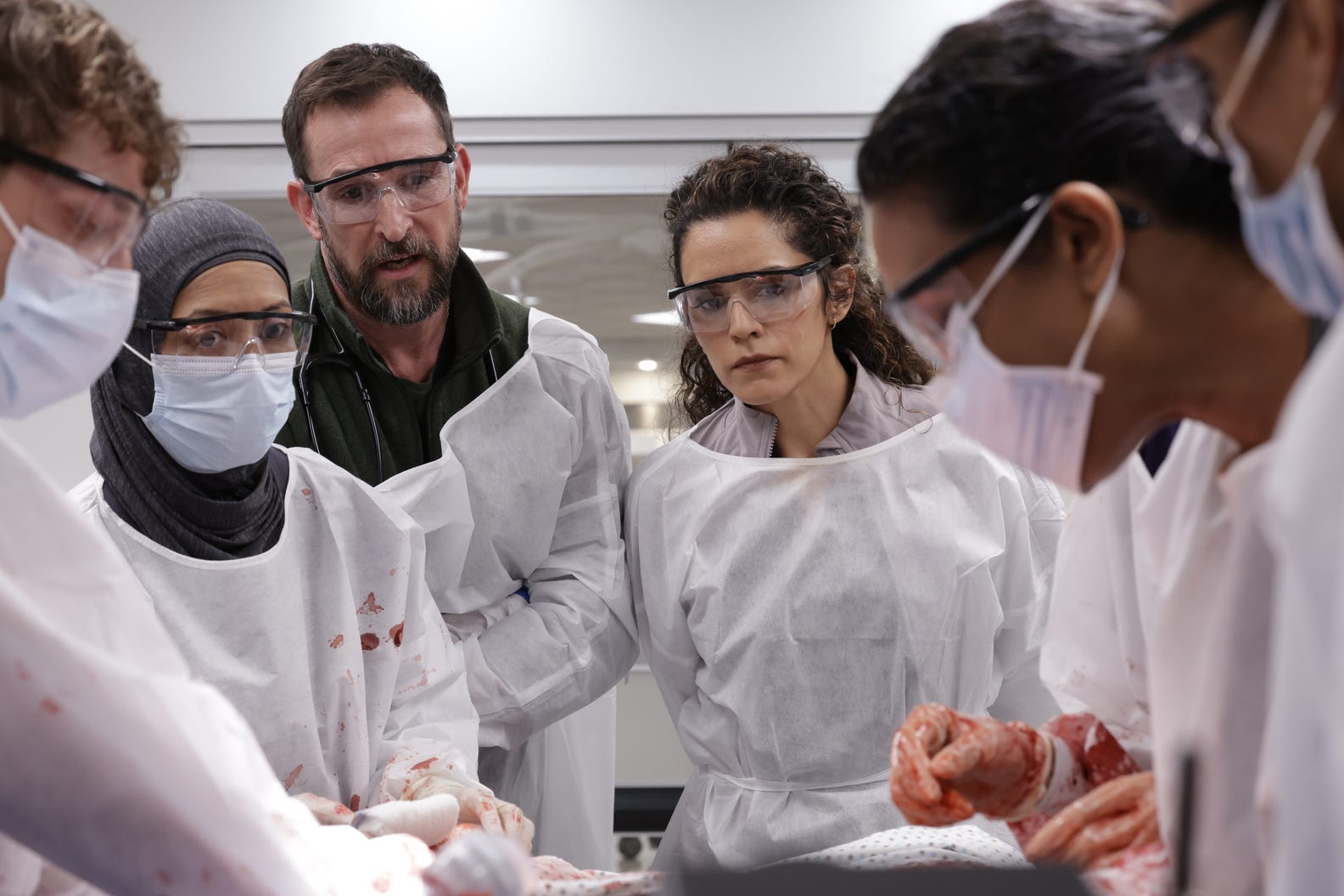
Dr. Robby enters the shift ahead of taking a long-overdue vacation, but the last shift before rest is rarely ever soft or forgiving, and he is not ready in the way he wishes. That is the sort of honest The Pitt excels at—this show is not interested in pretending doctors are anti-emotional machines. They bring all their mess with them and still do the work. Sometimes, the mess is their only motivation to keep doing the work at all.
Into this already loaded atmosphere walks Dr. Baran Al-Hashimi (Sepideh Moafi), a new attending from the VA. She is the kind of calm presence who makes you wonder what she survived before stepping into “the pitt.” Her entry is a refreshing challenge to Dr. Robby and his medical practices, bringing her own background into the mix:
a different training background
a different relationship to trauma
an unconventional philosophy about the advancement of medical practice
Dr. Al-Hashimi is composed, precise, and unintimidated by legacy or Dr. Robby. Her relationship with Dr. Robby doesn’t explode in fireworks; it’s subtler and sharper. Philosophy versus experience, technology versus touch, how to teach, how to lead, what medicine is becoming and what it should never stop being—the friction is intellectual and deeply human, the kind that doesn’t need to raise its voice to be loud. Their dynamic mimics many conversations being had in all walks of life, and The Pitt takes those fears and optimism and places it into two very dynamic—and strong-willed—characters and asks “now what?”
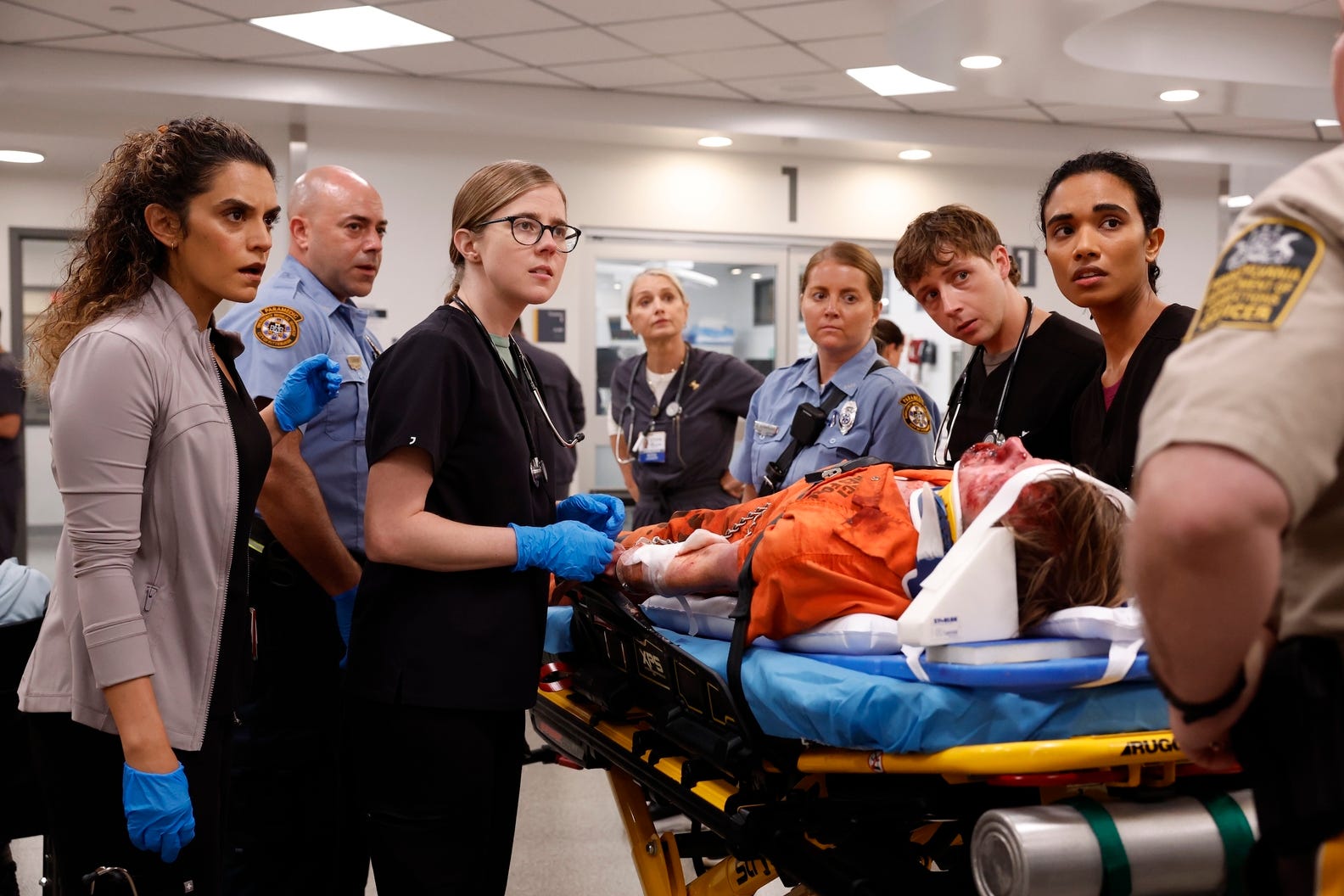
One of Season 2’s most unnerving arcs isn’t a villain—it’s a system failure. A network crash pushes the hospital into full analog mode: paper charting, runners, manual interpretation. It’s a reminder that modern medicine is built on technology, but held together by people—exhausted, brilliant, flawed people who have to keep going whether the system supports them or not. The Pitt doesn’t ask if the system will fail the workers. It asks what we do when the system fails the patients. It’s a living reminder that while technology is convenient, it will never be the heart of patient care—the people are.
And because this is The Pitt, there is still humor, superstition, and half-joking “what’s next?” energy that sits underneath emergency medicine like a drumbeat. One of the show’s greatest accomplishments is refusing to treat coping as a weakness. These characters make bets, make jokes, roll their eyes, then go back into trauma bays because if they don’t find the light anywhere, there would be nothing left to walk toward. This natural ease and transition between extreme trauma and light-hearted playfulness is what makes this hyper-realistic series so profound. The secret to its greatness is its commitment to being normal under not-normal circumstances.
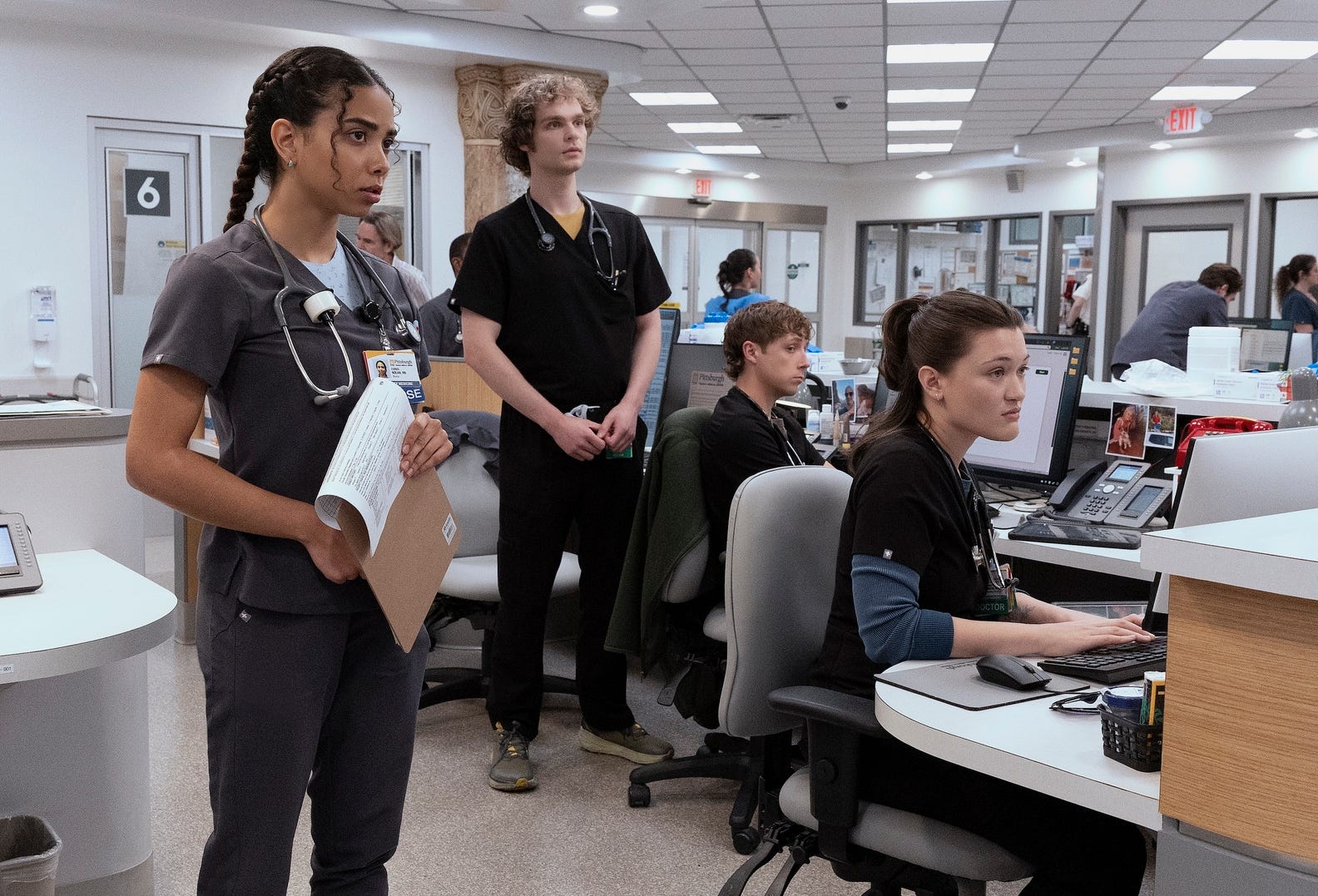
The residents return with the posture of people who know more now yet are smart enough to understand how much they still have to learn. Dr. Santos, Dr. Mel King (Taylor Dearden), Dr. Samira Mohan (Supriya Ganesh), and Dr. Dennis Whitaker (Gerran Howell) now have the responsibility of teaching while learning, painting an honest portrait of progression in a medical series. They carry new students beside their own uncertainty, and Season 2 lets them grow without sanding down what makes us love them in the first place.
Familiar faces ground the world even more: Fiona Dourif’s Dr. Cassie McKay, steady and wry; Shabana Azeez’s Dr. Victoria Javadi, who feels like she’s thinking two layers beneath what she says out loud; Shawn Hatosy’s Dr. Jack Abbot, all gravity and battlefield-tired heart. They feel less like returning characters and more like our favorite colleagues who we would change our own schedules to work with during busy shifts.
There is one notable absence, and the show handles it with humility instead of spectacle. Tracy Ifeachor’s Dr. Heather Collins doesn’t return this season—not because she disappeared or the story swallowed her, but because the writers honored something real. Residents finish. They move on. They go where jobs, fellowships, and their lives take them, often away from the facilities in which they trained. It’s the sort of realism medical television often ignores for the sake of a salacious storyline. Here, it feels right.
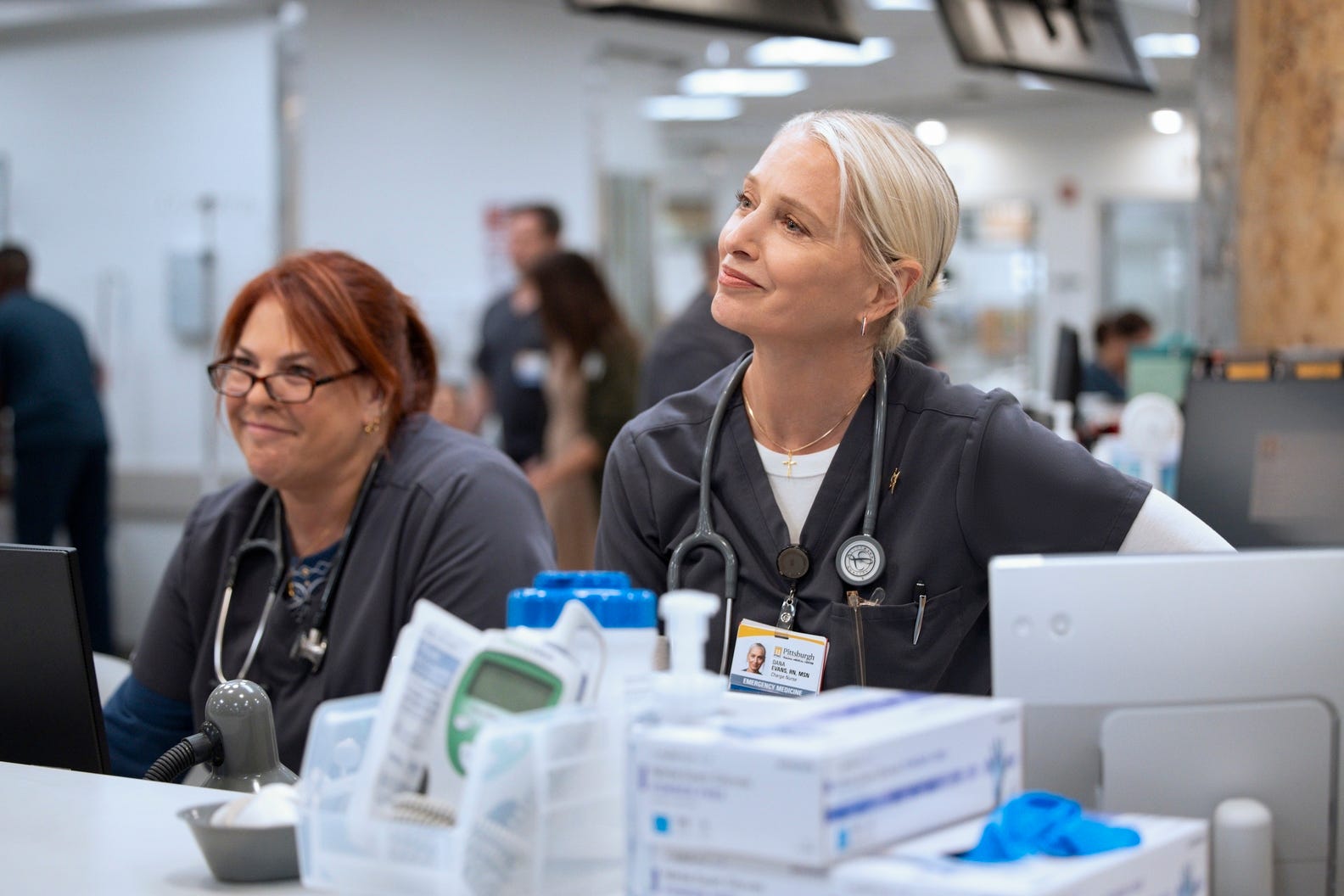
The Pitt has always been, quietly and insistently, a love letter to first responders and medical workers—scuffed, never easy, and imperfect. Tired, flawed, funny, brilliant, lonely, and loyal. Season 2 not only deepens this, it explodes across every episode. The show is less about what case comes through those doors and more about what the work does to the people who consistently show up to meet every demand.
Threaded through it all is the way the world outside the hospital never stays outside. The shadow of COVID-19 operations still haunts the hospital walls. Patients arrive frightened, impatient, sometimes violent, sometimes extraordinary, yet always in need. There is also a constant hum of AI and automation lingering like a question: what happens when the data gets louder than the people? Yet, the series doesn’t preach. It watches. It lets the audience wrestle right alongside the staff—multiple patients and multiple crises all at once. While the events of a shift are unknowing, one thing we do know is no one will walk away untouched.
The Pitt premieres Thursday, January 8, at 9pm ET only on HBO. New episodes will air weekly. Check out the trailer below.