


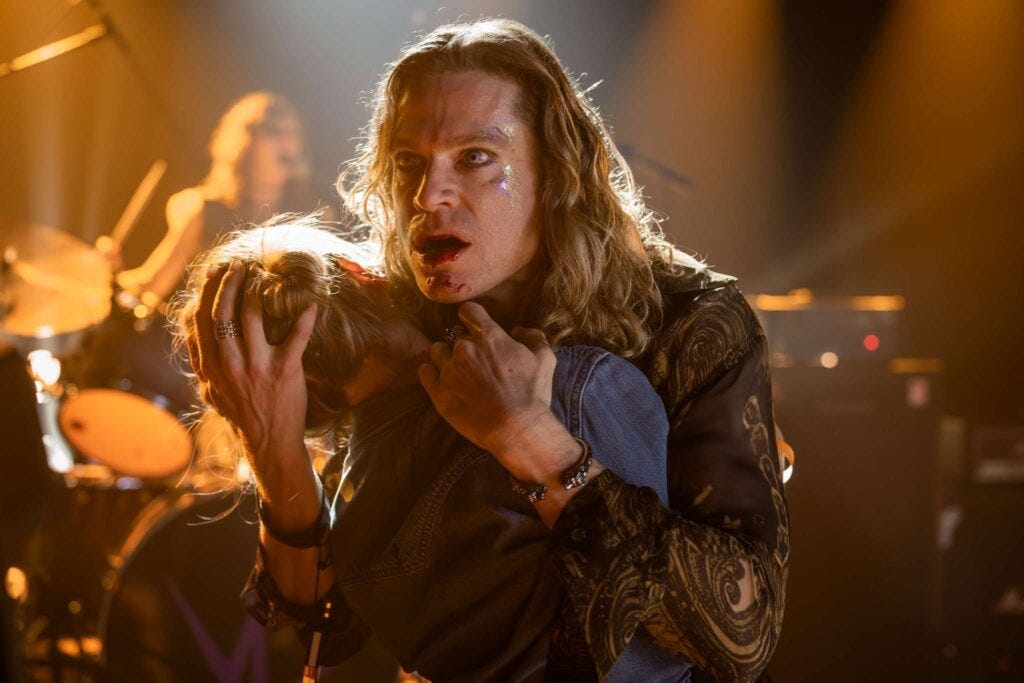
“Detroit” delivered Lestat to our screens in all of his bravado, seduction, and theatricality. But within the chaos lay something quieter, more fragile—a truth that constricts itself around his beating heart until he acknowledges its presence.
He is not as healed as he wants the people to believe.
“My songs are the story.”
This declaration echoes the entire feeling the season explores, and analyzed in my previous analysis, The Vampire Lestat Rewrites His Trauma Through Music. But “Detroit” reveals a fatal flaw in Lestat’s revision.
And it was on stage, in the middle of vampiric rage, where he realized that beneath the rock star persona, the endless performance, and the mythology of a vampire’s perfect life, he is profoundly alone.
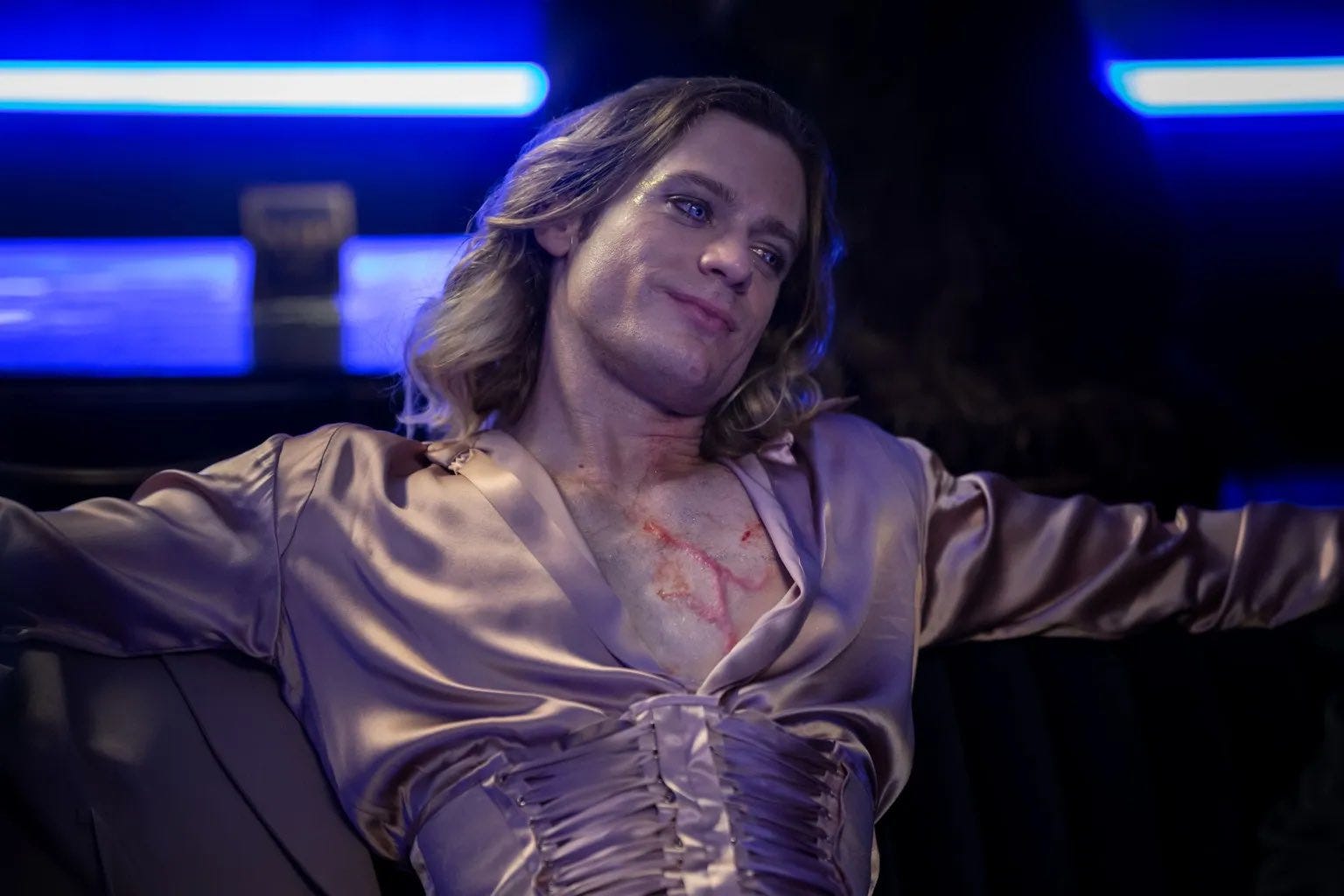
The Mask Slips in the Cover of Darkness
And nothing captures this loneliness more than his texts with ‘Toi.’
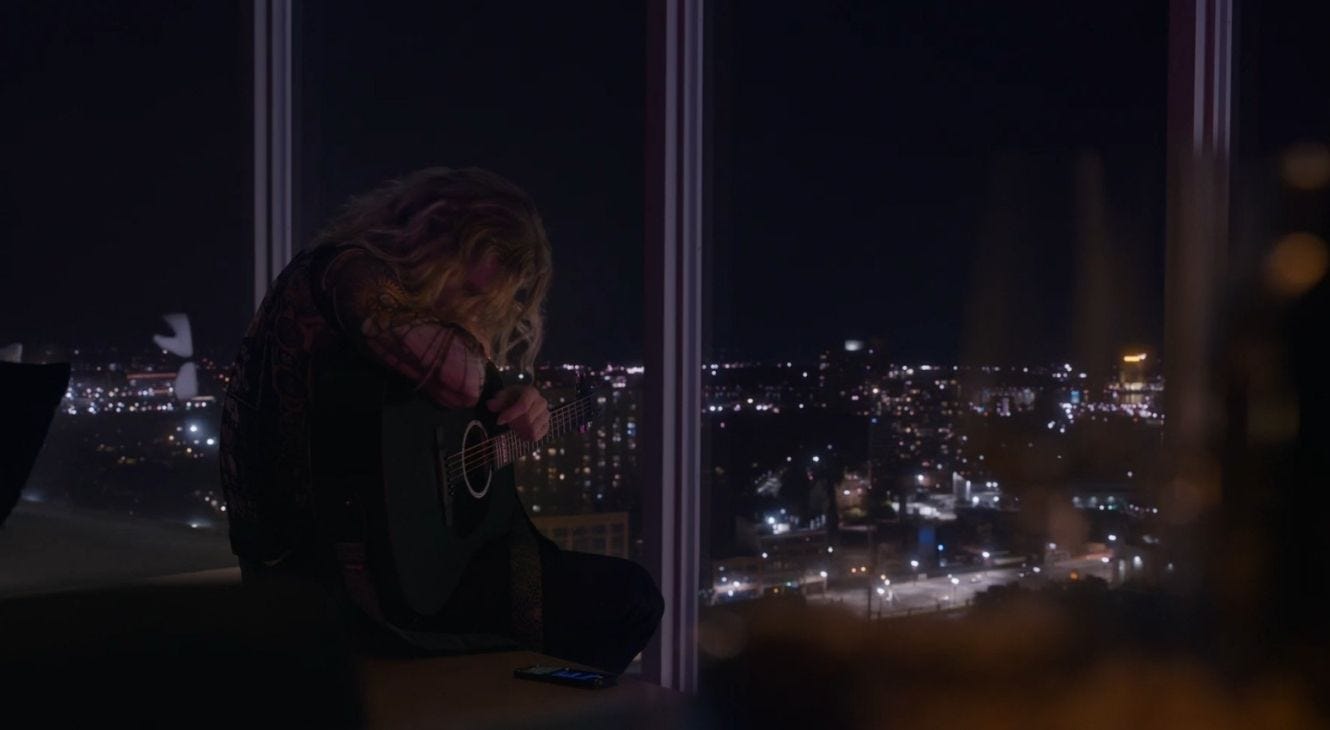
Throughout the episode, Lestat repeatedly reaches for his phone, texting the one person who feels like home. And at first, the messages are playfully distant. Careful.
Then the lights go out.
And for a brief moment, the mask cracks.
The darkness disrupts the performance.
And Lestat almost tells the truth.
Almost.
But when the lights come on, the vulnerability disappears and, along with it, the message. Instead, he settles on something akin to the mask he dons that aids his performance.
In the darkness Lestat becomes heartbreakingly human, relatable, and tangible, asking for help. But in the light, he preserves his dignity through distance and, instead, asks for company.
Asks for the thing he believes not only that he deserves but also is the limit of what others are willing to give.


The Cruelty that is “Almost”
That distinction becomes the central tragedy of The Vampire Lestat. At every “almost” confession, he retreats and presents the easiest parts of himself for a crumb of affection and attention.
And “almost” matters even more in the context of Loustat and their love story. Just as they were getting back to something gentle through modern courtship and use of electronic devices to strengthen communication, the release of" “Interview With the Vampire” twists the knife in Lestat’s deepest wound.
The publication, and Louis keeping his knowledge of its existence from him, forces Lestat to relive a devastating realization: the person he thought knew him best may have never understood him at all.
Or worse.
He understood and chose to only focus on all the ways in which he was a monster.
By the time “Black Licorice” cracks open his meticulously curated persona, the issue is no longer fame, music, or even the vampire world.
It is loneliness.
The songs have opened something inside him that he can no longer contain.
And for all of his talk about rewriting the narrative, “Detroit” suggests a painful truth:
The story Lestat is still trying hardest to rewrite is his own.
Kivonshe—founder of So There’s That—is a film & TV critic who explores compelling storytelling, fandom relationships, character psychology, and the impact of entertainment media through film reviews, episodic recaps, and in-depth theme analysis.