

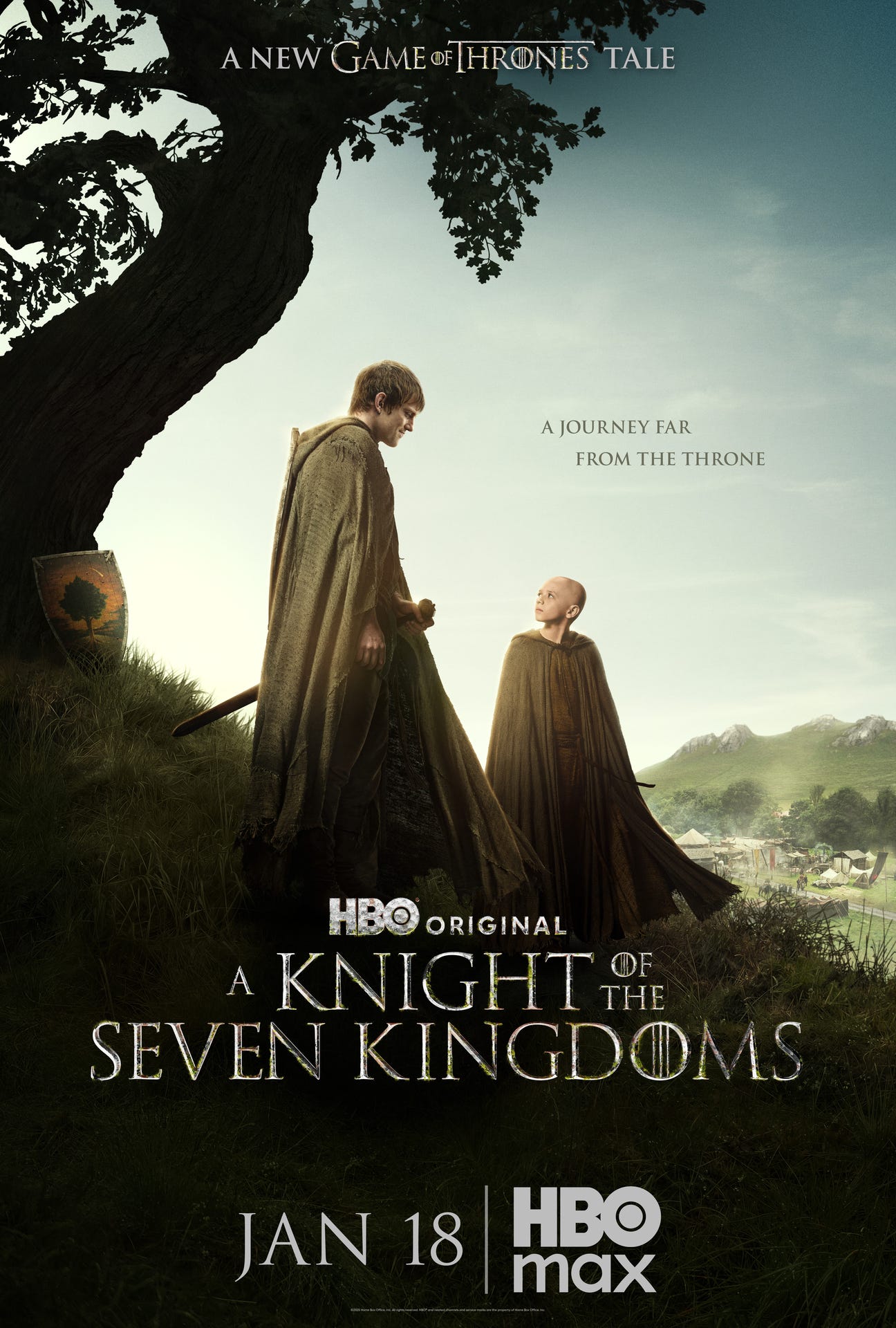
A smaller story with an even bigger heart, HBO’s A Knight of the Seven Kingdoms trades dragons for duty, arriving to our screens with an unenviable task: expand the world of Westeros without leaning on the spectacle that defined Game of Thrones. Set 90 years before the original series, this six-episode first season plants its flag in something intimate—a journey, a bond, and a question that feels timeless in this universe: what does it actually mean to be honorable?
Based on George R. R. Martin’s novella “The Hedge Knight,” and created by Martin alongside Ira Parker, the series centers on Ser Duncan “Dunk” the Tall (Peter Claffey) and his unlikely young companion Egg (Dexter Sol Ansell). Their relationship forms the emotional spine of the show—less master and squire, more older brother and stubborn (and sometimes innocently annoying) little shadow—forged through shared travel, witnessed violence, and the slow realization that survival in Westeros often demands more than good intentions.
Slow building has its purpose and its limits
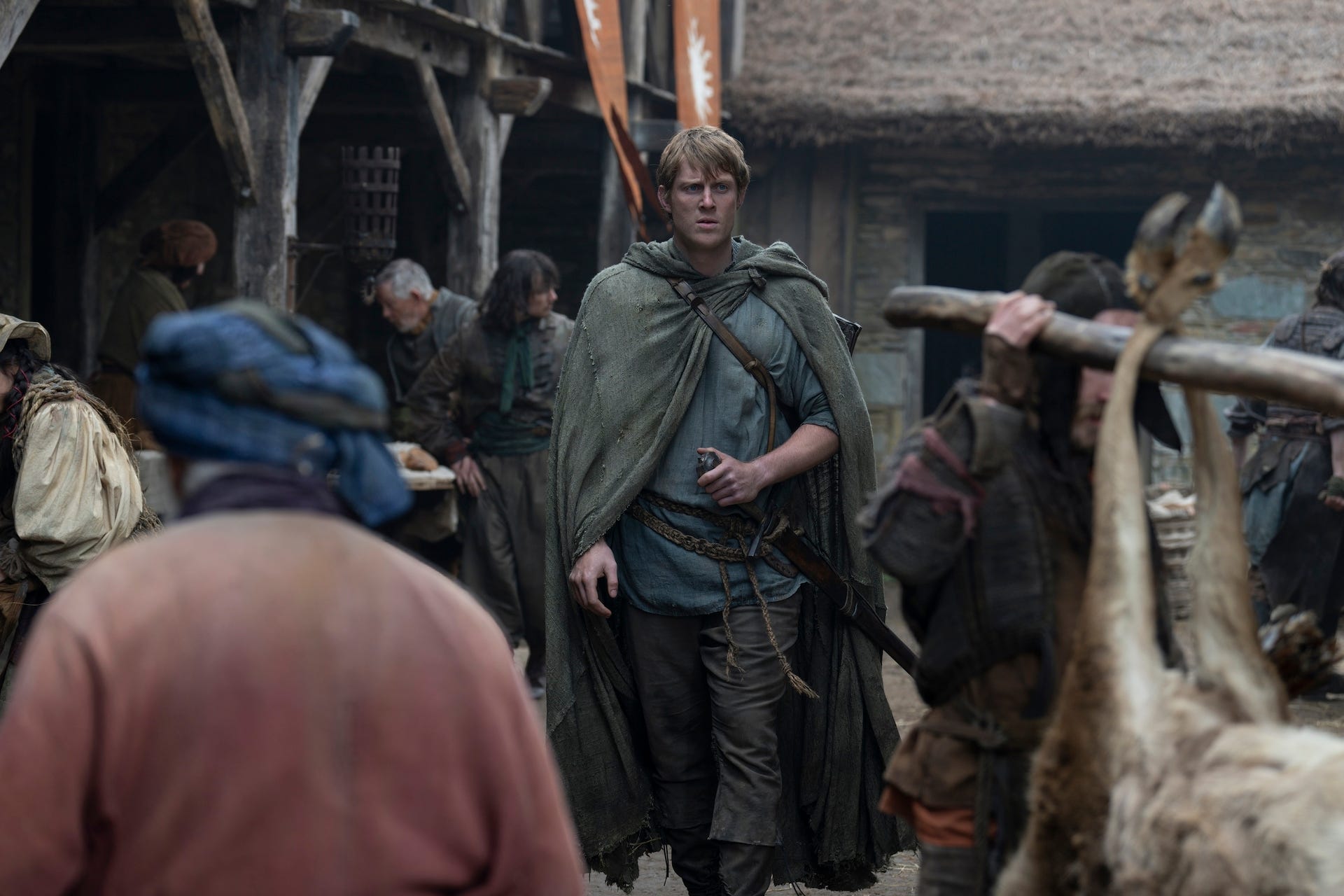
The first two episodes move cautiously slow, laying the groundwork for Dunk and Egg’s dynamic to take root. Dunk begins the story alone, shaped by grief and guided by a simple moral compass. When Egg enters his life, it isn’t destiny so much as it is mere coincidence—the kind that goes unquestioned, yet changing every outcome in its wake.
By episode 3, the series finds its footing. The stakes rise, danger becomes unavoidable, and Dunk’s sense of responsibility sharpens. He’s a character defined not by cleverness or grandeur, but by decency. There’s a faint echo of a future Ned Stark here—not in lineage, but in spirit. Dunk isn’t flashy. He doesn’t perform heroism. He simply tries to do the right thing, even when it costs him.
That grounding is both the show’s strength and, at times, its limitations. As a half-hour drama with only six episodes, the pacing feels uneven. The final three episodes are gripping and information-dense, but they arrive almost abruptly, leaving little room to sit with the consequences of what unfolds. The emotional payoff is there—it just doesn’t get the breathing room it would receive if all six episodes were one-hour long.


Comedy, conflict, and contrast live where brutality once reigned
One of the series’ most pleasant surprises is its tonal balance. There’s humor here—dry, situational, character-driven—that never undercuts the stakes, but adds relief to them like an accent mark. As Claffey explained in an October 2025 NYCC interview with Big Gold Belt Media:
“We knew pretty early on that we were gonna be leaning into the comedic aspects of things…it works and you still get your political conflict and gory violence and all these things as well.”
That contrast is key. The comedy is earned. And when the story turns dark, it does so without apology—highlighting the aspects we love about its flagship series. Ansell put it bluntly in the same interview:
“It’s also probably the most disturbing thing I still have been in.”
These two sentiments—levity and unease—coexist throughout the season, capturing exactly what A Knight of Seven Kingdoms aims to be: approachable, unsettling, and emotionally honest.


The Song of Fire and Ice reigns on
A special nod to Rami Djawadi, whose score subtly weaves a familiar “A Song of Fire and Ice” motifs into something gentler, anchoring this smaller tale to the giant that is its predecessor without overwhelming and overshadowing its own identity. It’s not just nostalgia bait (because that’s why you’re here, right), but connective tissue to tie the worlds and the tales together.
With a Season 2 renewal already announced ahead of its debut, this first season feels as though it serves partly as a litmus test—gauging appetite for a quieter corner of Westeros to an audience who lives and loves to compare. While they are related, functionally they are not the same. However, the structure of the series compared to its predecessor may be the determining factor for its success beyond Season 2. If the show continues a half-hour format, a longer episode order would be ideal to allow audiences more time to bond with Dunk and Egg the way they deserve, the way the source material intended.
Still, A Knight of the Seven Kingdoms succeeds where it matters most. It reminds us that heroism in Westeros isn’t always about power or prophecy. Sometimes, it’s about choosing kindness when cruelty would be easier—and carrying that choice forward, even when you’re unsure if the world will reward that same kindness in return.
A Knight of the Seven Kingdoms premieres Sunday, January 18 on HBO and HBO Max at 10pm EST, airing weekly until the finale. Check out the trailer below.
© Kivonshe | So There’s That Podcast
Original editorial commentary on film and television. All rights reserved. Reproduction or redistribution without attribution is not permitted.