


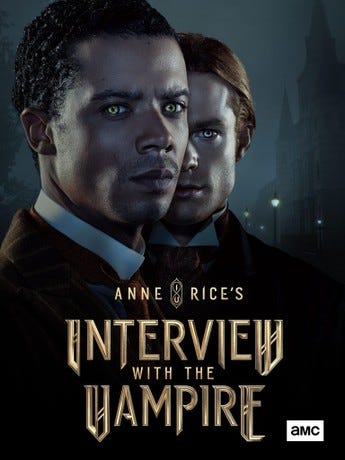
Sam Reid and Jacob Anderson don’t just act. They turn emotion and expression into an unspoken physical language that conveys more than words could ever capture. And in AMC’s gothic epic, posture and presence do the talking long before anyone utters a single word.
There’s a particular kind of performance that doesn’t announce itself. It doesn’t beg for attention or swell with monologues. It lives in the shoulders, the spine, and the way the body occupies—or refuses to occupy—space. In Anne Rice’s Interview With the Vampire, that kind of performance becomes the backbone of the storytelling, carried with devastating precision by Jacob Anderson as Louis de Pointe du Lac and Sam Reid as Lestat de Lioncourt.
They saw the acting bar and proceeded to tear it off its hinges.
What unfolds across Seasons 1 and 2 is not just character development—it’s physical evolution. Bodies as text. Bodies as memory. Bodies as battlegrounds—where shame, desire, grief, and survival fight for dominance. The costume and makeup departments aid in these transformations like accent marks—baggy silhouettes, sharpened tailoring, haunted faces—the impact of the their combined purpose coming to life in how Anderson and Reid effortlessly move within them.


A man in motion, running from the shadows of himself
When we meet Louis in Season 1, his status is clear. He is the man in charge, a man with money, influence, and a carefully curated reputation. But his body language betrays him at every turn.
His shoulders are perpetually hunched under the weight of:
family expectations
legacy
inherited debt
financial and societal ambition
His clothing is intentionally baggy, creating the illusion of dominance—“big man on campus”—while his posture leans forward like a sprinter at the starting blocks: body poised for motion chasing the next venture, the next solution, the next way out of the trappings of Jim Crow.
He is exhausted.
The makeup tells one story—haggard looks, bags under the eyes—but Anderson does his best to hide Louis’ burdens with effortless smiles, a smooth drawl, and a lethal tongue that flirts with danger without ever crossing the line. But every ounce of his bravado oozes depression: his darkest thoughts tap dancing at the edges of his mind, never to be acknowledged because stopping would mean total collapse.
Then arrives Lestat.
The world slows down when he enters a room
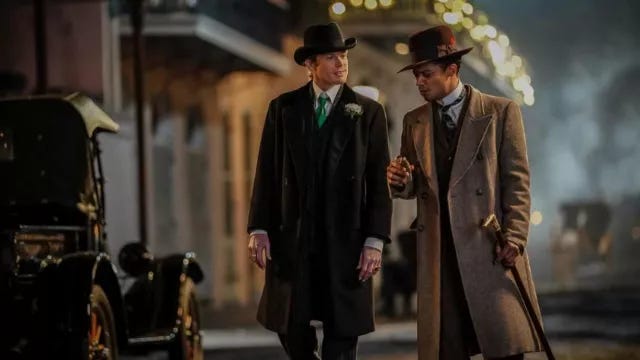
Lestat de Lioncourt enters Louis’ life as a disruption—a French foreigner with an irritatingly exotic accent and questionable manners. The clashing of the native French attitude with Louis’ French-Creole roots is a constant tug-of-war that feels clumsy until it suddenly…works. What begins as a battle of wits becomes a choreography of long glances, soft smiles, and unadulterated yearning.
And Louis slows down.
His walk changes. The sprint becomes a long stride. His shoulders are pulled back. For the first time, he isn’t pretending to belong—he believes it. Having someone pour into him, choose him, and see him fully for the first time alters his physicality. Even the bags under his eyes soften (he was tired, okay).
But that ease evaporates around his family. Bringing his unofficial-official boyfriend to dinner in a hyper-religious household—and he’s French—is tension in its purest form. His body becomes a battlefield again: the familiar and lifelong war between his duty as a son and his duty to himself.
And the tipping point, of course, is Paul.


Depression is the shadow you can’t pray away
Paul’s death doesn’t arrive gently. It is abrupt, blasting the doors open for depression to bolt in like a marching band—settling its spindly roots inside Louis with the weight of his overwhelming grief, responsibility, desire, and shame.
It’s too much.
But after accepting the Dark Gift, Louis’ body transforms. No more sleepless boyhood exhaustion. His walk carries the swagger of his vampiric bloodline, time stretching endlessly before him. He moves slowly, deliberately, stalking the earth as he absorbs the enormity of what he’s become.
But where you’re turned is where you’re cursed to remain.
Decade after decade, Louis fights demons suspended in time within his mind while his body remains (marginally) unscathed. Depression turns septic—poisoning and fracturing his body language, hollowing him out. Anderson folds inward as Louis—shoulders hunching again, steps faltering. He is dead (or undead), yet somehow looks like he’s died a thousand more times over.
By the end of Season 1, after killing his maker, Louis exists in a state of hyperkinetic catatonia: he must keep moving, or he will fall apart for good, forever trapped in his misery and endless despair.


A dream is a temporary escape; it is not reality
Season 2 introduces one of the most audacious physical performances on television: Dreamstat. This manifestation of Lestat—born from Louis’ anger, grief, blame, and regret—is not Sam Reid playing Lestat. It’s Lestat playing Louis’ emotional support ghost of a (former) lover—a version Reid has spoken about during interviews—adopting Louis’ walk and mannerisms, ensuring the audience never mistakes Dreamstat for an independent presence. This Lestat is imagination in the flesh—Louis’ darkest sins and strongest desires wearing his face.
Dreamstat moves like an intrusive thought: bold, uncoordinated, and invasive. During the bar scene with Armand, Dreamstat appears with a mocking rendition of “Come to Me,” while Armand drones on, grating on Louis’ sanity like an out-of-tune key. His movements are deliberately too much and oppressively too close, even though he’s physically far away—sinking his phantom fangs directly into Louis’ psyche.
The camera never fails to amplify these moments. “Fishbowl” effects. Intimate framing. Lestat always at the forefront of Louis’s mind—literally and figuratively.
As Louis begins to accept Dreamstat as a confidante, both bodies soften. Louis moves easier in Paris. So does Lestat, their performances a testament to Anderson and Reid’s shared commitment to physical storytelling across time and emotion.


When it all falls down
During the trial (we won’t lament; it’s traumatizing enough), Lestat enters cloaked in the arrogance others have painted—but there’s a magician’s sleight of hand at work. He’s fluid and grand, distracting the audience from the trick within the script.
Later, in Magnus’ tower, silence takes over. Body language becomes the only dialogue. Lestat is physically worn—he’s annoyed, unamused, and postured close to a state of vulnerability. Louis, fresh from vengeance, struggles to hold power in a room where he is both the youngest and the weakest—using his declaration of love for Armand as both sword and shield, positioning his body for emphasis and intended effect.
That physical tension bleeds into modern day Louis, the narrator. With Daniel Molloy sharpening the vision of his recollection, Louis cycles through physical moments of ease, arrogance, wavering, relief, and finally, disbelief—culminating in a 2-season masterclass that catapulted Anderson’s performance as Louis into the top 10 of everyone’s best actor list.
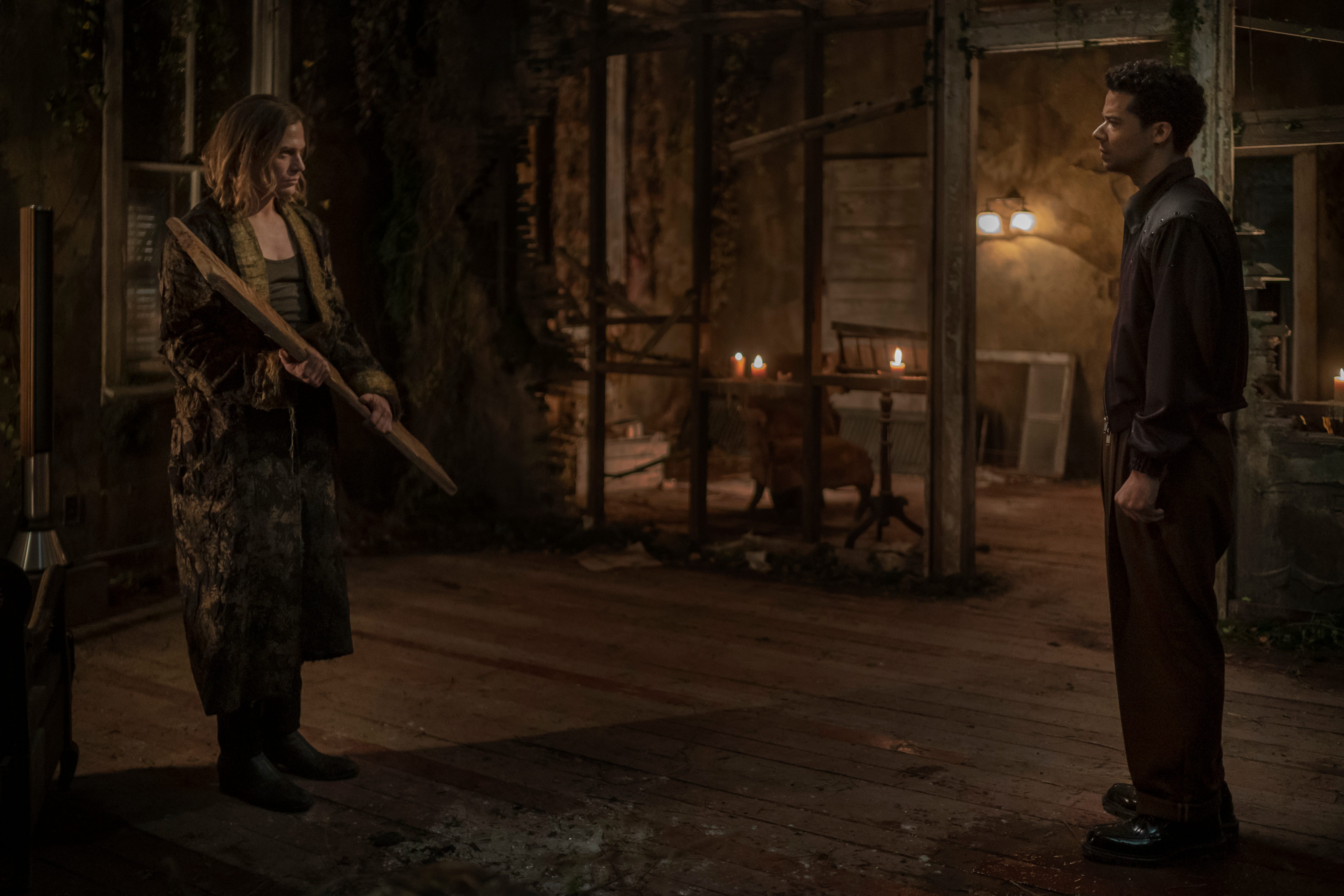
When we return to Rue Royale, both men are unrecognizable. Lestat is revealed to be a broken thing, a version of himself that never existed in the narration of those who held his story in their hands. And Louis, emotional but grounded, knows himself now more than ever.
It is quietude. It is familiar.
It’s home.
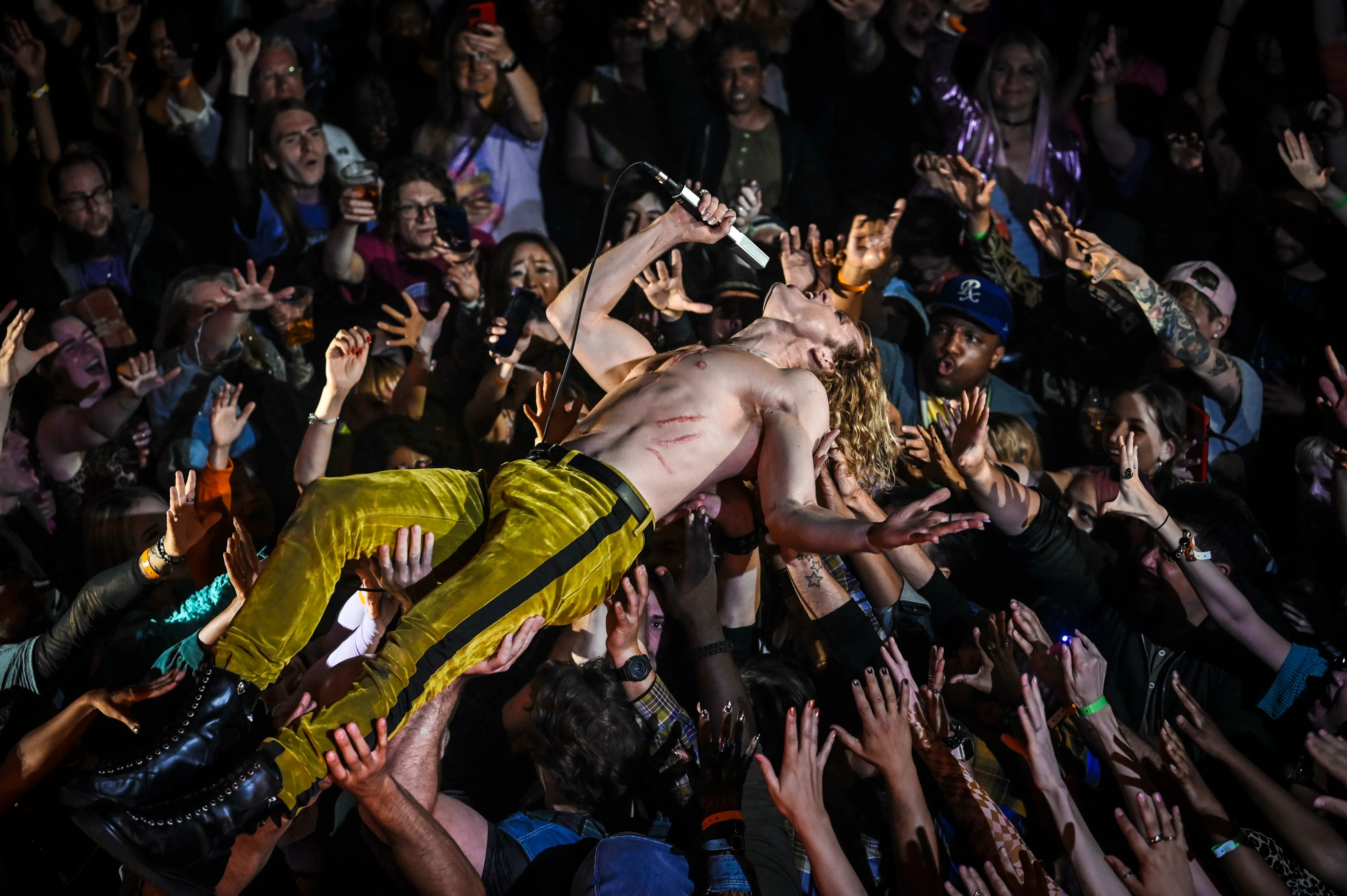
“Hot Brat Summer”
Based on trailers and teasers, the Lestat ahead of us is one we think we know—and yet have absolutely no idea about the drug-induced ride we’re in for.
His body language is uninhibited. Unhinged. Chaotic. Sloppy.
It all masks demons we’ve yet to explore, finally filtered through his songs, his haze, and his point of view.
Louis, meanwhile, appears hardened—a subtle return to his New Orleans boss energy, except this time it is no longer a defense mechanism. This physical change imposing and extremely dangerous. His character direction, teased by writers and showrunners Hannah Moscovitch and Rolin Jones, hints at the pure destruction he will leave in his wake—and it has us on the edges of our seats.
But even in the trailers and short clips, the level of physical acting speaks to Anderson and Reid’s hunger for the craft. While major award bodies have yet to fully recognize them, what they’re doing will be studied by all who follow in their footsteps.
Every deliberate choice. Every accidental Louis and Lestat possession. However they move, we’ll be watching.
The Vampire Lestat arrives Summer 2026. Sharpen your fangs.
For More Anne Rice Immortal Universe Character Analysis
Kivonshe—founder of So There’s That—is a film & TV critic who explores and investigates compelling storytelling, fandom relationships, character psychology, and the impact of entertainment media through film reviews, episodic recaps, and in depth theme analysis.