


NOTE: This article contains spoilers. Read at your own will.
The Prodigal Father
Teddy.
Alive, breathing, and well.
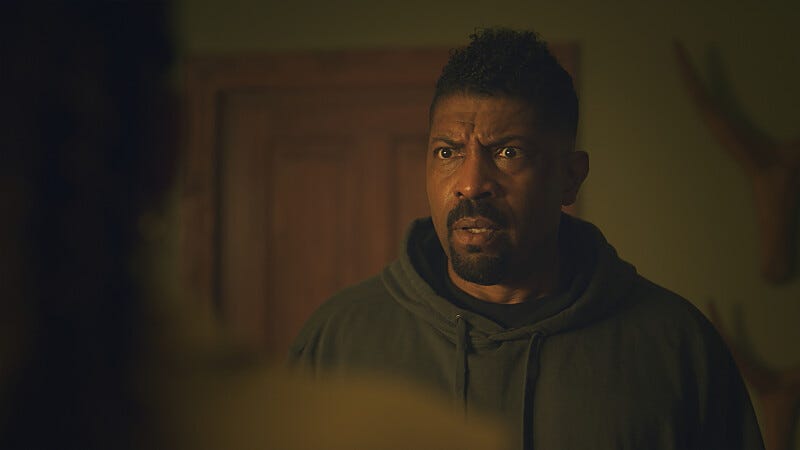
After one and a half seasons of being burdened with the consequences of his father’s illegal career choices, Joe finally comes face to face with the source of his problems in Average Joe Season 2 Episode 7, “Family Reunion.”
In Episode 6, “Blind Spot,” Joe turned himself over to Sipho with a recon mission to get his sister safely out of the compound and all of them (well, maybe except for Cathy) out of the country.
This becomes foiled when he finds himself locked in a cell with no clear lines of communication to Leon and Touch.
But his incarceration came with a revelation he couldn’t have predicted; even his life depended on it.
Teddy is alive.
And suddenly, Joe’s suppressed rage has a physical target.
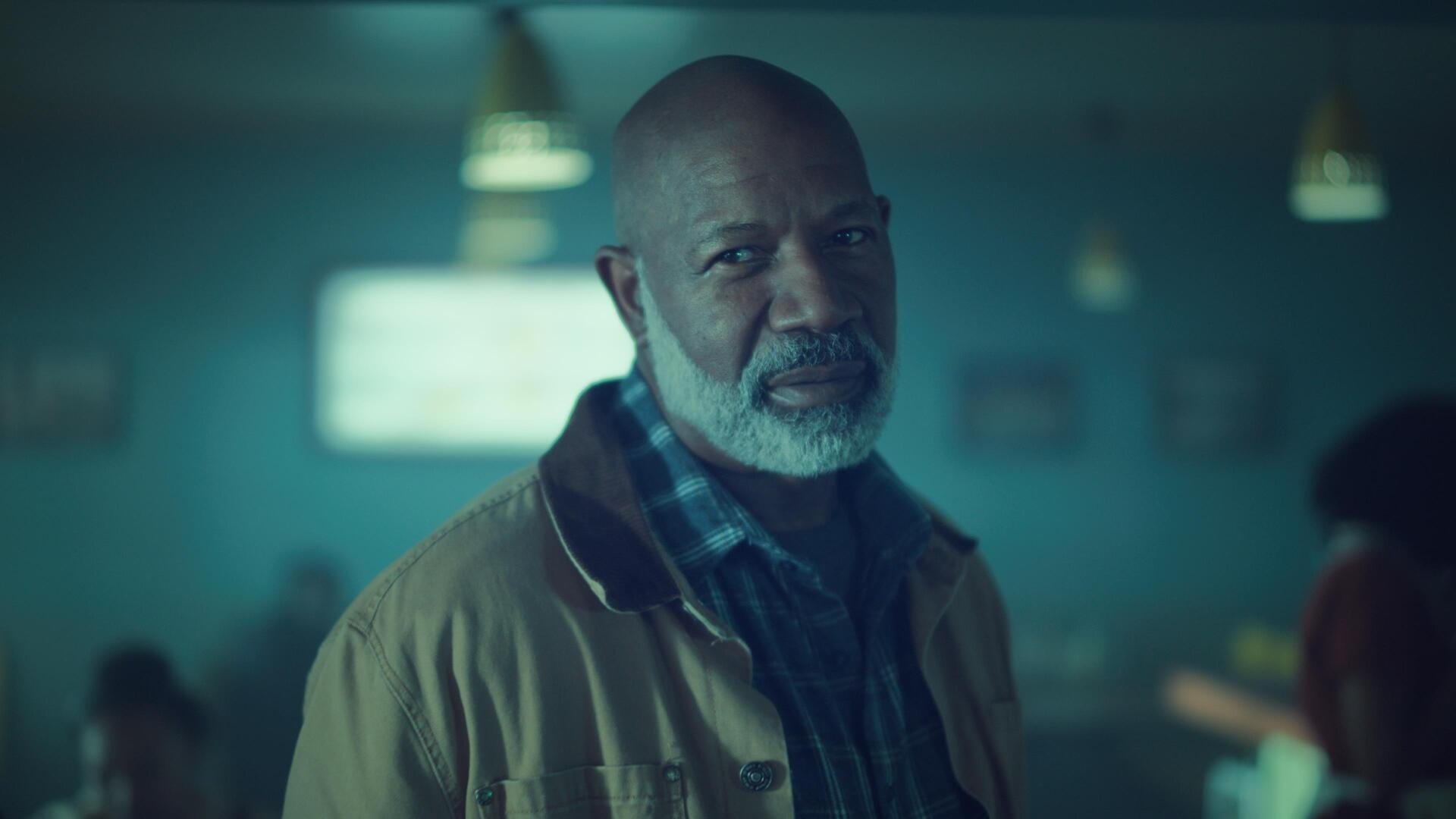
In a flashback, Teddy, played by Dennis Haysbert, sits with a more reserved Joe—a conversation that feigns normalcy but exposes the depths of Joe and Teddy’s relationship.
Joe feels small.
Meek.
And childlike.
Given what we know of his strict upbringing from Season 1, we see the power dynamic on full display in the diner.
Teddy isn’t just a figure that’s larger than life.
He is larger than life.
It’s within this flashback that Teddy casually brings up the buck head that, unbeknownst to Joe, contains millions of dollars.
What once appeared innocuous now reveals Teddy laying the groundwork for his disappearance long before anyone suspected he intended to die.
But the manipulation doesn’t end there.
“I love you son.”
It sounds genuine.
It comes out like a fall breeze.
Yet Joe is rendered momentarily speechless from the intrusion of it, as if he’s never heard it at all.
“I love you too, Pops.”
Joe’s inner child becomes present in the scene, unknowingly vulnerable to the events that lay ahead.
Every Teddy defense, every scoff at Imani telling Joe he was alive, and every “almost” respect for his deceased father now shatters under the weight of the truth of Teddy’s existence.
The Son Who Fights Back
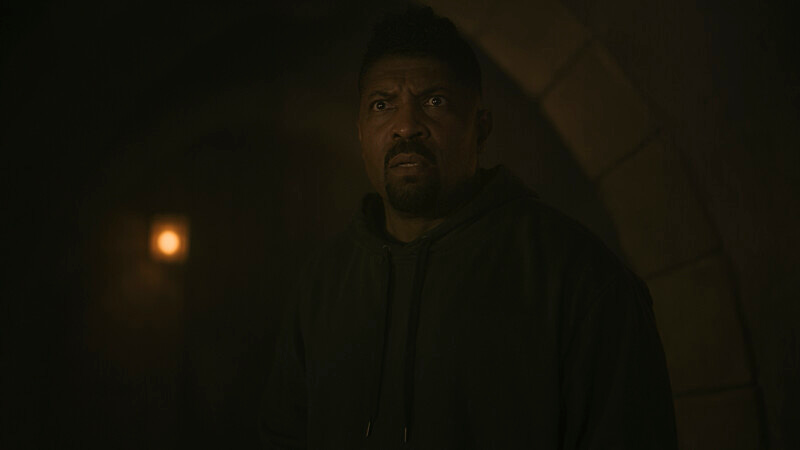
“You think I’m still scared of you?”
Father and son.
Maker and made.
Teddy and Joe.
It all boils down to a confrontation that is long overdue—not just for the mess Joe is in currently but for the boy who sought his father’s love just to be given less than what he deserved in return.
“You think I won’t f— you up for what the f— you did to my life, to my family?”
Finally, the crux of the entire series is exposed in a single combative question.
Teddy destroyed his family.
Joe’s family was destroyed by Teddy’s choices.
And now Joe’s chosen family is fractured because of Teddy’s schemes.
Family, for Joe, is everything he had that separated him from being his father’s son.
But it is now the very thing that is heading toward the very outcome he tried hard to avoid.
Joe can’t change the family Teddy gave him.
But Imani, Leon, and Touch are the family he chose and built himself.
Allowing Teddy to destroy them would mean letting his father take something from him one final time, and Joe refuses to allow this version of his family to be consumed by Teddy.


Another man whose present conflict with family determines how he operates is Detective Akinyemi.
In Episode 6, Akinyemi found Phyllis and Imani at Jamila’s house and brought them into custody for questioning.
But the image of her dead in front of him, alongside the bodies piling up on this case, continues to pull forth his inner demons.
A father whose profession led to an inheritance his son didn’t ask for.
A son who lost his life because of it.
Driven by his need to reconcile not being able to change his son’s fate, he makes a critical mistake that lands him, Phyllis, and Imani in Sipho’s hands.
In “Family Reunion,” everything collides at Sipho’s compound, and the definition of family takes a different appearance.
Leon versus Cathy—a family fractured by lies and ambition.
Teddy versus Jamila—a family curated as a means to an end to acquire power.
Imani versus Teddy—a daughter who has yet to realize how the woman she loved most was merely a blip in Teddy’s criminal ascension.
But new family alliances form as Phyllis and Touch’s season-long yearning finally finds acknowledgment between them—a shared moment that ends with Touch bringing in Joe’s newly acquired family.
Ahmale.
A Double-Edged Sword
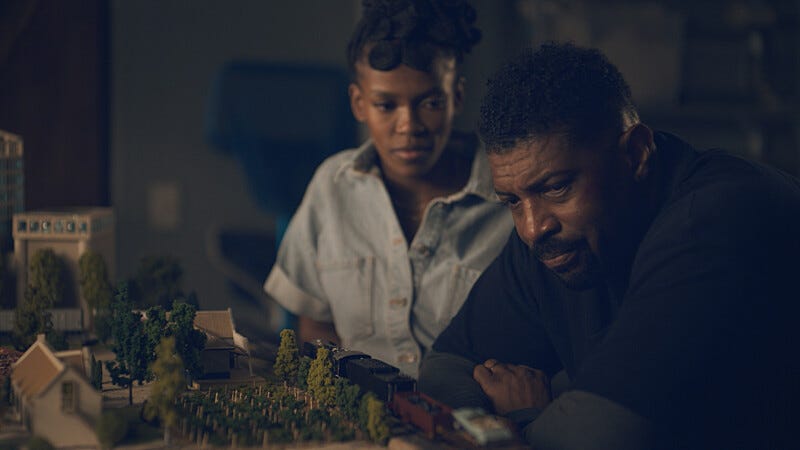
Teddy’s transactional approach to relationships inadvertently appears as the very connection Touch uses to try to get everyone out of the compound safely.
A blind spot that Teddy won’t see coming because Teddy believes Joe is like him.
But unlike him, Joe values those he calls family and doesn’t discard them at the slightest inconvenience.
What he did for Ahmale and her people may be the difference that makes her choose to show up for Joe.
Not because of Teddy, but because of who he already proved to her to be.
But Teddy knows something about his son too.
He sent Joe the picture of his wife and daughter knowing Joe would come to Cape Town. He knew discovering he had a sister would make him stay.
Now Teddy has positioned himself as the one parent left Imani wouldn’t leave without. And he knows Joe won’t leave without Imani—playing on his wounds at already losing his wife and daughter.
“You won’t leave without her, which means you won’t leave without me.”
Teddy turns the very thing that separates Joe from him into his final act of manipulation.
Family.
Joe may want to leave Teddy behind, but saving Imani now means saving the father who destroyed them both.
By the end of Episode 7, Joe’s fight is no longer simply about getting his family out alive.
It’s about deciding whether or not Teddy is a part of the family he’ll choose to save.
Are you restless about the Average Joe Season 2 finale? We are too. Subscribe to get an analysis sent directly to your inbox.
Joe’s Family Tree
Kivonshe—founder of So There’s That—is a film & TV critic who explores compelling storytelling, fandom relationships, character psychology, and the impact of entertainment media through film reviews, episodic recaps, and in-depth theme analysis.
© Kivonshe | So There’s That
Original editorial commentary on film and television. All rights reserved. Reproduction or redistribution without attribution is not permitted.