

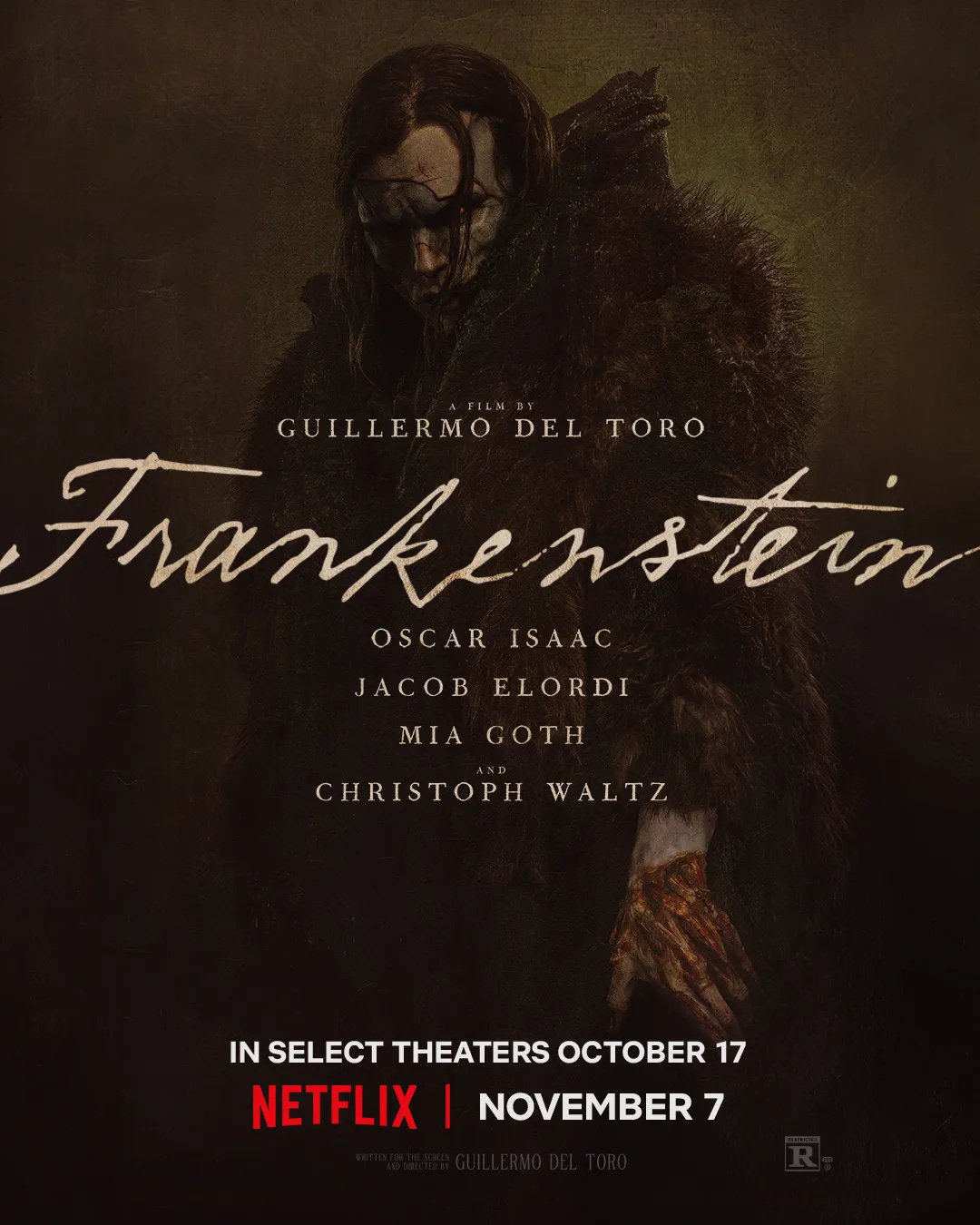
In the behind the scenes documentary of Frankenstein, Guillermo del Toro stated that as he gets older and more experienced in directing and filmmaking, he would like to take more risks. Based on the critic reviews, audience reviews, and the 33 million views on Netflix, Frankenstein—his passion project—was a risk with indescribable reward. Guillermo del Toro’s Frankenstein is a film adaptation of Mary Shelley’s novel that follows Victor Frankenstein, a scientist with an enormous ego who wishes to defy death through creation. While Mary Shelley’s novel focuses on themes of ambition, the cost of scientific breakthroughs, and consequences of extreme isolation, Guillermo’s film highlights compassion, forgiveness, and the desire for affection.
Starring Oscar Isaac as Victor Frankenstein, Mia Goth as Elizabeth, and Jacob Elordi as the Creature, del Toro weaves a beautifully heartbreaking 2-part tale of brokenness-begetting-brokenness through Victor and the Creature’s relationship. While the nucleus of the film is the father-son/creator-creature relationship, del Toro goes one step further in wrapping this tale in a kiss of love, a kiss of remorse, and a kiss of surrender.
The Cost of Ambition
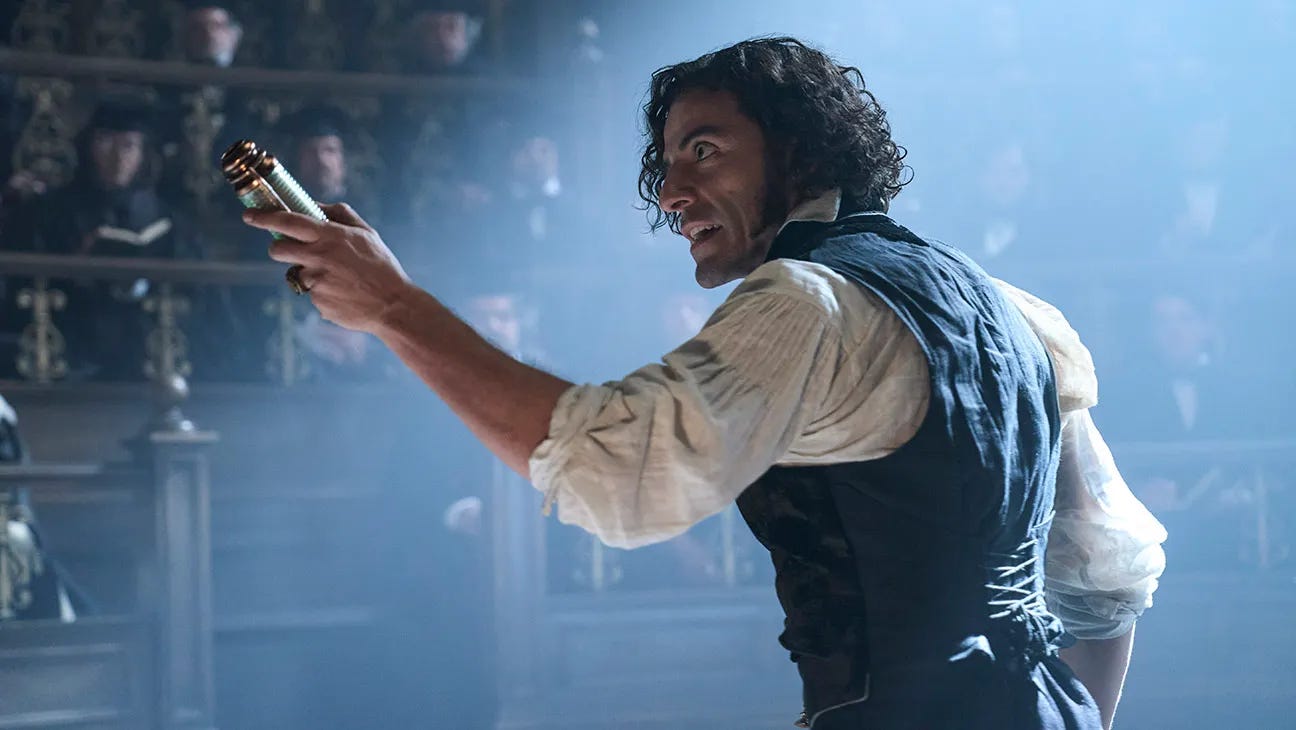
In part 1 of the film, we meet Victor as a young boy who is highly intelligent but longs for love and acceptance from his father, Leopold (Charles Dance). There is a small reprieve of happiness through the softer moments with his mother Caroline, also played by Mia Goth, but upon her death, Victor blames his father’s inadequacies as a scientist for failing to save her. From there, he vows to be the greatest scientist in the world. This leads him down the path of pursuing science that aids in the reanimation and creation of the human body after death. His life’s work culminates in the creation of the Creature.
Oscar Isaac delivers a gripping performance, rooted in unresolved (and unrecognized) trauma that snatches the audience by the heart and peels it back piece by piece in extreme agony. What shines the most in his portrayal is Victor’s insistence on telling everyone that he is “good” while committing the most awful acts toward the Creature, his brother, Elizabeth, and, worst of all, himself. Victor is a beacon to what happens when a broken human tries to create life with the intentions to raise their child differently than they were raised, only to realize they perpetuate the same horrid acts—lacking the tools and knowledge to do anything but cause the same pain and destruction.
One of the key points of Victor’s self-delusions is the beginning of his own tale as he tells the Danish captain “some of what I tell you is fact, some is not, but it is all true.” This speaks to what I like to call “parental amnesia,” where an abusive parents seeks to tell their side first, coloring their abuse and disguising it as frustration and failure rather than the truth: neglect and disgust. Even in Victor’s own retelling, he cannot fathom that his behavior was motivated by anything other than goodness and the advancement of science, painting the Creature’s behaviors as more violent to make his own look like a simple push in the sandbox. Even in these horrors, Isaac’s masterful performance as Victor Frankenstein still manages to make you seek an apology just as feverishly as you seek retribution.
You Were Made for This
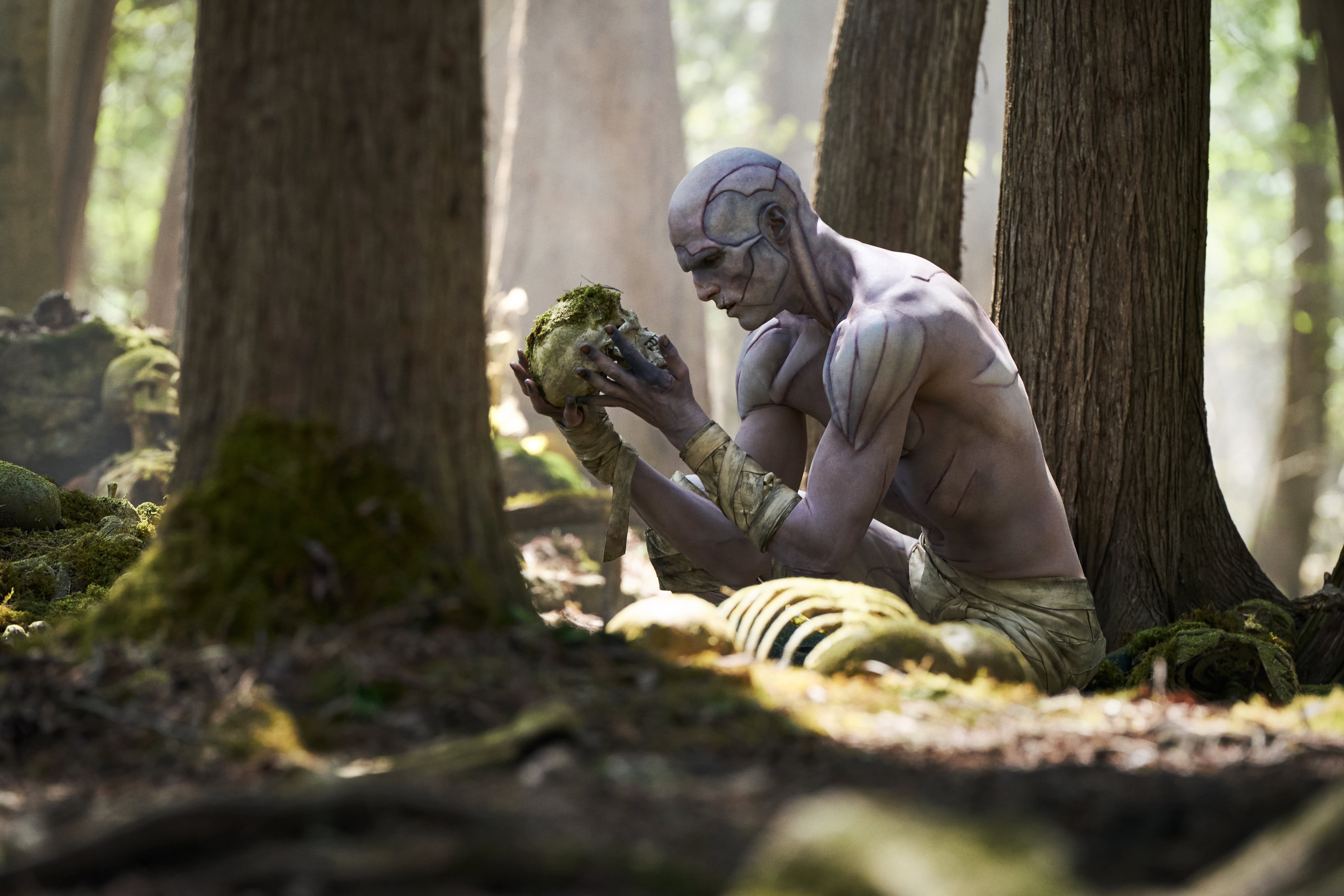
“This was on the list of impossible dreams,” a statement Jacob Elordi made to Josh Horowitz on Happy, Sad, Confused. Well Jacob, as Lestat stated in his first meeting with Louis “seul l’impossible préfère l’impossible.” For many years and through many adaptations, the Creature was a simple monstrous amalgamation of fallen men—an inarticulate giant with no autonomy nor thoughts of his own, popularized by the 1931 film. Although subsequent adaptations sought to grow the character, no other performance has risen to the task of playing him as a fully realized being—who Mary Shelley described as possessing deep emotional depth—until Jacob Elordi.
We meet the Creature (who I affectionately call Sweetie) after a stormy night wrapped in soft cloth and layered in smooth marbling skin; stitched together in the signature del Toro way that instantly makes him the most beautiful monster ever seen. In his first interaction with Victor, he exudes the behaviors of an infant with a singular desire: affection. This moment is punctuated by Creature’s instinct to embrace Victor during their first father-son bonding. However, the beauty and awe quickly fades as Victor devolves, blaming Creature’s lack of display of intelligence on the Creature rather than his own shortcomings as a nurturer. The berating, blaming, abusing, and purposeful distancing (I am your creator…don’t ever touch me) plant seeds of loneliness in Creature that bloom into utter hatred as we explore part 2 of the tale.
What makes Jacob’s Creature so beautiful is the complete heartbreak, abandonment, wonder, and exhaustion he displays in his entire physical being. From his first Bambi-like toddler steps to his ethereal stalking across the ice, Jacob tells a story without language. Perhaps the most incredible parts of Creature are when he does not speak— conveying the pain and deep eddy of despair for not only himself, but for every man’s soul he possesses within him. Jacob delivers the performance of a lifetime, bringing every word on the page to life. Jacob lost himself in the monster and was made anew in the tragedy that is Frankenstein.
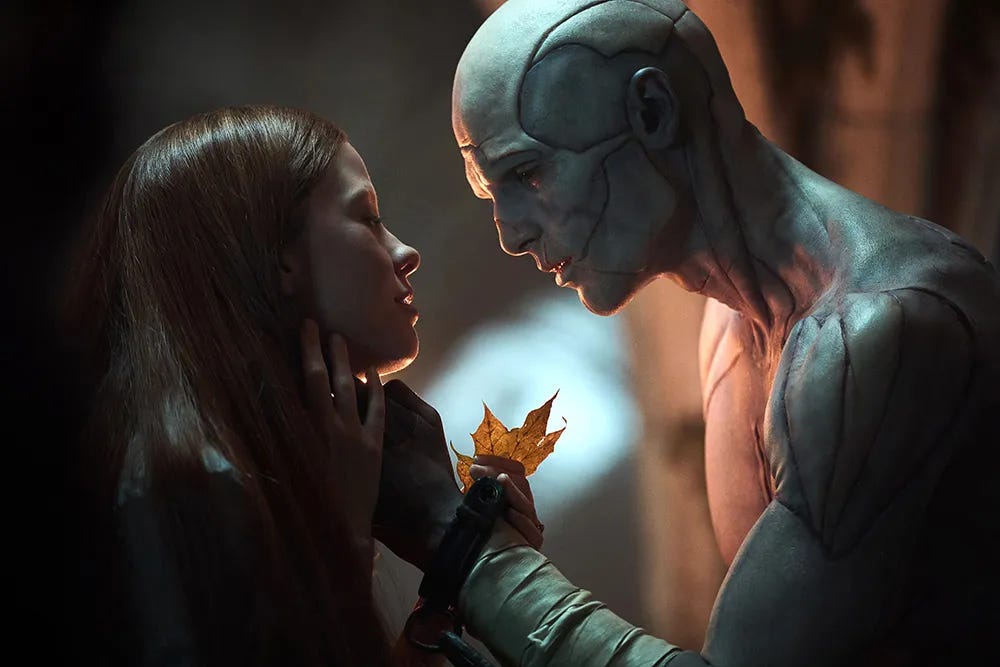
“To Be Lost and To Be Found, That is the Lifespan of Love”
Despite Victor’s attempts at forming the narrative that the Creature is dangerous, one person sees herself as a reflection of him. Elizabeth, the name spoken from Creature’s lips with such depth and emotion that her name becomes symbolic with hope and freedom. “I sought and longed for something I could not quite name. But in you, I found it.” Elizabeth not only looked beyond the facade of Victor’s self-proclaimed “nice guy” act, but she looked in the Creature and did not see the ugliness of former men. She saw the beauty in the souls of those lost within in him, an embodiment of “human” that outshone every man around him. Creature represented the opportunity to live long enough to transcend hatred and to challenge the world to question their own acts of monstrosities. And it is through Mia Goth’s aching portrayal that allows the audience to explore the literal and metaphorical meaning and discover the answer within our own lives and in our own ambitions.
Guillermo del Toro did not just give us an adaptation. He slams the mirror in front of each and every person witnessing this masterpiece, forcing us to contend with the ugliest parts of ourselves and ask: am I as good as I think I am? Through beautiful cinematography, an incredible script, and transcendent performances Frankenstein is more than a film. It is a call to action on humanity.
Stream Frankenstein now on Netflix.
Great article!