

The Boy Without a Choice
“I know exactly ‘why me.’”
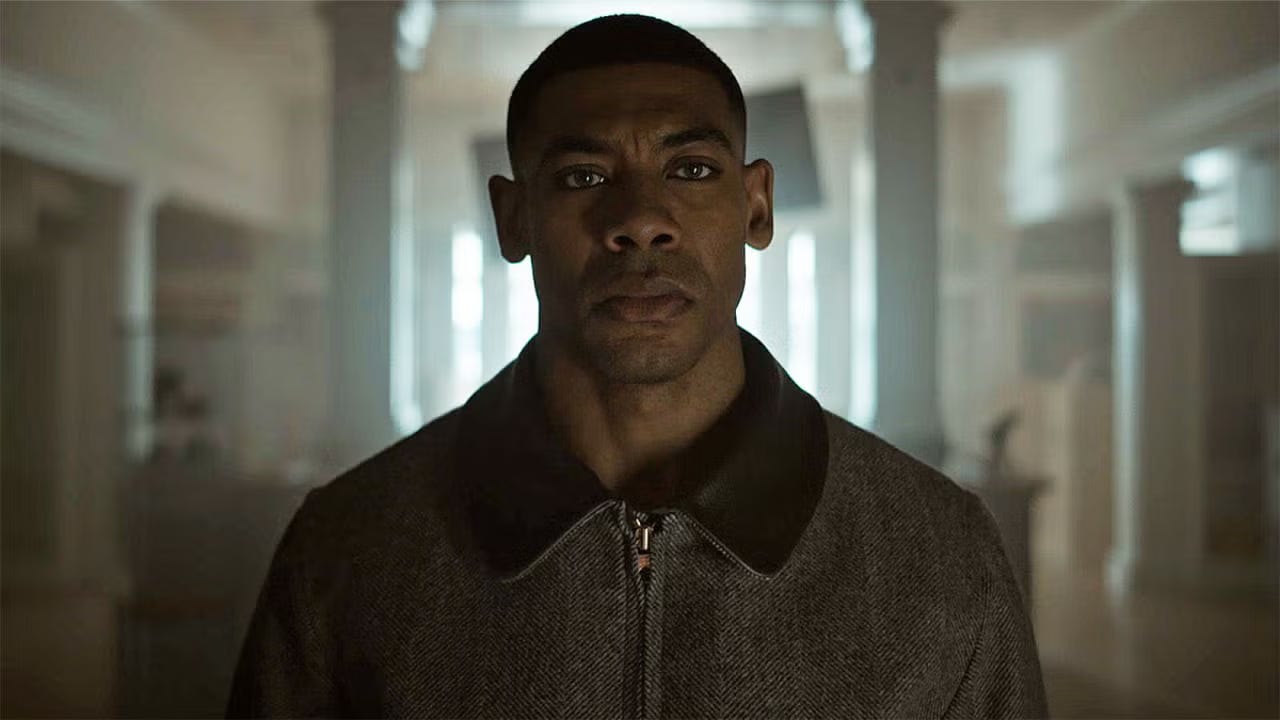
Lanterns Episode 3, “OutKast,” delivers the backstory that John Stewart deserves, exploring the intersectionality of race, fear, and heroism in a world designed to make him afraid.
And who but young John’s mother, Bernadette (Jasmine Cephas Jones), to question the enormity of this reality for her son who does not yet know the world he exists within?
After a terrifying moment where John Sr. (J. Alphonse Nicholson) is traumatized by being selected as the next Lantern, the resulting shame of being afraid changes the state of the Stewart family to the near point of destruction.
To extraterrestrials, the dismantling of the Black household is a concept they are vastly unfamiliar with, further leaning into the symbolism of racial and socioeconomic imbalance.
Thus, the asking of a Black man in America, “Are you afraid?”
Yes.
Very much so.
And when Bernadette is met by the Guardian, realizing that the alien musings of her husband are true, she confronts her with a hard truth.
“Even in space, you don’t consider us.”
The grandeur of racial inequity and disparity across galaxies is perfectly packaged in the conversation between mother and alien in a single concise and markedly important moment that changes the trajectory of all their lives.


Raising John to be fearless was rooted in more than preparing him for a life of being a hero. It was to prepare him for the weight of existing in a world that he loves and would never love him back.
For the past two episodes we’ve seen aliens with limited knowledge of the human experience and our nuances, and the offering of a large diamond as an apology for emotional and psychological distress exposes those limits.
The diamond cannot be easily liquidated into a usable currency, let alone believed to be rightfully owned by the Stewarts, shining a spaceship-sized beacon of light on the pacification of generational Black trauma in this country.
And as the episode cycles between John’s childhood and the current interview with the Guardian, the meaning behind his waiting in the seat overnight settles heavy in our bones.
The moment calls forth familiar conversations of having to be three times better than everyone else just to get an ounce of a chance—a conversation Black kids and parents know all too well.
“I like being alone.”
Though surrounded by the truth and the unconventional support of his family, John was still isolated and outcast as a sibling—learning to rely on no one but himself even into adulthood.
The result of that rigor was the horror of a young John asking his father to shoot the apple atop his head, an action that his own mother condones to help remove the fear from both her husband and her son.
But an episode that grabs you by the spine and makes you want to scream at the parents also shines a spotlight on parental fear.
It’s the generational fear of having to prepare children for a violent and unforgiving world, placing them in dangerous scenarios and praying it’ll be a lesson that fortifies them for what’s to come.
While many of us didn’t experience this exact scenario, the added pressure of being Earth’s next hero required an even greater emotional sacrifice from two loving parents whose lives were affected just as much as young John’s.
Unfortunately, they couldn’t just wait.
For them, this required more.
The lessons John Sr. and Bernadette had to teach weren’t easy, and the unfairness and pain are highlighted when a young John comes home and his mom simply offers him food in exchange for solace.
But in the quiet of being alone, he sobs and she’s in pain—both hiding their fear from one another for the promise of John becoming Earth’s next hero.
The echo of the heartbeat that belies this entire episode is a Black mother’s love—tough, unrelenting, powerful, yet deeply unwavering.
The Presence of Fear is John’s Greatest Strength
“They know you better than they knew Hal Jordan, and they know you’re better.”
In one of the most honest and vulnerable conversations of “OutKast,” Bernadette explains why they’re pushing him so hard and why it’s okay that as a young Black boy he has fear.
This world teaches Black men to fear it, and she calls out the privilege of those who never have to experience it all because of the racial constructs within America.
This candor between mother and son becomes the final barrier young John finally deconstructs to become the man he is today.
The thing that’s unsaid about John’s upbringing is that, to others, it comes across as unsavory.
However, the conversation between John and the Guardian during the interview alludes to that fact, as the alien cannot fathom his happiness with his upbringing.
In deconstructing his childhood, we understand more and more the great appreciation he has for the life he lived and how it prepared him to step into the suit today.
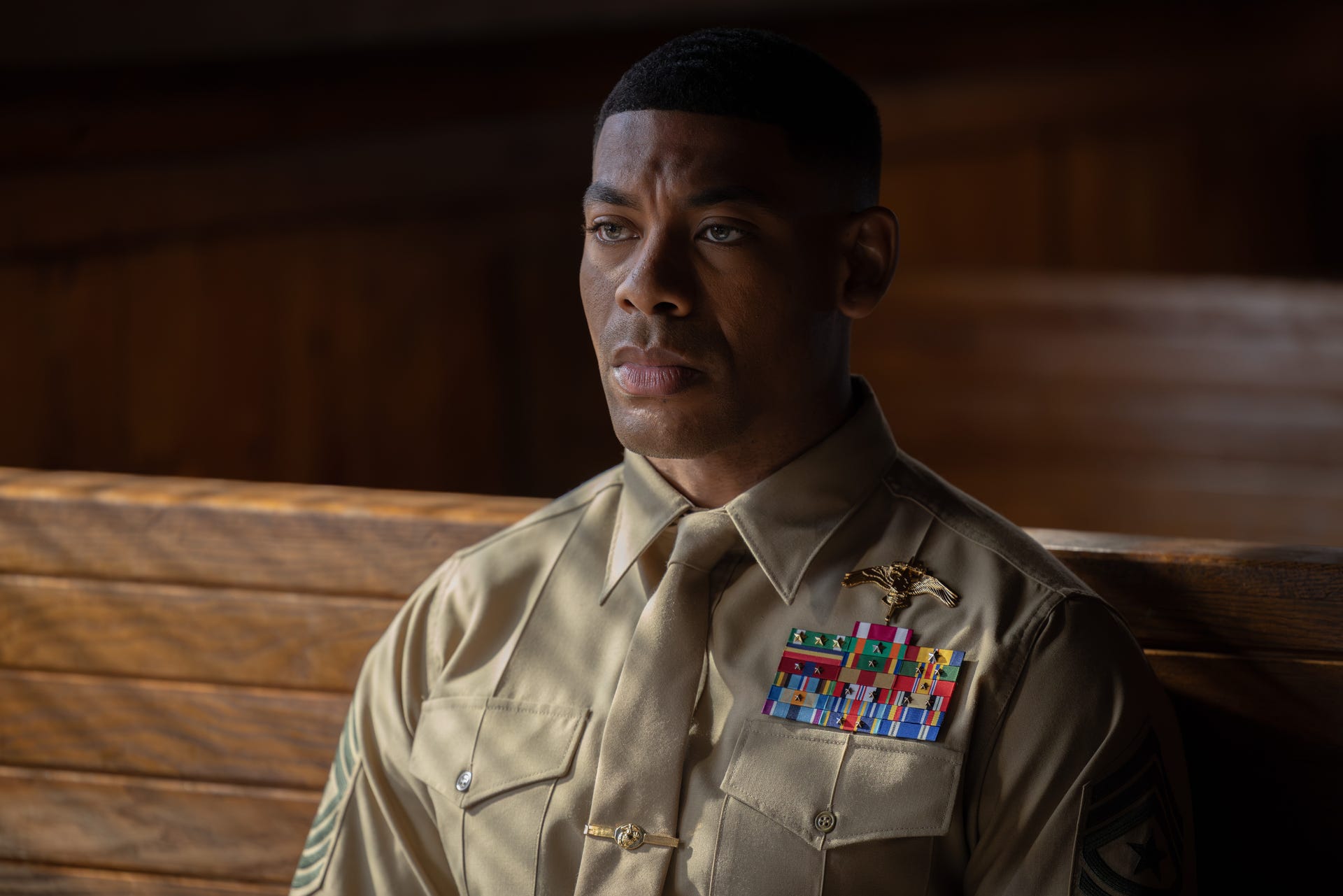
As we unpack why John was dishonorably discharged from the military, the gaping realization is that he took the fall for Hal’s interference.
This makes Hal’s withholding of John’s high level of abilities to sustain a construct without a ring more pointed and begs one major question:
Did Hal interfere with John’s mission to purposely sabotage his chances at being selected?
Hal is great because he’s fearless with the privilege to never know true fear, but John is courageous because he lives in a world where every boy and man who looks like him has no choice but to live with it.
Fearlessness and courage are not synonymous, and the lesson Bernadette teaches not only John but also herself and her husband is that fear will always be present for us.
Move anyway.
John’s journey from birth to now was riddled with fear—his own, his father’s, and his mother’s—as he walked through the literal shadows of death, all to come out the other side, alive, fearing no man or evil because that’s who his parents raised him to be.
Hal lived a life of never having to conceptualize a life riddled with crippling fear.
John aimed a gun at his own mother despite both being afraid, building an intimate relationship with fear and using it as a tool for excellence rather than positioning it as an inherent flaw.
They are not built the same.
Their strengths are forged from opposite ends of the “fear” spectrum, yet John comes with a resilience Hal couldn’t construct with or without a ring.
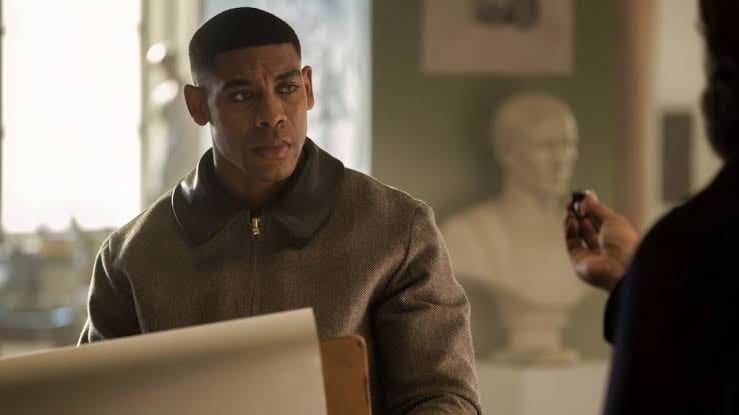
This is solidified when Bernadette applies to art school on John’s behalf following his dishonorable discharge, encouraging him to feed his other talents while the one he knows awaits him takes a backseat—leading to the episode’s interview.
Just as we questioned Hal’s intentions, then and now, the Guardian asks John if he blames Hal as well while propositioning him as Hal’s replacement under the guise of simply being “the backup.”
This revelation turns the entire series on its head.
John doesn’t simply wonder who he is.
He knows exactly who he is.
And scratching at the back of his mind like a bad itch, so does Hal.
“I guess the birds aren’t liars after all.”
In Episode 2, “Trust Fall,” Hal asks John why he constructed a bird, and John writes it off as just a bird.
But as the episode ends, with a bird perched on John’s mailbox, we now know the bird was a message.
A new Green Lantern is here.
HBO’s Lanterns Episodic Analysis
Kivonshe—founder of So There’s That—is a film & TV critic who explores compelling storytelling, fandom relationships, character psychology, and the impact of entertainment media through film reviews, episodic recaps, and in-depth theme analysis.