

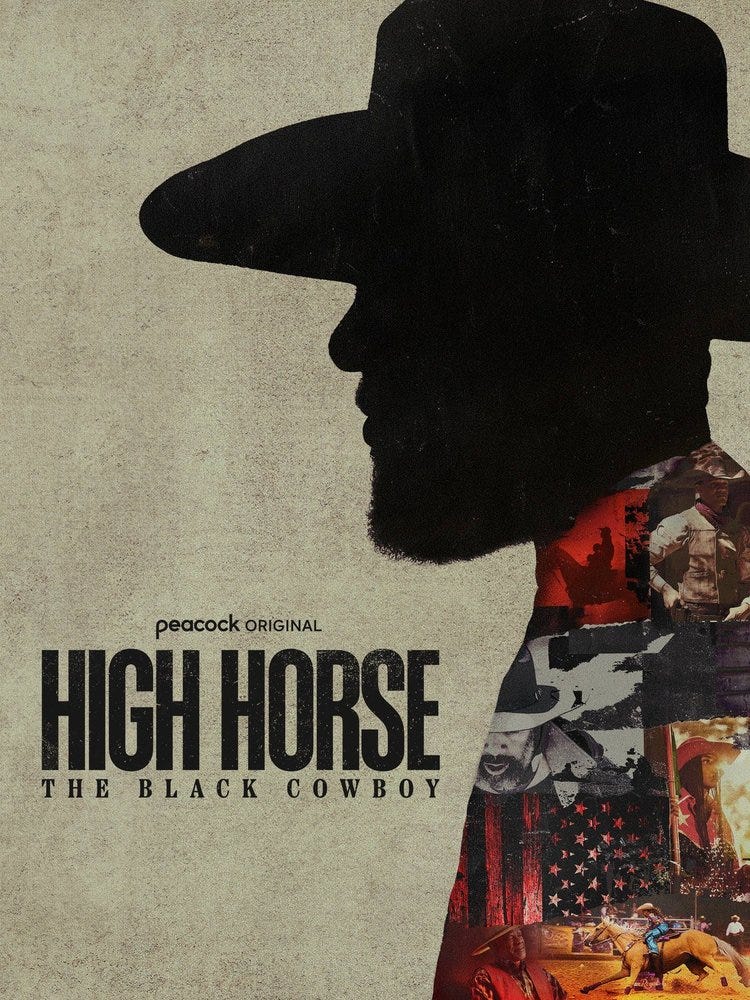
Peacock’s new documentary, High Horse: The Black Cowboy, executive produced by Jordan Peele and MonkeyPaw Productions, premiered on the platform on November 20, 2025. This 3-part documentary explores the origins of “cowboy” and cowboy culture in America—aiming to set the record straight on the real history behind one of America’s greatest claims of culture.
This series uses historical documentation, archived footage, and first-hand interviews with celebrities, academics, members of the National Black Farmers Organization, and other Black cowboys and cowgirls to dive into the richness, and erasure, of Black roots in cowboy culture—starting with the name. The term “cow-boy” is racist in origin, used to distinguish Black cow hands from white cow hands by distinction of race and ethnicity. Black slaves affinity with horse wrangling, agriculture, and farming made them great at being “cowboys.” While the term has an ugly and horrific inception, Black people took it, ran with it, and turned it into a lifestyle—a lifestyle that is recognized globally yet absent of its credit to its creators.
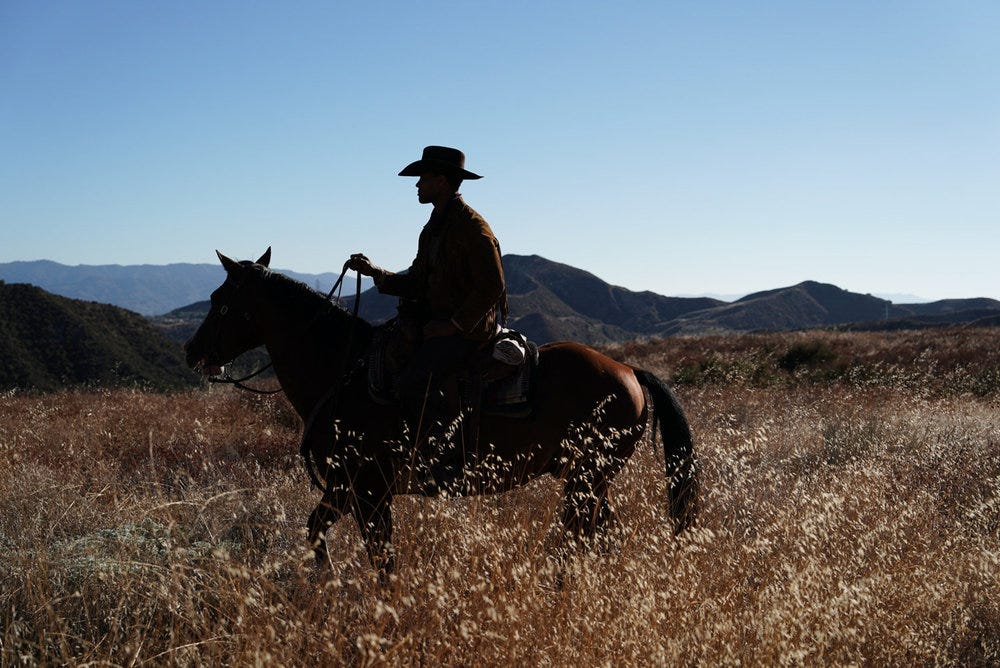
High Horse goes back in time with one of its episodes titled “Land,” focusing on the displacement of slaves, the promise of 40 acres and a mule, and reparations denied. It also highlights the causal relationship between land and generational wealth. But the documentary is not a sad story. It is not a slave story. It is a story of triumph, one academic calling Black people’s increase in land acquisition and farming “The Great Return”—descendants of “The Great Migration” from major U.S cities moving back to the towns of their ancestors to reclaim land and build for future generations.
One such term that is explored in this episode is agropastorialism—a way of life or a form of social organization based on the growing of crops and the raising of livestock as the primary means of economic activity (Merriam-Webster). In the past, when a Black person would be approached about potentially going into agriculture, it would be met with a visceral and autonomic reaction due to the history of Black people working on land in America. For decades, there was open rejection to the agriculture business because it was associated with slavery. In “Land,” they carefully dissect this trauma by displaying all its ugliness then replace it with the history of African and Black people’s natural intelligence and understanding of land and crops. This return to land is not only pivotal for ownership, but it is a source of healing—restoring cultural identity in a space in which Black people were forced out.
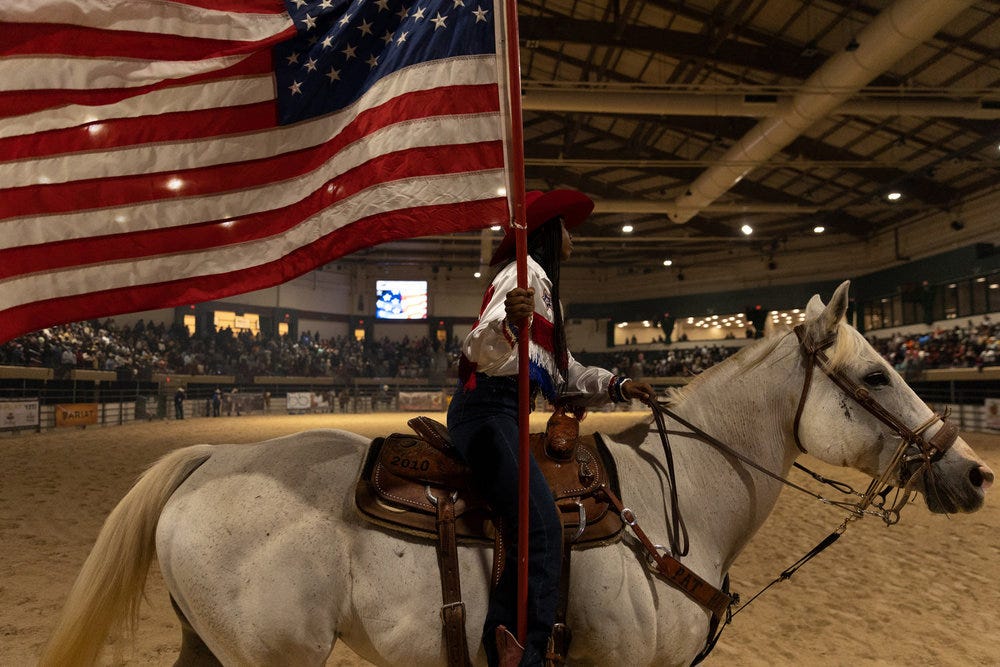
The image of a Black person on a horse represented defiance, a middle finger to the horrific, constant, and consistent outcasting of Black Americans in American history. In this documentary, the interviewees do not aim to rewrite history, they aim to correct it. From land, to rodeos, to movies, and to music, High Horse shines the spotlight on the displacement of identity in the fabric of this country. Notable figures like Tina Knowles, Jordan Peele, Pam Grier, The Compton Cowboys, and John Boyd Jr walk us down the path of truth and reclamation in this riveting and inspiring series. As one interviewee stated “it is uncomfortable but we must talk about it.” And talking about it keeps the truth alive for centuries to come.
Stream High Horse: The Black Cowboy now on Peacock.