



Audiences were first introduced to the concept of an unreliable narrator in the first two seasons of Interview With the Vampire, and in the two years in between seasons, fans concluded that the theme would continue to exist.
Louis’ broken memories.
Armand’s rewrite.
And Daniel questioned it all as he dug and pried into the things said and unsaid.
Now, with The Vampire Lestat, audiences are asked to do something completely different.
Listen.
Not to the noise or the perfectly placed narration that drowns the dialogue in the scenes in front of us.
Not to the visual distractions that effectively cause us to question everything we thought we knew.
But to the music.
The pain buried within every scale, every drumbeat, and every hum.
When Daniel digs too deep, when Gabriella’s presence brings upon an assault of memories that pushes his emotions too far, and Lestat is overwhelmed from the magnitude of it all, the music quietly and patiently heals the wounds his mortal and immortal life left behind.


The Lyrics are Chapters in a Book He Refuses to Write
Throughout this season, Lestat’s armor cracks whenever Daniel sidles too close to a truth.
The stutter.
The panic attack.
Lestat’s careful performance is disrupted, and he redirects in desperate attempts to keep the mask from slipping through his fingers.
But where Lestat meticulously edits his narrative, Daniel Hart delicately strips the veil away.
Every song—“Your Biggest Fan,” “Big Boss,” “The Loneliness”—becomes an emotional translation of great trauma and a well of pain that no ordinary conversation can contain.
They expose him, revealing wounds that even vampiric healing can’t reach.
But where speech fails, music encourages.
Music chases those memories.
And music brings him home.
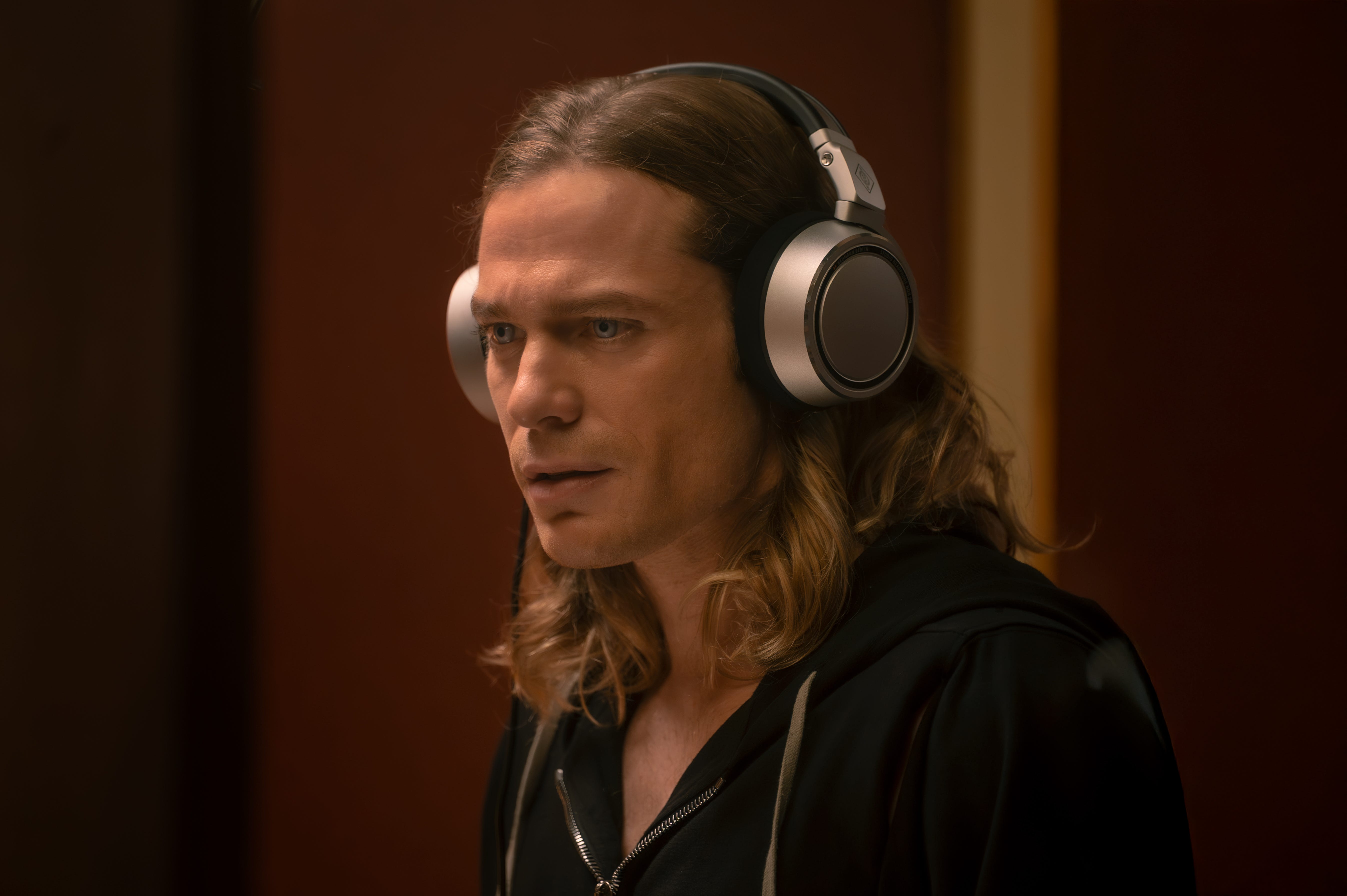
Music Becomes the Most Reliable Narrator
The Vampire Lestat has done incredible work by not attempting to convince the audience that Lestat’s version of events is the truth.
In fact, memories from prior seasons have been presented quickly, fleetingly, as events Lestat has either accepted or discounted as something not worth his time to revisit.
But what the season has done is show us Lestat’s hiding places.
Not inside the documentary tapes.
Not inside the flashbacks and pompous narration.
Lestat’s hiding places are within the melodies, the orchestration, and the lyrics that he can no longer contain.
His feelings are too big.
His emotions are “a lot.”
And while he can play a vampire trick on Daniel to keep from capturing his vulnerability, Lestat cannot play the same trick on his heart.
Hart’s compositions become the place where reliability nestles comfortably within the dialogue. He preserves the delicate and harrowing details from Anne Rice’s novels by allowing the music to carry the memories Lestat intentionally obscures from the audience.
Perhaps this is why the music resonates so deeply with audiences. Where Lestat becomes physically incapable of articulating his pain, Hart’s score takes his hand and does it for him.
This emotional unfolding makes it more and more difficult for Lestat to separate his curated performance from his truth.
And by the last note sung on “Stained Glass Heart,” they are no longer two separate identities.
The performance becomes the confession.
Understanding Lestat Through Music
Kivonshe—founder of So There’s That—is a film & TV critic who explores compelling storytelling, fandom relationships, character psychology, and the impact of entertainment media through film reviews, episodic recaps, and in-depth theme analysis.