


NOTE: This article contains spoilers. Read at your own will.

Line of Fire Episode 6, “Cabin Pressure,” proves that, amidst the chaos and dysfunction, the Hollingsworths know how to show up for one another, especially when the outcome is life or death.
“Cabin Pressure” mobilizes every single member of the family on a day that started off pretty mundane then quickly turned deadly.
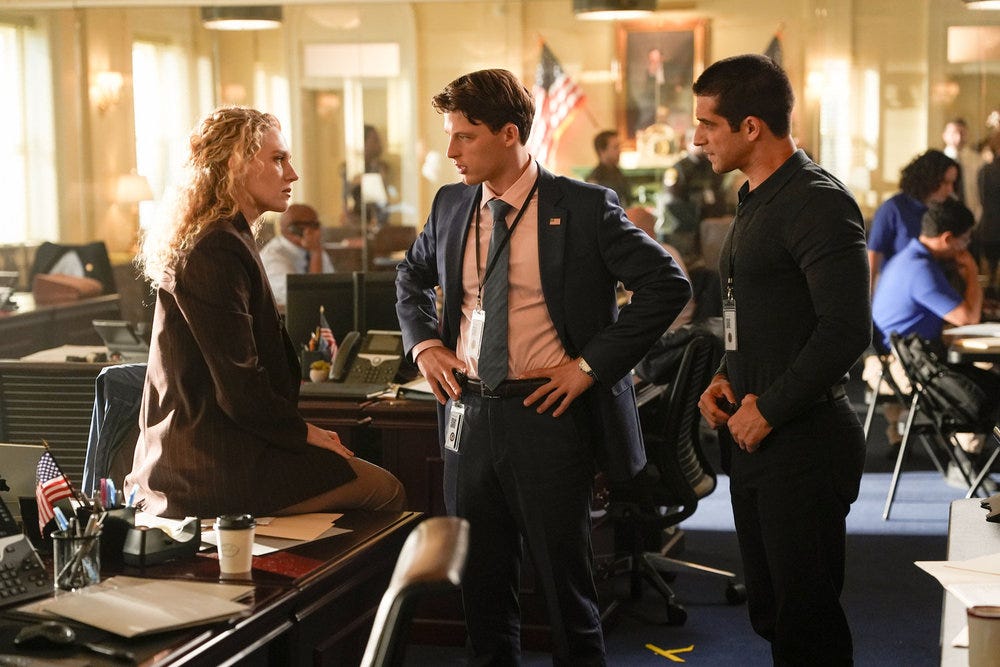
After Micah convinced him that he was chasing ghosts with the Barnes assassination attempt, Mike finds himself pulled back in when Micah and Russ bring him new evidence of the potential shooter.
Meanwhile, Jane is on a routine detainee transport that turns into a coordinated aircraft hijacking that places her life in immediate danger.
But beneath the escalating threats and conspiracies is the heart of the show.
The Hollingsworths learn that the very strengths they cultivated and nurtured within their household are what they need to ensure they come home safe to one another.

When Walls Meant to Protect Become a Prison
For Jane, protecting others has always come naturally.
However, in protecting others, Jane forgot that she is also someone who is worthy of protection.
While that is another story, one we hope to be explored when Line of Fire returns from its two-week hiatus, “Cabin Pressure” provides us a glimpse of Jane taking the first step to tearing down the wall she built to hide her from her family.
One such person she was avoiding is Mike.
After the heated confrontation in Episode 5, their situationship is strained—the only pleasantries being Jane telling Mike she was headed to the airport.
It’s brief.
Sterile.
Polite.
An ordinary moment on an otherwise ordinary day, on the way to a routine escorting job.
But ordinary doesn’t last for long when Jane finds herself caught in the middle of a hijacking. Her feelings take a temporary backseat as her instincts as a U.S. Marshal immediately take over.
What starts as a test of professional judgment—analyzing the situation, the potential casualties, and the probability of making it out alive—turns into something far more personal for Jane and her family.
And as Clare, Russ, and their entire team work swiftly to uncover the people behind the hijacking, Jane realizes that her detainee’s accomplice, former Air Marshal Boone, isn’t out for a political agenda or monetary gain.
He’s a father grieving the loss of his child.
And grief is something Jane understands all too well.
After discovering that Boone lost his daughter in a plane crash, Jane appeals to the one part of him that hasn’t been consumed by his anger.
His love for his little girl.
She asks him to speak about his daughter. To say her name. To let the people listening know who she was.
And then Jane does something she hasn’t allowed herself to do in a long time.
She talks about Jack.
“It cost me my marriage. It cost me my kids.”
It’s a gut-wrenching admission.
Not just because of the damage Jack’s presumed death caused within the family, but because Jane finally says the hard thing out loud—how she played a role in destroying the very thing she’s worked hard to protect.
Her family.
And it’s the very same emotional walls Mike confronted in “Cul-de-Sac,” ones that come crumbling down while Jane is more than thirty thousand feet in the air.
Line of Fire positions this breakthrough in a very poignant way. It’s not Mike or her children who convince her to confront her hidden truths.
It comes from allowing herself the freedom to experience her own pain in order to connect with another parent who shares those same feelings of guilt—granting her the courage to not only stop hiding from the ones who love her most but also to stop hiding from herself.
Her training may help her navigate the danger, but it’s her humanity that gives her the opportunity to reach the hijacker.
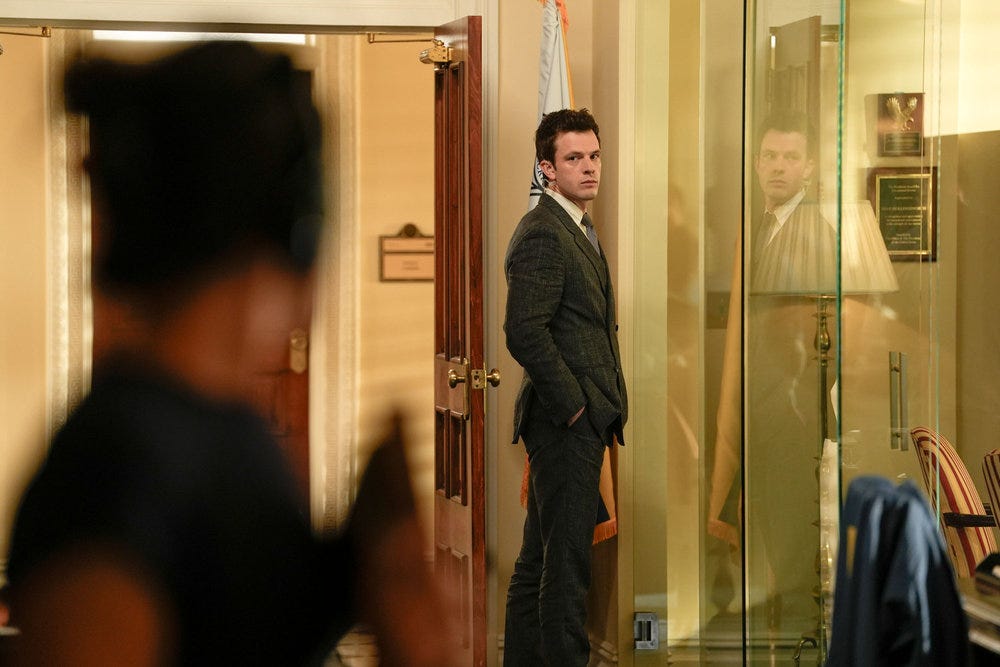
The Son of a Legend
While Jane fights to bring everyone aboard the aircraft home, Mike is confronting a different kind of threat.
And one that strikes dangerously close to home.
When Russ and Micah uncover evidence implicating Sam Antosca in the assassination attempt against President Barnes, Mike and Micah pursue the lead together.
But Antosca’s apparent suicide raises more questions than answers.
Why now?
Why would a man connected to such an elaborate assassination plot suddenly take his own life?
For Mike, the answer isn’t nearly as simple as everyone wants to believe.
And for Micah, his father’s refusal to accept the apparent conclusion threatens to pull them back into a familiar conflict.
One where Mike’s instincts are questioned and Micah struggles to separate his professional judgment from the weight of being his father’s son.
But “Cabin Pressure” does something different with their relationship.
It allows them to be father and son.
Mike begins to refer to Micah as Junior, a term that could easily be mistaken for hierarchy or even condescension.
Yet in this case, it’s the very thing Micah has been seeking since the beginning of the season.
His dad.

Mike allows fatherhood to enter the investigation, paralleling Jane’s identity as a mother entering hers, to show Micah that he’s not here to overshadow him.
He’s here to root for him.
Despite the tension, Micah finally admits to Mike what’s been weighing on him his entire life.
“I grew up wanting to stand beside you and to be just like you.”
Like his mother, Micah finds himself voicing the very thing he’s tried to bury—the struggle to find his own identity following the footsteps of the man he considers a legend.
But Mike doesn’t coddle. And, on the heels of Jane telling him that he let Jack go, Mike pulls Micah in—allowing fatherhood to be present in the workplace to reassure Micah that his own instincts, convictions, and determination are enough.
That Micah, being Micah, has always been enough.
And Micah, for all the same stubbornness that he inherited from his father, is learning that his father isn’t always right—that he is a man who makes mistakes but doesn’t let them define him nor allow them to undermine his abilities as an agent.
In fact, it’s these very qualities that cause Mike to make a decision that impacts his family, but will it be to his own detriment?
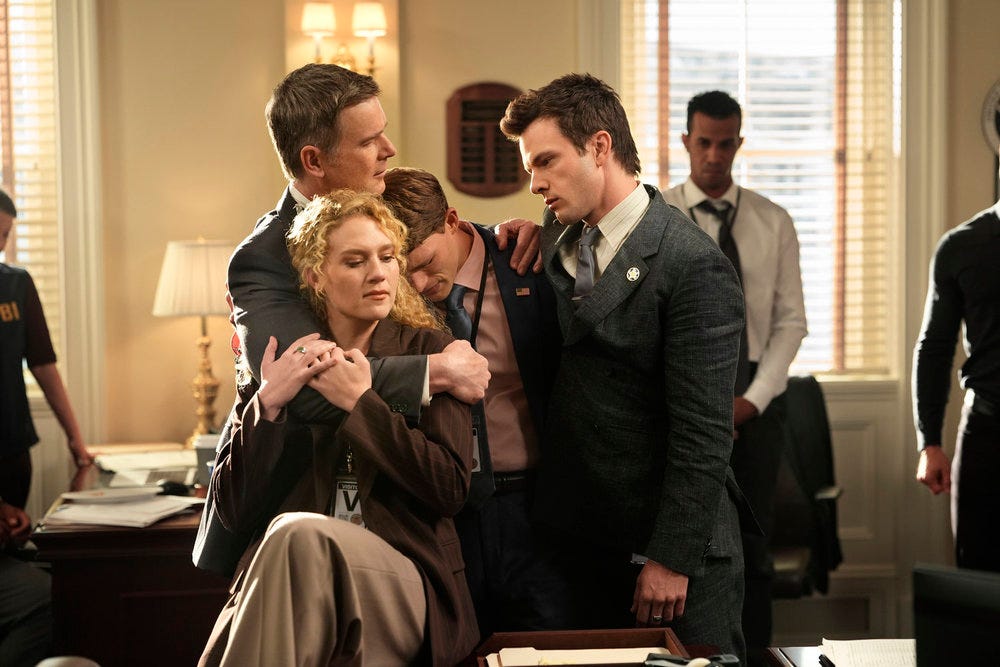
Fractured, but Never Broken
“Cabin Pressure” continues to bridge storylines by showcasing a narrative that naturally connects two entirely different investigations across the family’s different law enforcement professions.
Their responsibilities are different.
Their objectives are different.
But their purpose is the same.
Bring their family home.
Line of Fire’s parallel investigations also reinforce the breadcrumbs connecting the family with background plotting without forcing anything into a premature storyline.
What began as “okay, when will this all make sense” is now suddenly revealing itself to be a well-written mystery drama that centers one family.
Clare’s instincts, self-assurance, and confidence mirror her mother’s. Micah’s convictions and pride reflect his father’s. And Russ embodies the resourcefulness and determination of the entire Hollingsworth clan—ingredients that maintain the show’s momentum without sacrificing room for character growth.
For Mike and Jane, this growth comes in the form of making a different decision to keep their remaining children from danger—attempting to learn from the decision that tore them apart.
And although their marriage may be fractured, the foundation they built over thirty years together remains sound and true.
Yet just as the Hollingsworths begin finding their way back to one another, Mike’s investigation leads him to a threat that challenges both his loyalty to his country and his loyalty to his family.
Antosca’s death.
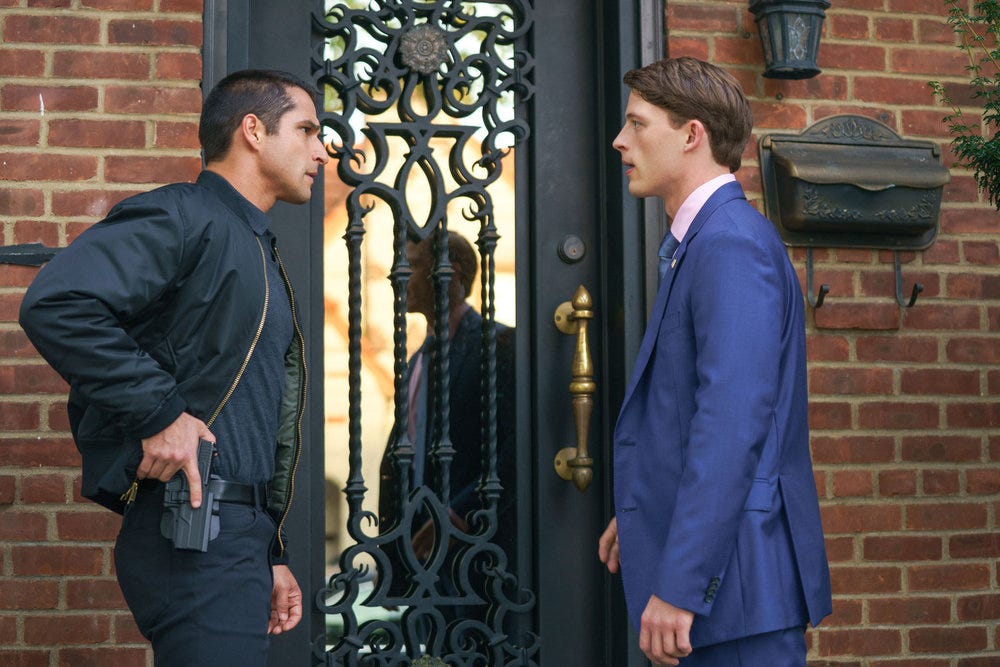
The quick investigative conclusion raises more red flags, leading him to the doorstep of a former colleague, Daryl, after forensic evidence raises doubts about whether Antosca died of a self-inflicted gunshot wound.
Mike’s decision to confront Daryl places him on a dangerous path—one that could challenge his faith in the people and institutions he’s spent his career protecting.
And possibly his family.
Just as they’re finding their way back to one another, a new danger threatens to place Mike in a familiar position—where protecting the people you love could once again mean keeping them in the dark.
Want more Hollingsworth breadcrumbs? Subscribe to get new articles delivered directly to your inbox so you can follow along the investigations.
The Hollingsworth Family Legacy
Kivonshe—founder of So There’s That—is a film & TV critic who explores compelling storytelling, fandom relationships, character psychology, and the impact of entertainment media through film reviews, episodic recaps, and in-depth theme analysis.
© Kivonshe | So There’s That
Original editorial commentary, criticism, and analysis. Unauthorized reproduction, republication, redistribution, or adaptation of this content, in whole or in part, is prohibited without prior express written permission from the copyright holder. Attribution alone does not constitute permission.