

The Line Between Convenience and Dependence
What happens when humans become too dependent upon devices in order to perform basic functions?
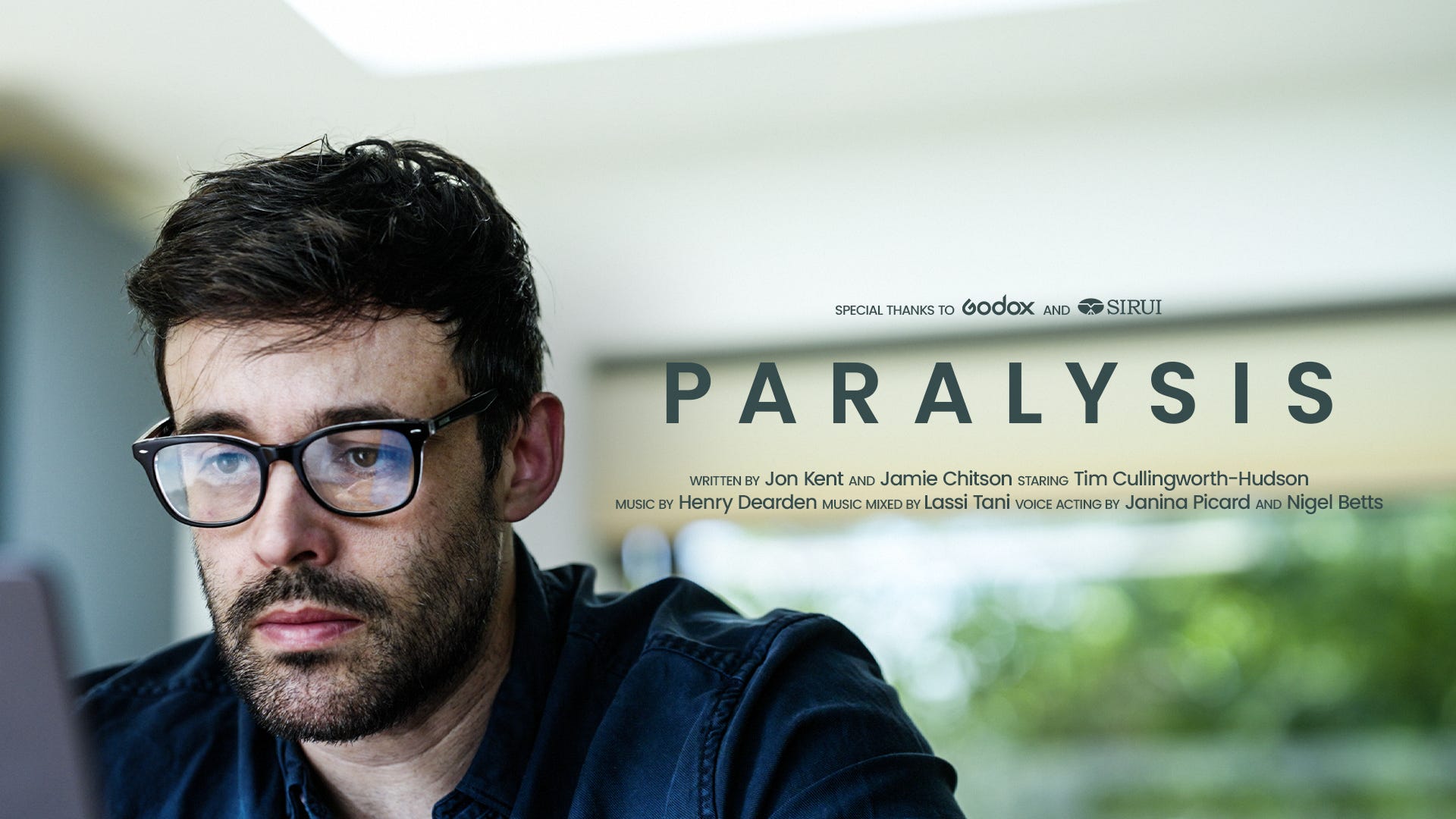
UK filmmaker Jon Kent explores this harrowing idea in his latest psychological horror short, Paralysis, starring Tim Cullingworth-Hudson.
“I need someone to talk to.”
One of the darkest parts of the film happens at the very beginning—a relationship between AI and a human.
Is it a relationship in the romantic sense?
No (but those do exist).
It’s a relationship in the way that humans require social interaction but have now somehow allowed convenience to replace companionship, making the connection far darker than it appears on the surface.
“Alexa, lights. Alexa!”
Something as simple as walking to the wall and turning on the light is now a panicked demand to a device that experiences glitches.
You may think, “Why not just walk over to the wall?” but this is where Paralysis pulls the viewer inside.
Siri.
Google.
Echo.
ChatGPT.
Even when the remote control was invented, people became so dependent on the convenience that, when lost between couch cushions or in another room, they would spend 10 minutes searching for it instead of taking the thirty seconds it took to walk to the TV and turn the channel.
Paralysis takes that dependency and goes deeper.


It examines human behavior and technological dependency from both the outside in as viewers and from the inside out as technology—utilizing a Halo filter to show the human from the tech point of view.
The desperation.
The brewing mania.
Seeking human expertise from systems whose capacities are only as great as the humans who invented them.
So why not just go to another human for answers?
For advice?
For connection?
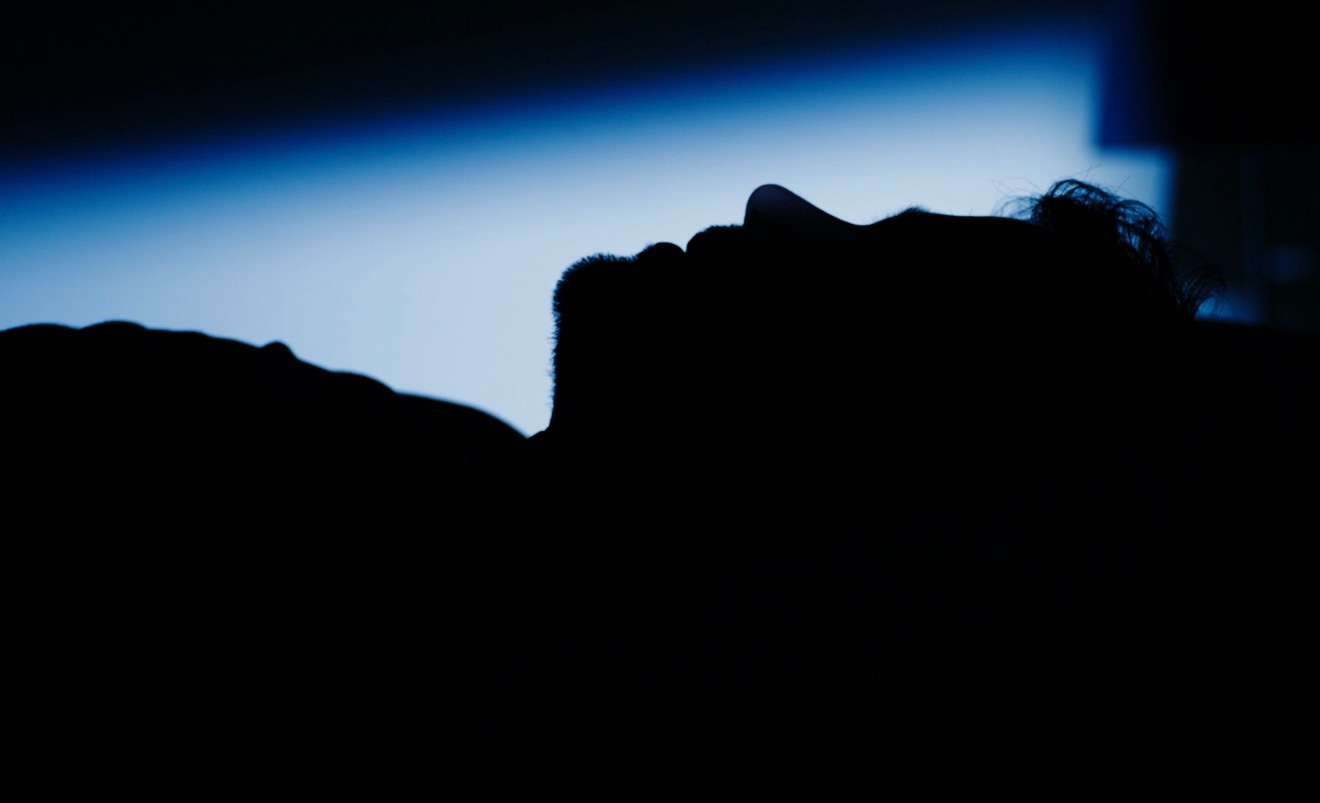
The film shows what it looks like to become paralyzed by our need for instant answers and device dependency—psychologically bedridden to technology as anxiety, insomnia, and depression begin to manifest physically.
Locked inside our homes with continued use of the devices that contribute to our very destruction.
The Restraint Behind the Horror
What I love about Kent’s storytelling is his restraint, brevity, and extreme clarity about what he wants to tell the audience. He gives us exactly enough and trusts us with the rest.
When I asked him where the idea for Paralysis came from, he drew from his own evolving experience with technology.
“It started after a YouTube rabbit hole, one video about why humans fear the dark, another about creepy AI glitches. The AI side became personal because I realized how much I rely on it, even asking it about illnesses or things I’d normally Google. The sleep paralysis element comes from vivid experiences I had as a kid.”
Short films are inherently thesis-driven, capturing complete story concepts with depth and precision.
And Paralysis delivers that depth and precision in just eight minutes—showing audiences how ingrained our devices are in our lives to the point we trust our own thoughts and decisions less and less.
Paralysis simply asks the question.
But only humans can provide the answer.
How deep into your dependency will you go before you feel too paralyzed to remove yourself from its grip?
Want more reviews on short films? Subscribe to get them directly to your inbox. Have a film you want to suggest? Leave a comment.
Short Films to Explore
Kivonshe—founder of So There’s That—is a film & TV critic who explores compelling storytelling, fandom relationships, character psychology, and the impact of entertainment media through film reviews, episodic recaps, and in-depth theme analysis.