Peacock’s ‘The Good Daughter’ Turns Memory Into a Monster You Can’t Escape
Rose Byrne and Meghann Fahy confront fractured memories, a tragic past, and buried truths in a mystery that reminds us that all isn’t always as we remember

NOTE: This is a spoiler-light review.
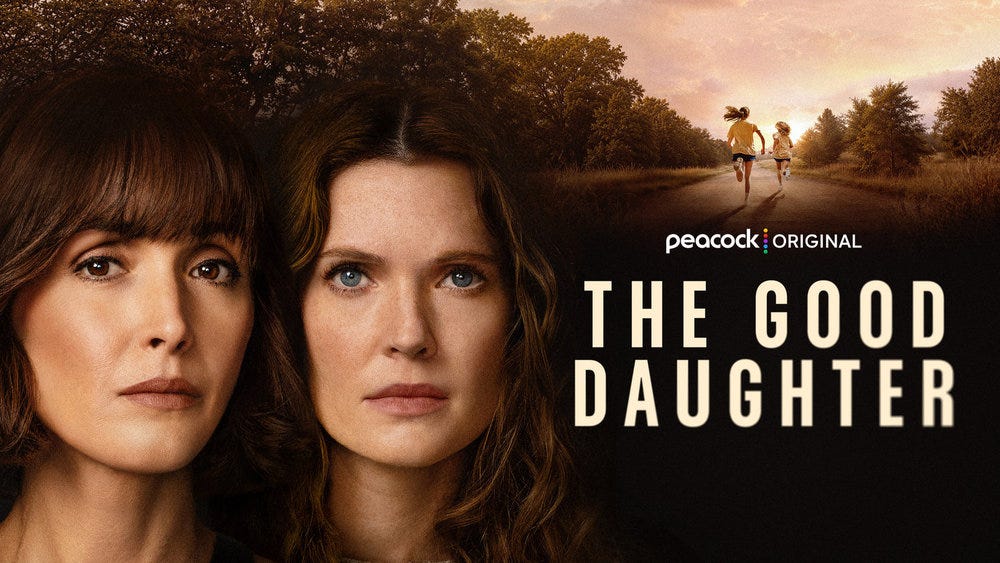
Memory has a way of convincing us that what we remember is the absolute truth, even though our experiences only tell part of the story.
And sometimes we hold on to the worst parts of those memories, the ones that caused the most pain, while burying other ones so deep that we convince ourselves parts of our lives never even existed.
But what happens when a single tragedy experienced by two people sends them down completely separate paths based on their memory of the day’s events?
Peacock’s latest series, The Good Daughter—adapted from Karin Slaughter’s novel—examines this question through the lens of two sisters, Charlotte “Charlie” Quinn (Meghann Fahy) and Samantha “Sam” Quinn (Rose Byrne), whose lives were shaped by a violent past neither could ever fully escape.
Written by Slaughter and directed by Steph Green, the six-episode limited series introduces audiences to a family with a complicated history as they struggle to rebuild and reconnect.
When another act of unspeakable violence occurs, the present becomes impossible to separate from the past, sending Charlie and Sam down memories they wish to never revisit.
While the investigation creates the series’ suspense, The Good Daughter’s most compelling mystery isn’t necessarily rooted in that event.
It’s how the past, and what each member of the Quinn family remembers about their own tragedy, influences how they go about solving the case.
Two Women, One Tragic History
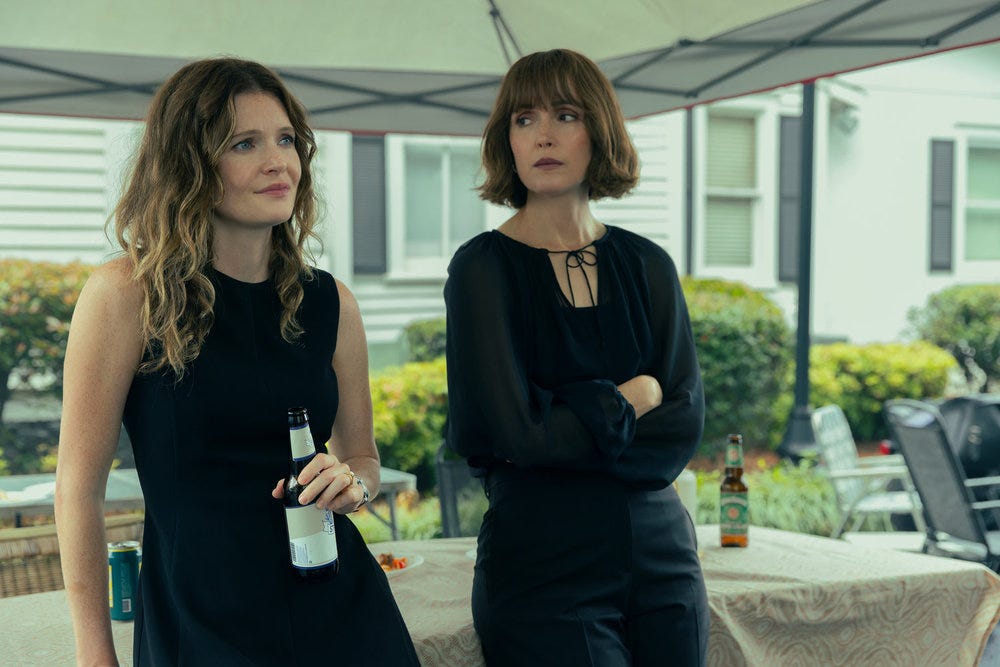
Charlie and Sam share the same childhood, but their relationship with their past couldn’t be farther apart.
Charlie, the younger of the two, built a quiet life in Pikeville, Georgia, surrounded by the familiarity of a town that refuses to let her escape the Quinn reputation.
Like her father, Rusty Quinn (Brendan Gleeson), she’s a defense attorney, carrying the dark cloud of his professional decisions and a reputation that continues to follow the Quinn family.
But what’s interesting about Charlie is the contradiction in which she exists.
She’s remained in the very place that caused her greatest trauma yet struggles to face the memories that impact how she moves in the world as an adult.
Sam, on the other hand, built a life for herself in New York. A former prosecutor turned patent lawyer, her return to Pikeville is treated less like a homecoming and more like being dragged into a past she’s spent twenty years trying to leave behind.
And where Charlie maintains a sense of familiar comfort in Pikeville, Sam struggles to reconcile finding growth in the place that took so much from her.
The distance between the two sisters doesn’t just exist emotionally. It exists in their individual relationships with Rusty.
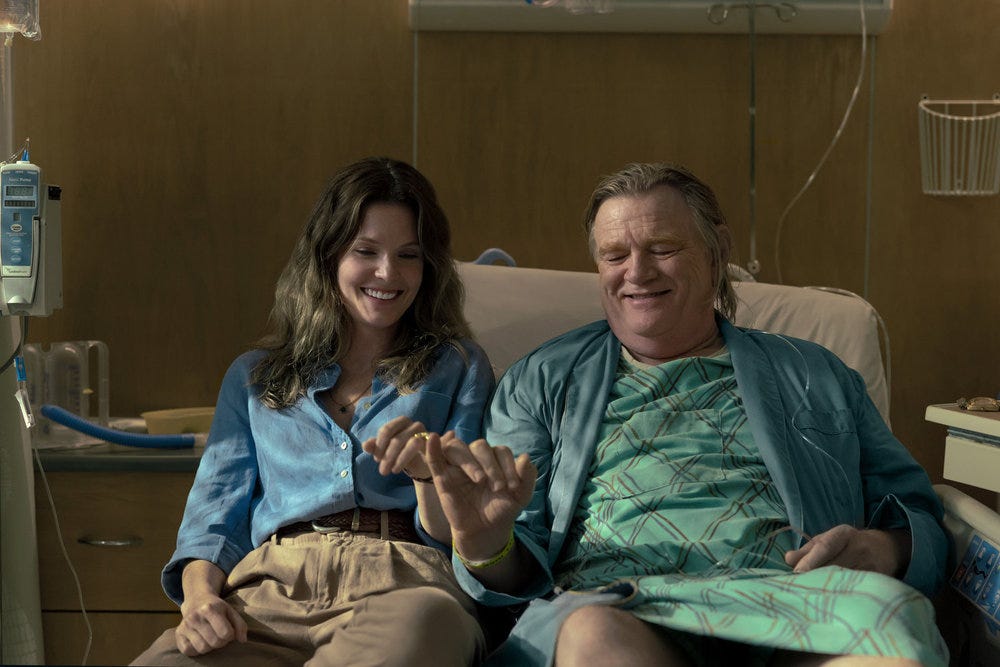
Charlie admires her father for the very reasons Sam harbors resentment; one daughter sees a man whose work gives his life meaning while the other sees only the consequences of that devotion to his career.
Neither perspective is entirely without merit.
That’s what makes their relationship compelling.
Their strained relationship isn’t rooted in an absence of love but in the belief the other sister simply doesn’t understand what she’s endured in spite of it.
Byrne and Fahy live inside that endurance, allowing the sisters’ affection and frustration to occupy the space at all times. They create a tension that exists within their familiar sibling behavior that makes you root for them one uncovered memory at a time.
Memory Only Slumbers, It Never Dies
The opening episode, “What Happened to Charlie,” takes its time pulling the audience into Charlie’s world.
Too much time.
While there’s a considerable amount of history that must be established to quickly introduce you to one of the main characters, the constant movement between Charlie’s memories and immediate present-day circumstances makes it difficult to remain focused.
But for Charlie, those interruptions are exactly how she experiences the world.
Intrusions at the worst possible moments fighting to take up space within her mind.
Her memories aren’t neat or pretty.
And Pikeville is a giant trigger that constantly reminds her of a past she’s never fully processed.
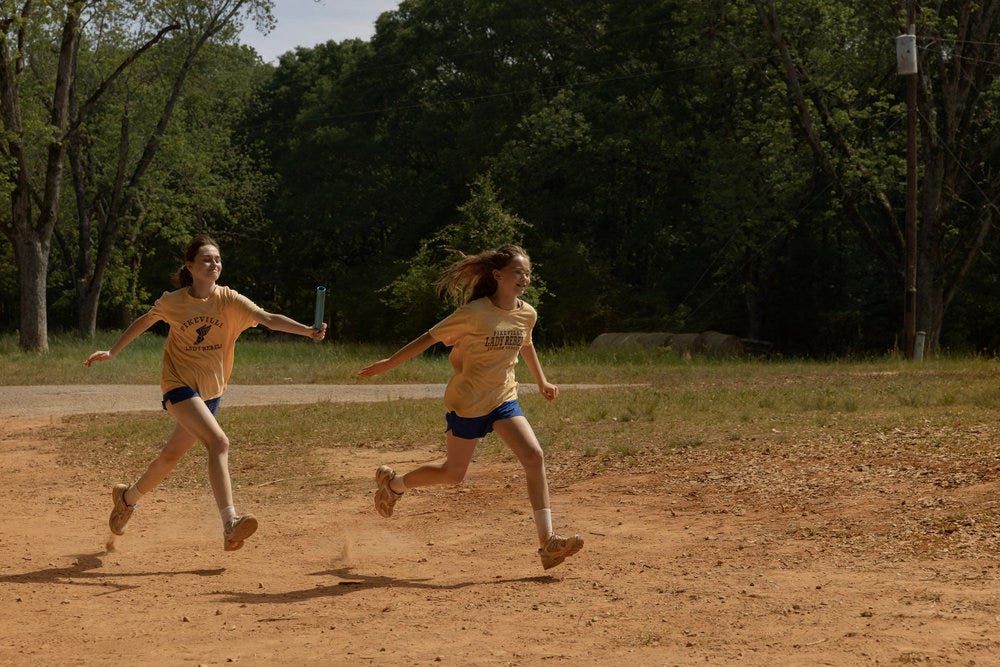
Once the episode gains its footing, The Good Daughter uses those interruptions to connect the woman we meet with the girl of the past, played by Drew Cheek.
And in Episode 2, “What Happened to Sam,” a young Sam, played by Audrey Grace Marshall, adds a new perspective.
We shift from Charlie’s perspective to that of the older sister. The one with a different responsibility, and we’re being asked to consider what their history looks like through both their experiences, not just the first Quinn sister we meet.
This shift, along with the episode titles, gives the story stronger emotional grounding while drawing you deeper into the mystery.
Unfortunately, that uneven rhythm carries into the start of the second episode, slowing the investigation’s momentum and interrupting the audience’s attention.
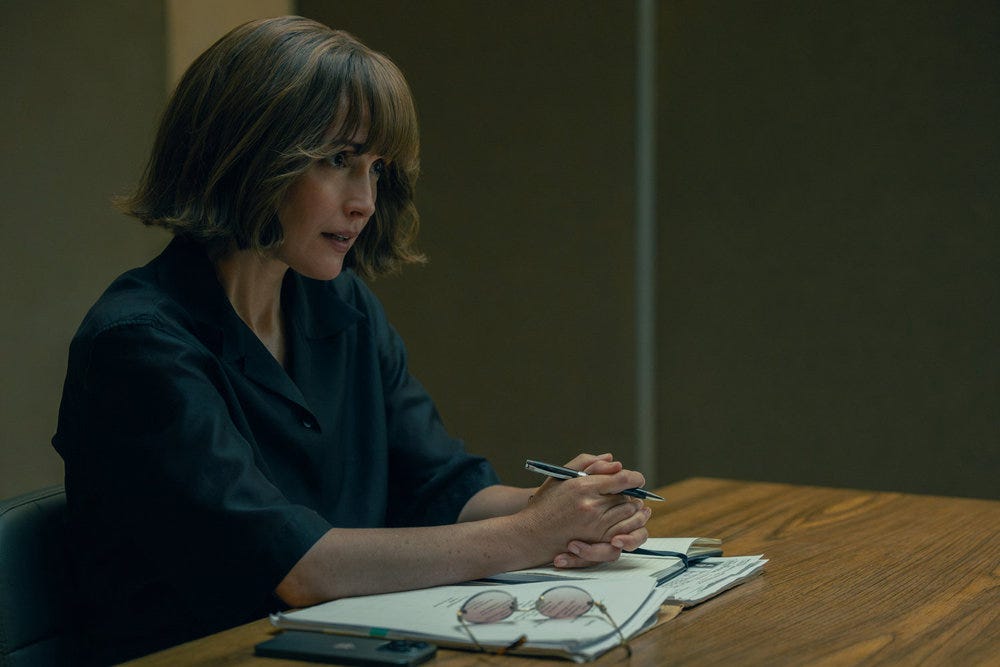
But during the final moments of “What Happened to Sam,” everything changes.
The investigation exposes questions that complicate every assumption made surrounding the case, and Sam’s presence now gives the story a sense of urgency.
The pacing picks up, and the story progresses toward the final revelations by balancing what the audience and the characters experience now and what each new unlocked memory contributes to those revelations.
The score also contributes to the growing tension—percussive rhythms, persistent tapping, and restrained strings to create a sense of dread in the countdown toward a truth no one is prepared to learn.
This makes Green’s direction of the intrusive memories more meaningful—they no longer feel like an explanation of the past but desperate puzzle pieces needed to uncover the events of the present.
Justice Doesn’t Always Look So Clean
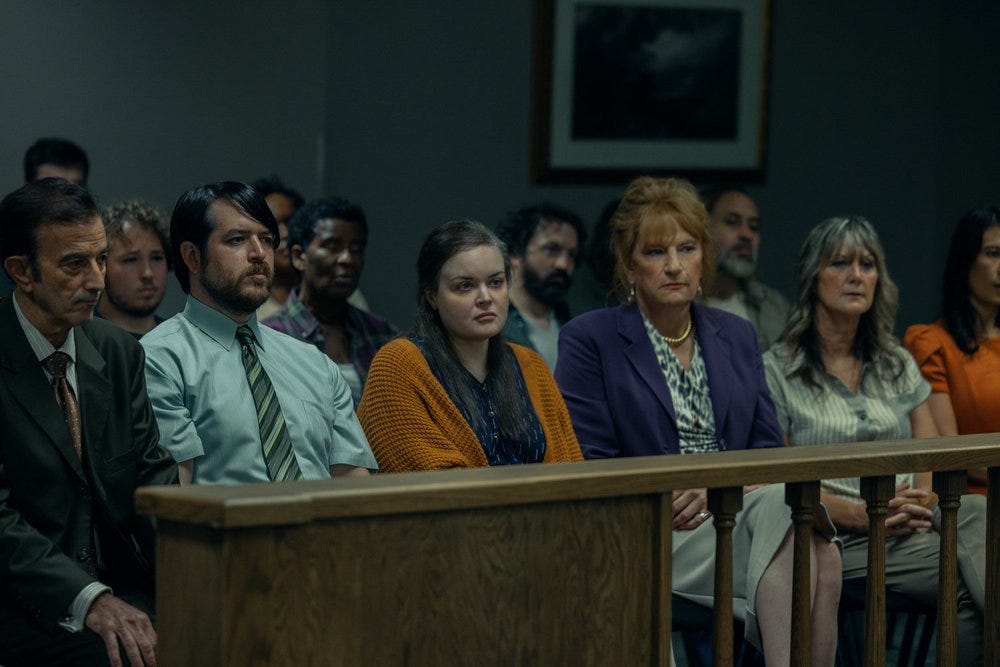
One of the most interesting themes of The Good Daughter is how it challenges what it looks like to obtain justice.
Even Charlie’s attempt to question police tactics becomes another confrontation with the Quinn reputation and their fight for fairness, raising questions about whether justice is only determined by those who enforce it.
In a town where personal histories, institutional power, and longstanding resentments overlap, the distinction between guilt and innocence becomes increasingly difficult to separate from the people making those judgments.
What happens when one person’s pursuit of justice is the source of someone else’s suffering?
How does one reconcile accountability when pain doesn’t always cause you to make reasonable or rational decisions?
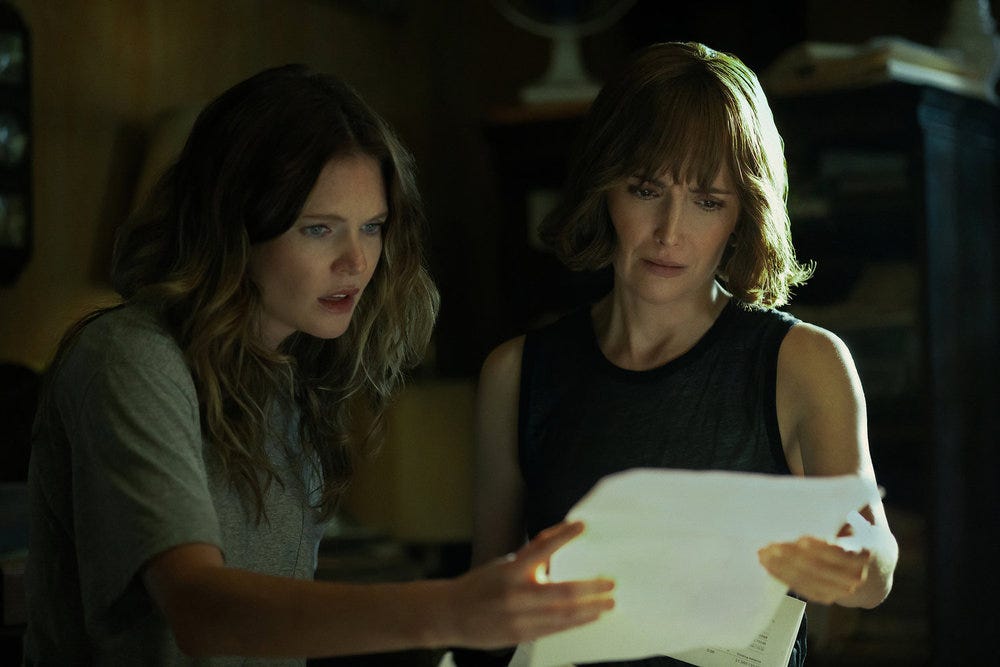
These questions become increasingly poignant as the series approaches the finale.
The final episode, “What Really Happened,” is effective in bringing those competing experiences and questions into confrontation.
And the truth isn’t neat.
It’s not a solution that suddenly heals everyone’s pain.
Instead, it forces the characters to consider what they believed, what they misunderstood, and what they are prepared to do with the knowledge they now possess.
That is where the series finds its greatest strength.
However, there’s a difference between knowing what happened and knowing what it means, and The Good Daughter builds its emotional premise around that distinction.
And while the mystery provides its share of unsettling revelations, the emotional weight rests with the sisters.
But the Quinn family’s history isn’t defined by one perspective.
It’s defined by the ways love, guilt, loyalty, resentment, and memory have shaped each person’s understanding of the same past.
And perhaps that's what makes memory such a monster.
It doesn't always haunt us with what happened. Sometimes it simply presents us with the version of the truth that’s easier to believe.
Want more analysis for your favorite shows? Subscribe to get them directly in your inbox. Have a suggestion? Leave a comment.
The Mysteries Continue
Kivonshe—founder of So There’s That—is a film & TV critic who explores compelling storytelling, fandom relationships, character psychology, and the impact of entertainment media through film reviews, episodic recaps, and in-depth theme analysis.
© Kivonshe | So There’s That
Original editorial commentary, criticism, and analysis. Unauthorized reproduction, republication, redistribution, or adaptation of this content, in whole or in part, is prohibited without prior express written permission from the copyright holder. Attribution alone does not constitute permission.
Discussion about this post