


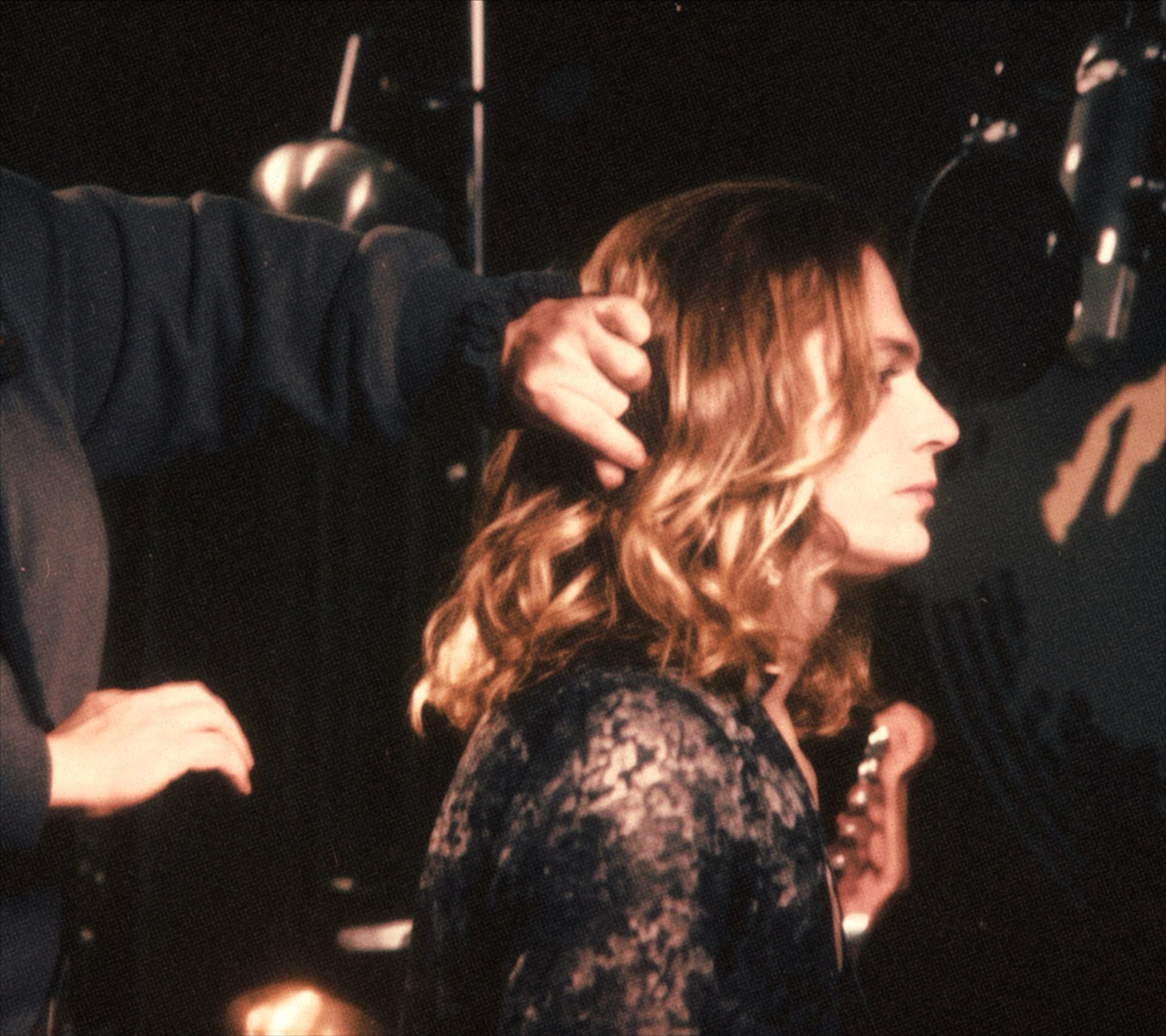
Lestat is a character forged through tragedy, loneliness, and violence; yet, he exists in spite of his trauma as a persistent light.
The light that made Nicki vicious.
The light that made Armand envious.
The light that made Gabrielle/a disappear.
The light that made Louis both overwhelmed and afraid.
And in the fandom, as in the books, this very light lives and breathes within polarizing conversations that end in Lestat being mischaracterized as egotistical or reduced to surface-level sexual objectification that removes him from being a victim of lifelong sexual abuse.
But he’s more than what one can capture in a condensed and non-nuanced conversation.
Though he runs from his pain and uses various performances to hide the scars, Lestat endures above all else.

The Vampire Lestat—premiering Sunday, June 7, on AMC and AMC+—learned as a young boy to push through physical, psychological, and sexual abuse, looking toward the “bright side” as a beacon for survival.
Wolves.
His father.
His brothers.
His mother.
Every scar they carved in his soul nestled deep within—taking up space in his psyche but never enough to darken the joy that he knew to be on the horizon.
Then came Magnus.
And Lestat’s horizon became death.
Yet, he was denied—turned against his will and left to figure out life as a new creature all on his own.
A familiar dalliance that mirrors his human life.
So he does what he knows how to do:
Endure.
However, with years for audiences to process and dissect Interview With the Vampire frame by frame, line by line—and Lestat’s character distorted and diluted through altered memories—many fans still reduce his trauma to that of his caricature on the train in Season 1 (you know the scene).
Why is that?
Is it hard to digest that Lestat is both villain and victim? Or does the current characterization eclipse an open mind for him to exist as a whole being?
Or is it easier to reduce him to something palatable to avoid sitting with the discomfort that he is capable of both harming and hurting?
Perhaps it is not a misunderstanding but an internal war of either accepting the labyrinth that is Lestat versus the alternative: realizing everything you thought you knew to be true is false.
For Lestat, his existence seems governed by something far more inevitable—an unrelenting law of cause and consequence, where every action demands a response, and every wound echoes long after it is inflicted.
And for almost 300 years, Lestat has reacted in ways that were both harmful to himself and to those he loves most.
Now, with the tour, it’s all the same.
A reaction to betrayal.
A reaction to vampire threats.
A reaction to being misunderstood and finally taking the steps to set the record of his existence straight.
But at what cost?

Many fans have waited decades for The Vampire Lestat to transform from text to screen, and it is finally his time to shine.
During interviews, Rolin Jones, and even Sam Reid himself, said that Season 3 will not be a season that paints Louis as a liar, nor will it set out to undo what the audience already knows.
It is a reframe—an alternate perspective that opens viewers up to see the truth behind the “monster” that lives inside their heads.
To peel back the vampire bit by bit until we uncover the man within.
All Lestat asks, and all he’s ever wanted, is for you to listen—but what happens when listening means accepting the parts of him you were comfortable misunderstanding?
Will you be ready?
The Vampire Lestat premieres Sunday, June 7, on AMC and AMC+. Check out the trailer below.
More Anne Rice Character Analysis
Kivonshe—founder of So There’s That—is a film & TV critic who explores and investigates compelling storytelling, fandom relationships, character psychology, and the impact of entertainment media through film reviews, episodic recaps, and in depth theme analysis.
© Kivonshe | So There’s That
Original editorial commentary on film and television. All rights reserved. Reproduction or redistribution without attribution is not permitted.