

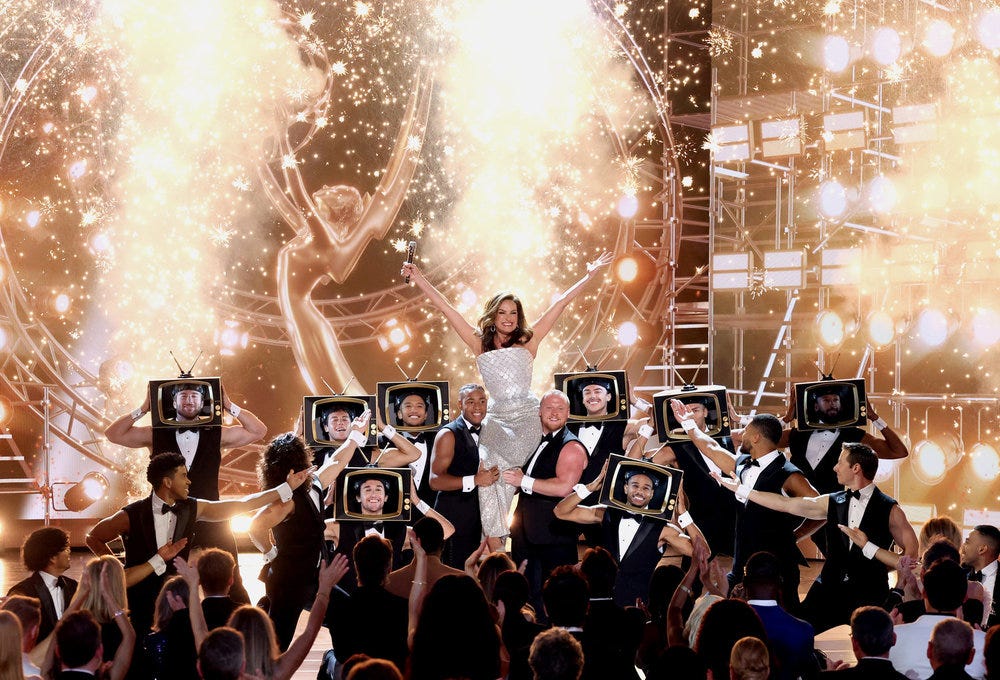
Television’s biggest night offered more than just glamour, awards, humorous monologues, and stale jokes.
It offered a look inside an ever-changing industry landscape—setting the stage that showed what prestige, longevity, genre, and creative risks look like.
And in between flawless performances delivered by Mariska Hargitay, history was made.
A comedy series dominated its categories and one performer proved that careers don’t have to end just because you reach a certain point in life.
But amidst those wins were some major absences—one of which sparked the birth of a social media hashtag that has viewers questioning if watching future awards shows is even worth it.
Together, the night gave us more than just a list of winners. It gave us a look at what the industry values now, and where it might be headed next.
Jean Smart Proves Age Doesn’t Stop Success
One thing is for sure, Jean Smart had an incredible night.
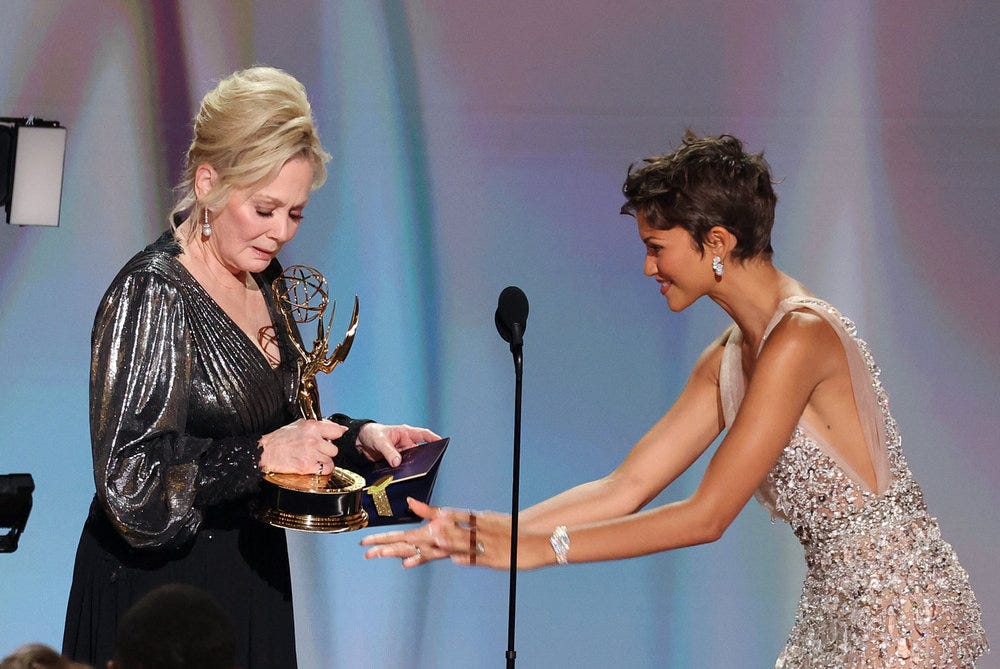
Her latest Emmy win for Outstanding Lead Actress in a Comedy Series for Hacks made history—making her the first woman to win an acting Emmy for every season of an ongoing series.
Alone, the achievement is remarkable.
But given where Smart is in her career—making history after 70 years of age—this marked something bigger for the industry.
Lately, Hollywood has offered women fewer leading roles, a point that many women have raised during interviews and on social media. This makes Smart’s win especially poignant because her success pushes against an industry that has treated age and gender as a limit to opportunity and longevity.
And in true Jean Smart fashion, she acknowledged that reality through comedy by telling all the women in the room to remain seated while the men stood—highlighting the level of discomfort women endure on nights like this while simultaneously pointing out that people only stood because “she is old.”
Funny.
Hilarious, even.
But beneath the joke sat an uncomfortable but appropriate truth given the history she had just made.
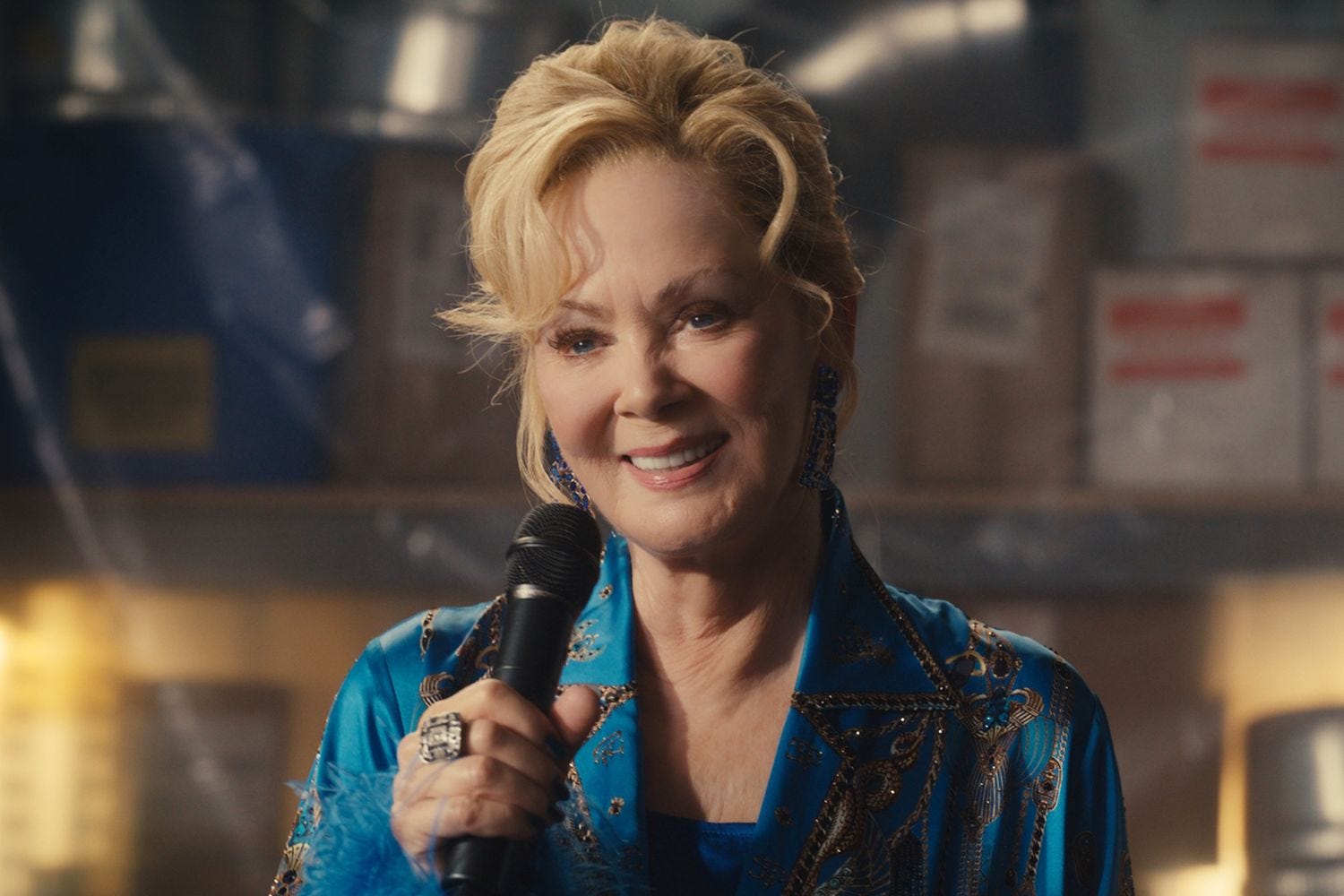
Her history, not as a legacy recipient due to past contributions to the arts but as a current working actress right now.
Hacks gave Smart the space and creativity in Deborah Vance to build someone of substance rather than become the supporting “old woman” in someone else’s story.
This makes her Emmy win a representation of every woman her age as well as those behind her who fight to come from the shadows of another’s portrayal.
And Smart recognized some of the people who were a part of this achievement along the way, reflecting on her 5-season-long journey: “What a ride it’s been.”
For the many women watching, Smart represents something grand and promising.
A career doesn’t have to diminish with age.
It can become something that is larger than life.
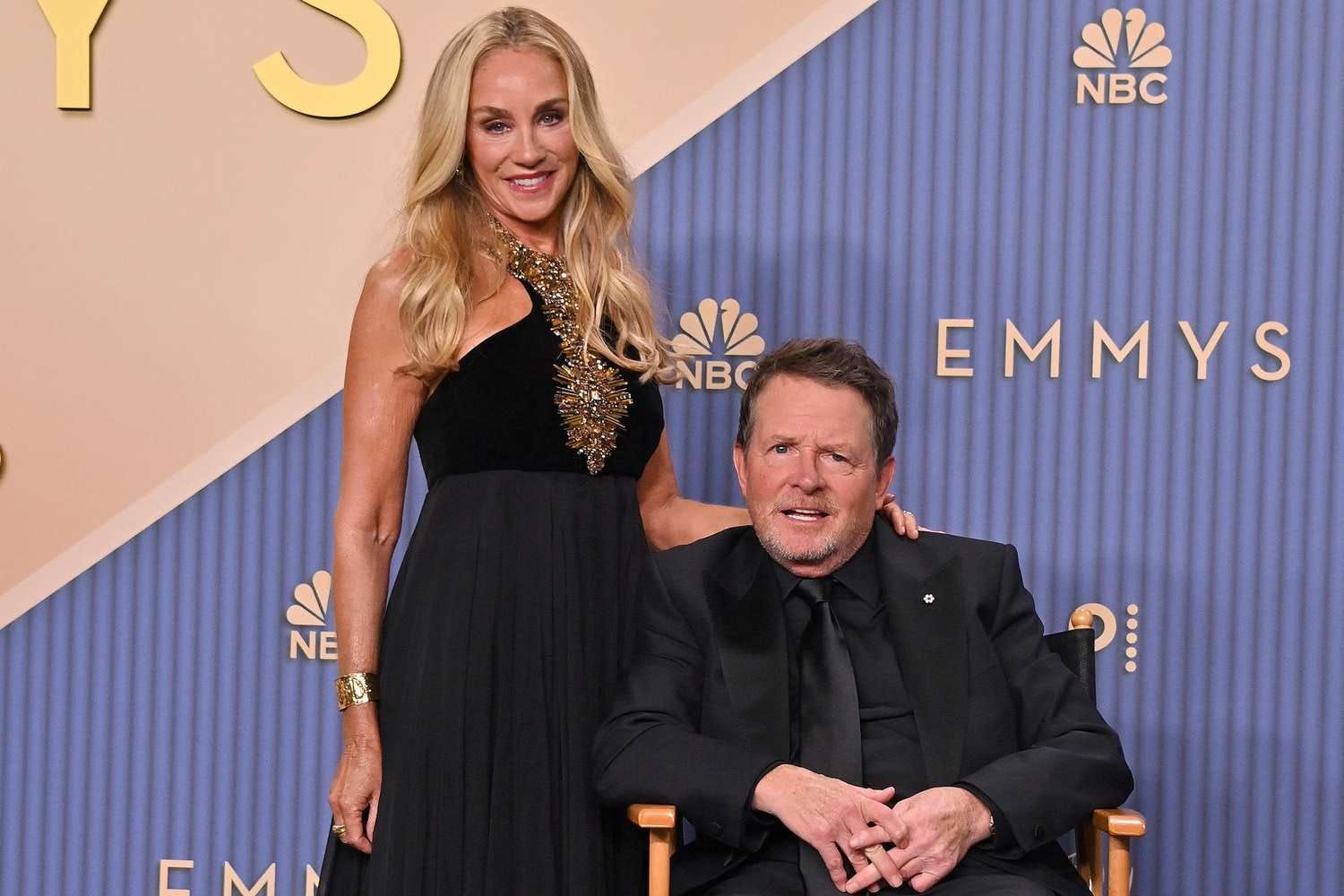
Michael J. Fox Brings the Room to Its Feet
Michael J. Fox became the latest recipient of the Bob Hope Humanitarian Award, delivering a speech that had everyone on their feet and moved to tears.
Fox is a constant reminder that television history and impact go far beyond ratings, big roles, and the next award.
His legacy in the industry and his tireless decades of advocacy for the cure of Parkinson’s disease brought the focus back to what matters.
People.
On a night built around competition, Fox’s speech and tireless work showed that visibility doesn’t just end when the director yells “cut.”
It extends beyond the life of a role when we allow ourselves to be human, undefined by man-made rewards and connected through service to our communities.
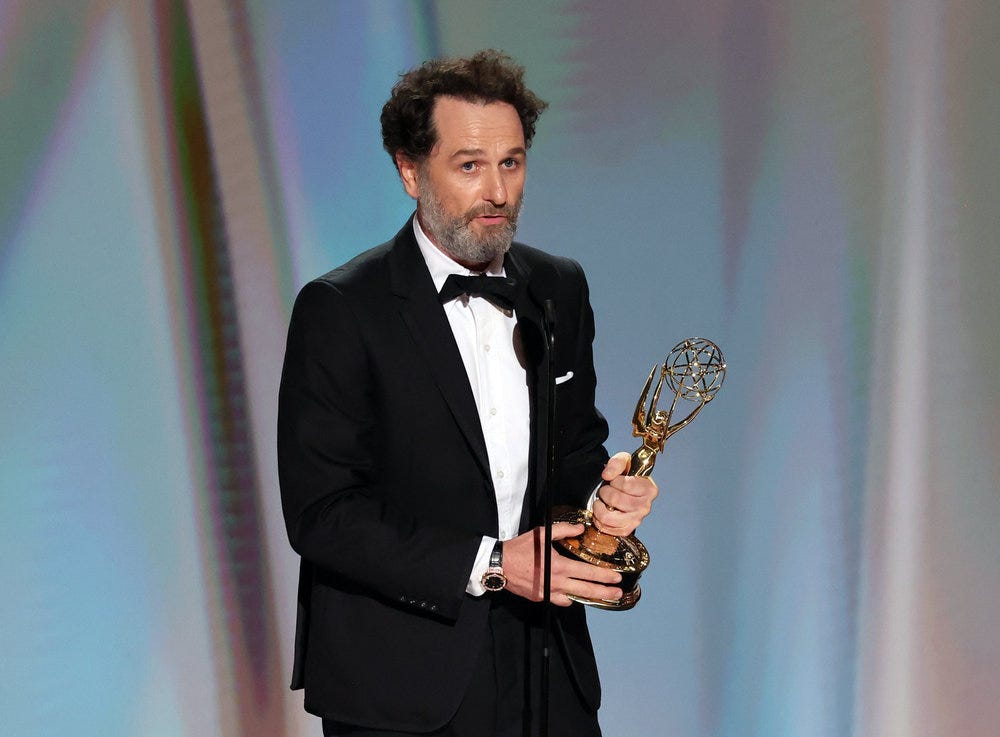
Matthew Rhys Did It... Again
It’s one thing to win an award in a single category.
But two in the same night?
That was unheard of until Matthew Rhys stepped onto our screens.
Rhys made Emmy history with his wins as the Lead Actor in both comedy and limited/anthology categories for Widow’s Bay and The Beast in Me.
With his previous win for The Americans in 2018, Rhys became the first performer ever to win Emmys across three lead-acting genre categories: drama, comedy, and limited/anthology.
Rhys’ wins highlight the vast creative engines behind his performances and how the writers and creators continue to push the limits of storytelling.
And Rhys made sure to acknowledge those who trusted him enough to embody the men whose stories he told.
During his speech for Widow’s Bay, Rhys praised writer and creator Katie Dippold—who won for Best Comedy Writing and Best Comedy—calling her mind both “depraved and twisted.”
He also extended honor to director Hiro Murai—who won for Best Directing—referring to him as his hero and crediting him with holding the series together “beautifully and decadently.”
That same gratitude extended not only to his creative family for The Beast in Me, but to his fellow actors whose stellar performances earned great praise from Rhys on stage.
During both speeches, Rhys kept the focus on the collaborative efforts of the entire team and his scene partners who challenged him in ways that made the nomination and subsequent wins possible.
Two different characters.
Two wins.
And historic wins across three different categories, an Emmys first.
This doesn’t speak to just an award statistic.
It speaks to opportunity.
In the past five years, television has increasingly become a space where actors push themselves beyond genres, showcasing sides of themselves that explore their strengths as performers while enriching characters’ lives for the viewers’ experience.
Matthew Rhys didn’t just explore those strengths.
He proved it’s possible to win with every aspect of them.


Creative Swings and Defining Moments That Took Center Stage
If Rhys represented genre fluidity as a performer, then Widow’s Bay became the poster child for series that genre-blend as well.
Widow’s Bay made a bold statement when it comes to shows that carry equal weight across multiple genres, proving that horror can make a home on the Emmys stage.
Matthew Rhys - Lead Actor
Stephen Root - Supporting Actor
Kate O’Flynn - Supporting Actress
Hiro Murai - Directing
Katie Dippold - Writing/Series
What made the wins exciting for TV is how the cast continuously brought the focus back to the creative team, who weren’t afraid to take risks by valuing the uniqueness of every member that contributed to the overall success of the show.
Root credited Dippold before calling Rhys and O’Flynn’s comedic work some of the best of the century.
O’Flynn called Patricia “the role of a lifetime” and thanked Dippold and Murai for their faith in her ability to bring depth to her character.
But for Dippold, this was a series 18 years in the making.
The first pilot for Widow’s Bay sat on the shelf for an entire childhood before she found the team that brought it to life, proving that sometimes time is the best reward.
Still, she made sure to single out the man also responsible for the final creative vision, Murai, with just these simple words:
“You are a genius.”
Murai’s Outstanding Directing win sits at the intersection of why audiences and voters were drawn to the series the way that they were in the first place.
As a director, he brought together performances, visual language, pacing, comedy, depth, and horror in a way that showed why it deserved a seat at the table.
And judging from everyone involved, it’s no accident that Widow’s Bay came out on top—proving that sometimes the strangest risks are the ones worth taking.
See full list of Emmy winners here.
Individually, the shows and performers that won represent different niches in television. Collectively, however, they show just how much the reward system has stayed the same.
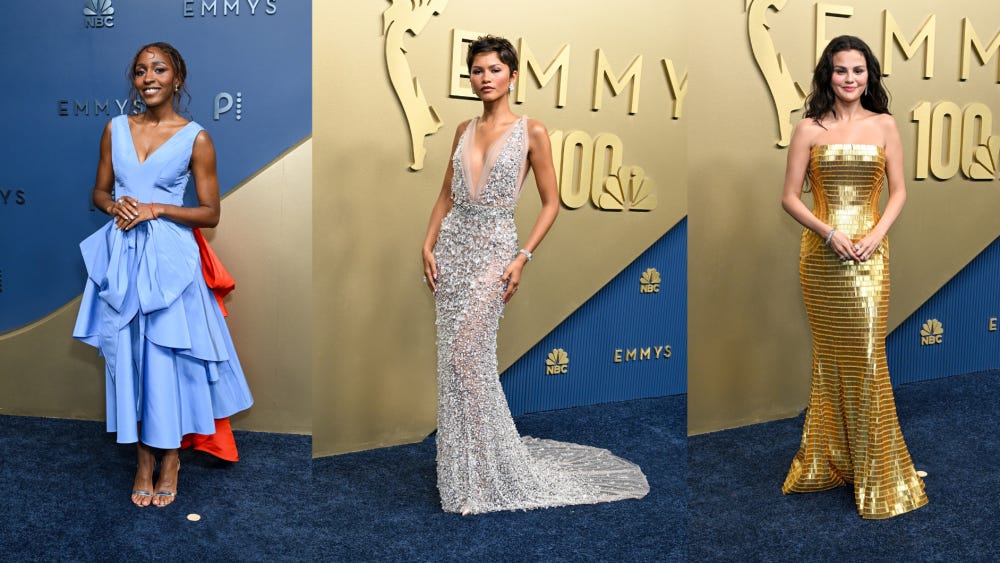
The Winners Circle Looked a Bit...
High fashion, glam, standing ovations, and shiny trophies are a great way to celebrate outstanding performers and shows, but they can also shine a light on those left absent from the applause.
Of the major broadcast winners, Black and other performers of color were noticeably left out of the accomplishments.
This isn’t an observation for the sake of inviting outrage nor forcing the Emmys to explain the state of representation across an entire industry.
But it is one worth examining, given the 2026 Emmys marked the first time in five years that no actors of color won an acting award.
Considering this alongside how the television landscape has somehow decided which stories hold prestige, it raises the question about those stories being considered worthy enough for recognition.
However, the question doesn’t get reduced to “who wins,” but it garners attention and a closer look at who’s consistently granted the opportunity, material, promotion, and industry support to stand on the big stage.
And at a moment where television already faces low episode counts, cancellations across networks and streaming platforms, and changed audience contribution to the cultural momentum, the questions become even more prevalent.
While history was made, the gaps in the “winners’ circle” raised eyebrows and questions.
Questions that cannot be answered by one ceremony alone.
Television is already changing at a pace that extends beyond awards and tradition. Furthermore, how audiences interact with the shows and the ceremonies is changing even faster.
With uncertainties all around, the issue of who receives the most opportunity to create a lasting body of work remains unresolved—a reality that stared us right in the face due to this year’s Emmys.
While the awards celebrate the art born from great storytelling, the patterns beneath the fabric of the industry reveal an uncomfortable question that television still has to answer.
Want more articles about television and its landscape? Subscribe to get them delivered right to your inbox.
The State of the Television and Streaming
Kivonshe—founder of So There’s That—is a film & TV critic who explores compelling storytelling, fandom relationships, character psychology, and the impact of entertainment media through film reviews, episodic recaps, and in-depth theme analysis.
1© Kivonshe | So There’s That
Original editorial commentary on film and television. All rights reserved. Reproduction or redistribution without attribution is not permitted.