

Hillman College Here We Come
“Relax. Relate. Release.”
SCHOOL IS IN SESSION!
A Different World premiered all 10 episodes Thursday, September 24, on Netflix, and it’s the perfect start of freshman year…
If you include the chaos and aimless decision-making that 18-year-olds are prone to make once they’re out from underneath their parents’ surveillance.
Fitting in, boys, girls, grades, and envy live within the students as they stumble through Hillman trying to find their identity and find their way.
AND IT’S HARD!
New crushes.
New secrets.
Looking for husbands?!
But the lessons that come with it equip you with the tools to call upon should the need come.
And that, students, is life.
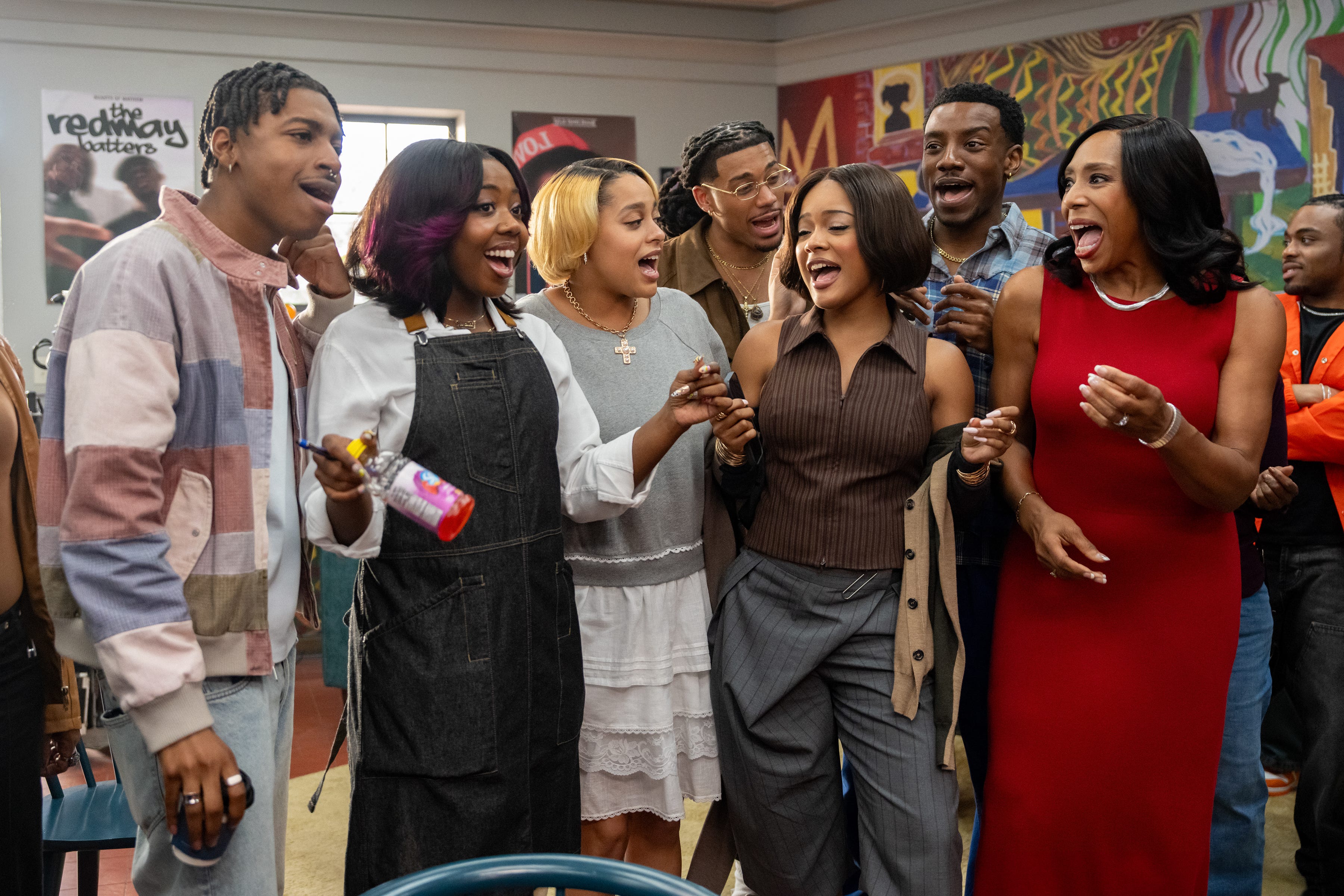
Creator and showrunner Felicia Pride brings another ensemble cast that includes Maleah Joi Moon, Alijah Kai Haggins, Cornell Young, Jordan Aaron Hall, Kennedi McClure, and Chibuikem Uche.
The legacy cast includes Kadeem Hardison, Jasmine Guy, Darryl M. Bell, Cree Summer, Charnele Brown, Jenifer Lewis, Dawnn Lewis, Glynn Turman, and Jada Pinkett Smith.
With legacy, however, comes the heavy weight to live up to family expectations, standards, social pressures, and personal goals.
A Different World returns to Hillman College with a new class stepping onto campus. At the center is Deborah Wayne (Moon), Whitley’s (Guy) and Dwayne’s (Hardison) lovingly sheltered youngest daughter, a free spirit with a flair for the spotlight and a big heart who’s still figuring out her own path at Hillman.
Throughout each episode the effortless mix of humor and depth remains and translates across time—integrating punchlines, one-liners, and social media interactions that feel both familiar and fresh.
And to their credit, the new generation has their own identity.
Though they occupy similar spaces (same jobs, dorm rooms, the jock, the sheltered), A Different World expands common generational behaviors and tropes in a way that still makes the characters feel brand new.


However, there is a downside to A Different World.
I know, don’t kill me, but it’s not what you think.
It’s not the writing, or the costumes, or even the story itself.
It’s that we simply didn’t get enough time to fully move into the dorms with these characters.
The ten-episode series glides through the personal struggles of the students, their successes, and past traumas quite smoothly—grounding the audience into the story without overwhelm.
Even the cast from the original series enters each scene authentically, still connected through nearly four decades of friendship.
But ten episodes just isn’t enough to keep us satisfied.
More episodes would allow audiences to create deep and rich connections with the new cast outside the shadows of their parents.
While keeping the previous cast connected to the series is the perfect bridge for fans old and new alike, more episodes could wean us away from the reliance on the original cast and develop new relationships with the younger generation.
It could also allow more breathing room for serious issues like under-testing and under-diagnosis of learning disabilities in Black women that get overlooked or often framed as “doing the most” or being “all over the place.”
It’s exactly the conversation A Different World has always made room for. Here, however, the shortened season means the series has to move on almost as quickly as it introduces it.
But as quickly as the topic comes, A Different World still manages to give the characters enough reflection to establish what the issue means.
Finding Yourself Within the Noise
A Different World still manages to infuse social and world issues into the messaging, and one of those issues is the navigation of social media.
There is power in what you say on the internet.
And A Different World tackles a storyline where the students must learn to maintain conscious awareness of their influence and how, if not taken seriously, it can negatively impact everyone around them.
For a generation whose social currency increasingly exists online, the series asks what happens when digital influence collides with real-world consequences.
And the storyline beautifully navigates the shift in how younger generations communicate and the responsibilities that come with that influence.
But there’s one storyline that is bold, loud, and proud.
The fashion.


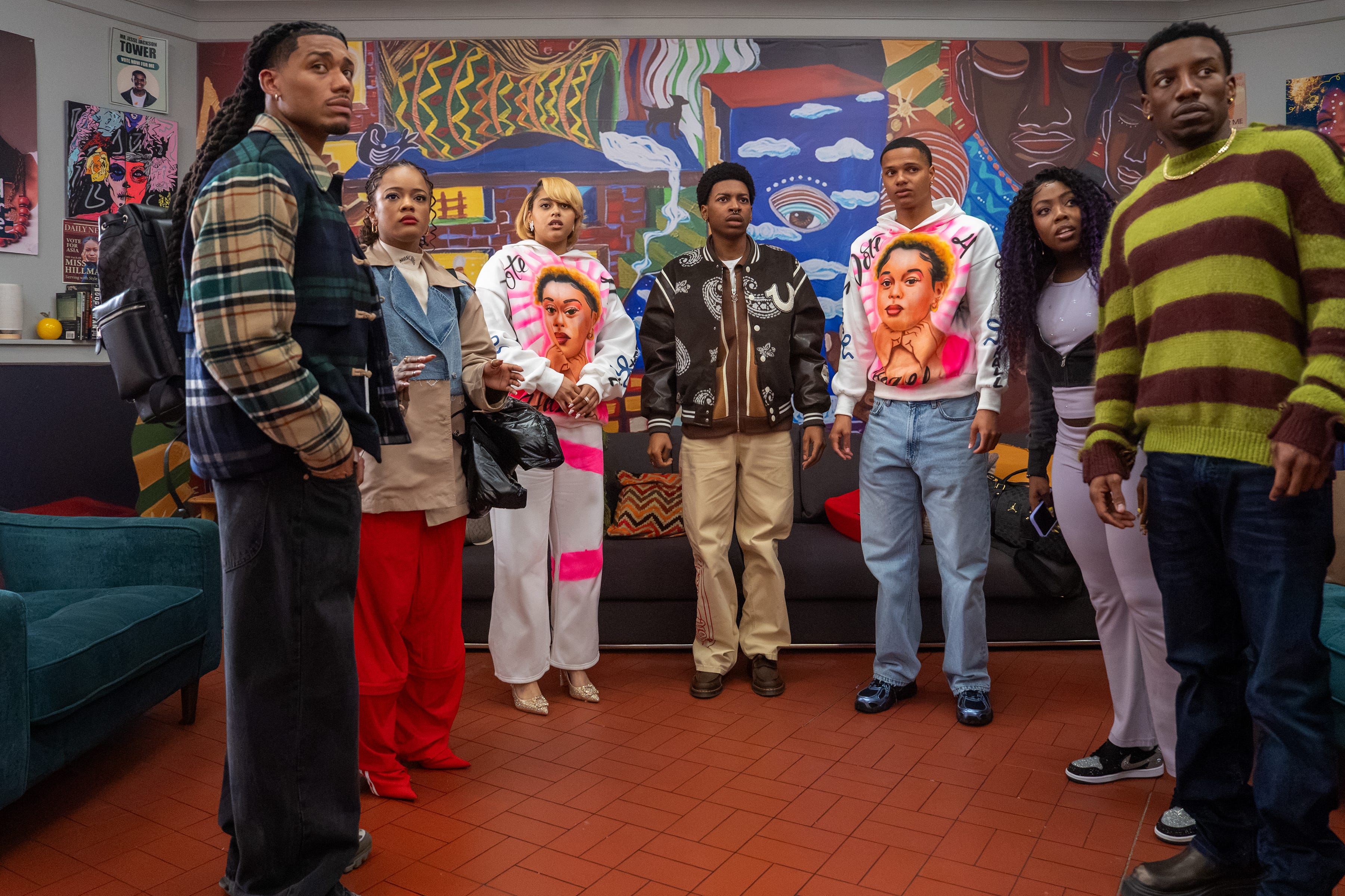
Historically, Black sitcoms have pushed artistic boundaries and expressed their political views through fashion, and Emmy-nominated costume designer Provi Fulp delivers.
Every outfit, every color, and every stitch enhances each character’s personality, personal journey, and emotional state—deepening our connection to who they are.
Deborah’s style changes from patterns and pairings that depict the daughter her parents want her to be to pieces that feel elevated—finding her voice through fashion just as much as her studies.
And with Fulp, style is more than something to admire.
It’s a lifestyle.
It’s a statement.
And the students of Hillman are bold with what they have to say.
Even if what they say turns into a hashtag.
What cannot be a hashtag is the power in Black education. From the original series to now, that messaging still remains.
Though it was compressed across a short order series, the value of what A Different World represents still matters.
Parents tell us who we’re supposed to become.
Social media tells people who we are.
Fashion tells people how we see ourselves.
Friends and relationships help us figure ourselves out within the noise.
But education gives the students the environment in which they can discover who they want to become.
This is where the old meets the new—a series that still makes space for conversations about identity and agency.
That’s why Hillman matters.
And it’s only just getting started.
Want more analysis for your favorite shows? Subscribe to get them directly in your inbox. Have a suggestion? Leave a comment.
Your Next Weekend Binge
Netflix’s Wayward Turns Troubled Teens Into Psychological Horror
Elle Brings a Bright New Chapter to the Legally Blonde Legacy
Kivonshe—founder of So There’s That—is a film & TV critic who explores compelling storytelling, fandom relationships, character psychology, and the impact of entertainment media through film reviews, episodic recaps, and in-depth theme analysis.
© Kivonshe | So There’s That
Original editorial commentary on film and television. All rights reserved. Reproduction or redistribution without attribution is not permitted.