Prime Video’s ‘Blade Runner 2099’ Review: The Brutality of a World Reborn
Michelle Yeoh and Hunter Schafer deliver powerful performances in a visually compelling dystopian drama that explores the cyclical nature of power, identity, and survival

Editor’s Note: Episodes were provided in advance for editorial coverage. All eight episodes are available to stream on Prime Video on Wednesday, November 25, 2026.
Blade Runner 2099 packs a huge punch with its futuristic world-building, perfectly restrained performances, and a storyline that will live on for years to come.
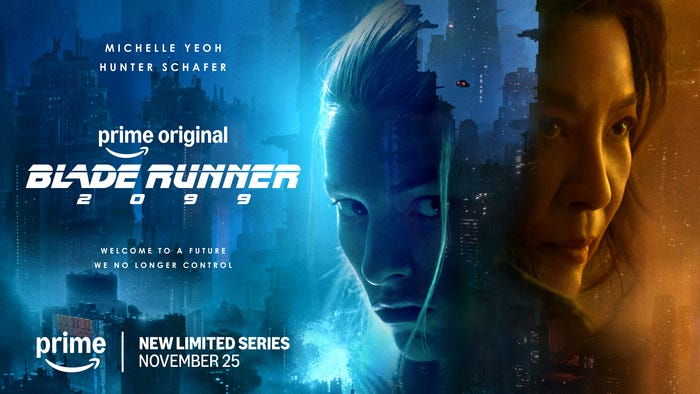
There’s only one word to describe Blade Runner 2099:
Brutal.
And in a dystopian future where the ones once in power are now subject to the life of those they oppressed, Blade Runner 2099 brings you into this brutality in a way that makes you question if this has always been your reality.
Created by Silka Luisa, with Ridley Scott serving as an executive producer, Prime Video’s eight-episode sci-fi miniseries takes place fifty years after the events of Blade Runner 2049. Los Angeles has been reborn, just not by humanity.
Starring Michelle Yeoh, Hunter Schafer, Dimitri Abold, and Lewis Gribben, Blade Runner 2099 thrusts us into a world where the power dynamic between humans and replicants has been reversed.
The outcome?
Utter chaos.
The Change in Power is Cyclical
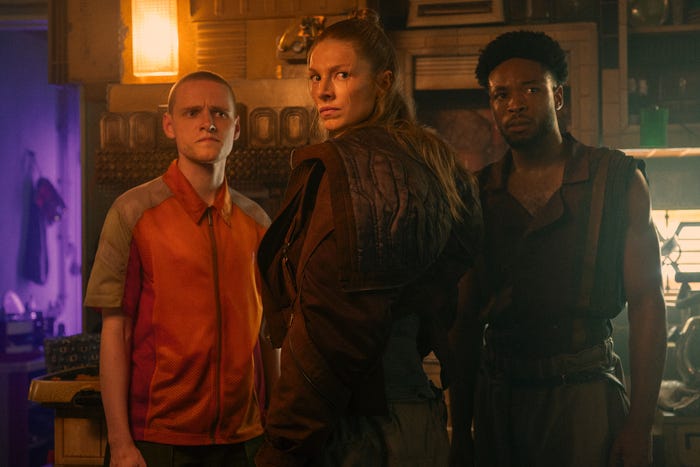
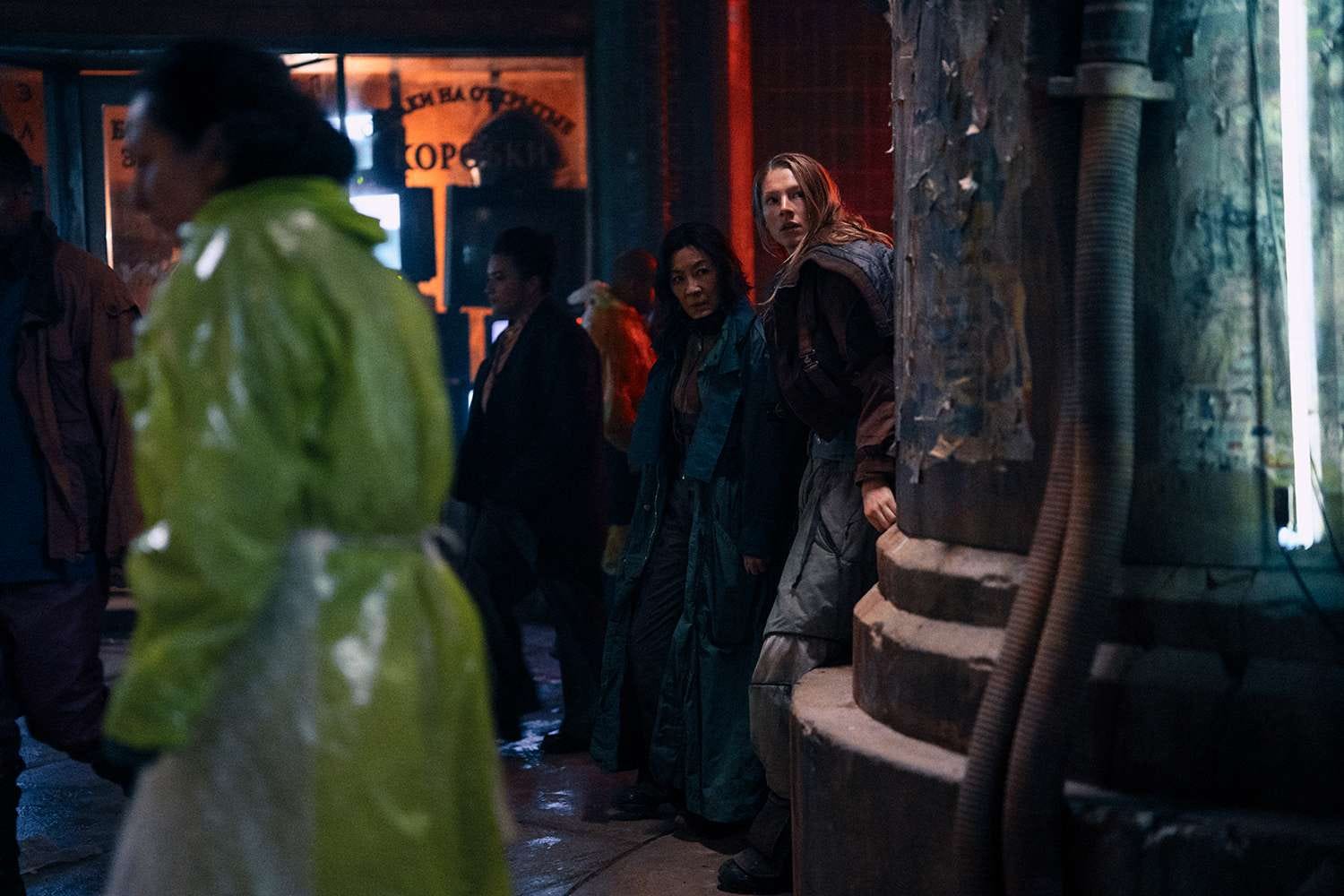
The series starts with Cora (Schafer) on the run—navigating the run-down streets to ensure she doesn’t get caught by replicants.
She’s in desperate need of a new identity, something the humans frequently do in order to not get caught and executed.
She enlists the help of Bebeto (Abold).
A new name.
A new persona to portray so that no one ever gets too close. No one ever sees who she truly is.
And for a girl who’s spent a lifetime changing identities, what’s one more if it means protecting herself and her brother, Elias?
“Replicants think we can forget we made them. But they can’t; we’re in their bones.”
Bones responsible for the construction of replicants in the first place, now at the mercy of the power they created.
But the very premise of Blade Runner 2099 is about the cyclical process of change.
What once was will be and what will be becomes what was.
In the battle of power between the replicants and the humans, the humans chase a time when they held the power, what once was.
For the replicants, however, they impose their power to show the humans what will be.
But as the cycle goes, that power will eventually change hands once again.
Who will be left behind in the struggle?
Two Sides of the Same Darkness
“Don’t be scared of dying. It’s just trading one darkness for another.”
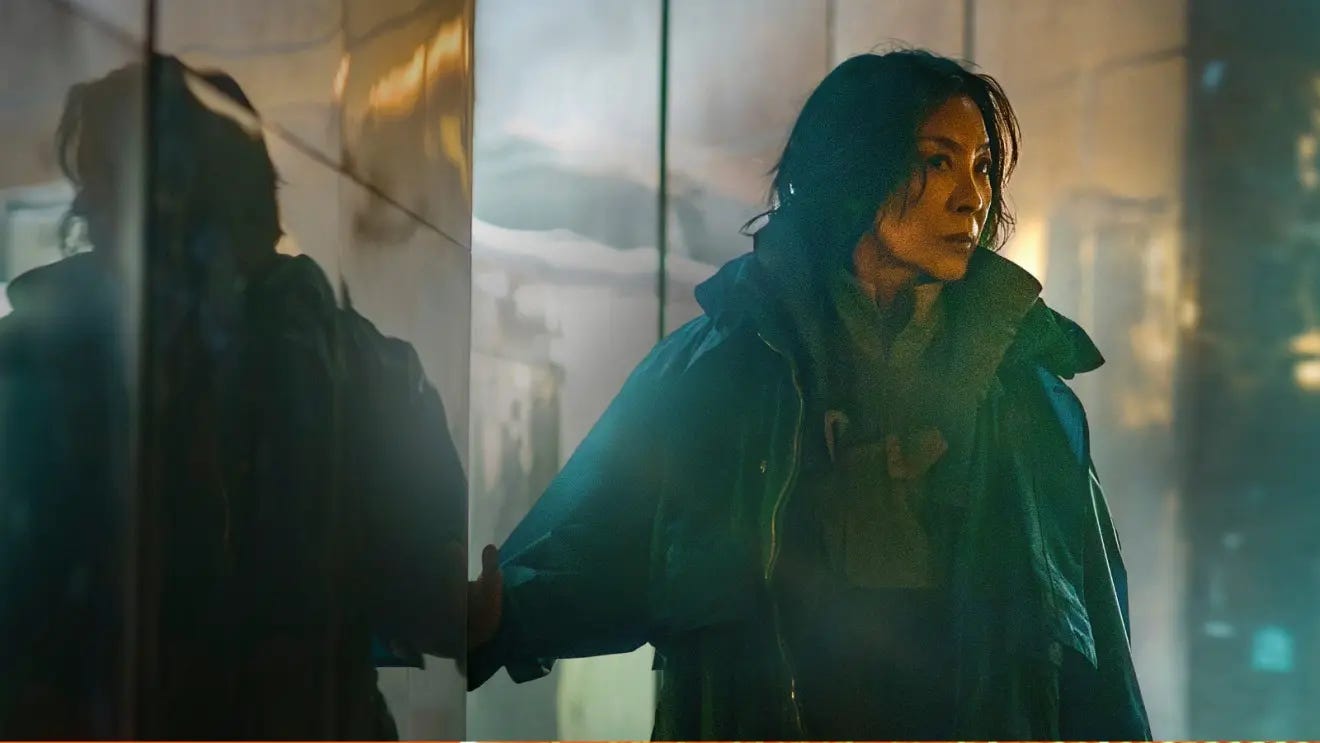
Olwen (Yeoh) is ruthless in her search for the blade runner called Marek, and her search spares no violence and offers little mercy.
And Michelle Yeoh’s callous delivery of the series’ most complicated protagonist is chilling—her apathy, stoicism, and unwillingness to bend give audiences a character who isn’t afraid to be complex.
She doesn’t care about being understood or about anyone’s sympathy—making her a compelling person to be pulled into.
But finding Marek means more for the replicants than humans could fathom.
If the replicants show dissension within their own ranks, it could give the humans the hope to potentially gain control once again.
Worse, Olwen is running out of time.
Time that Olwen feels in every fiber of her being, slipping away with each passing moment she doesn’t find him.
But her relationship with Marek and what she’s tasked to do when she finds him are at odds—showing a side of her that replicants aren’t supposed to be capable of expressing.
Yet, the compassion audiences might feel neither overshadows nor competes with the ferocity she’s known for. There’s a duality to who she is that doesn’t complicate our perceptions of her at all.
She’s ruthless.
She has a past where something kinder existed.
It is what it is.
And Yeoh delivers her character with power and ease.
She was born for this.
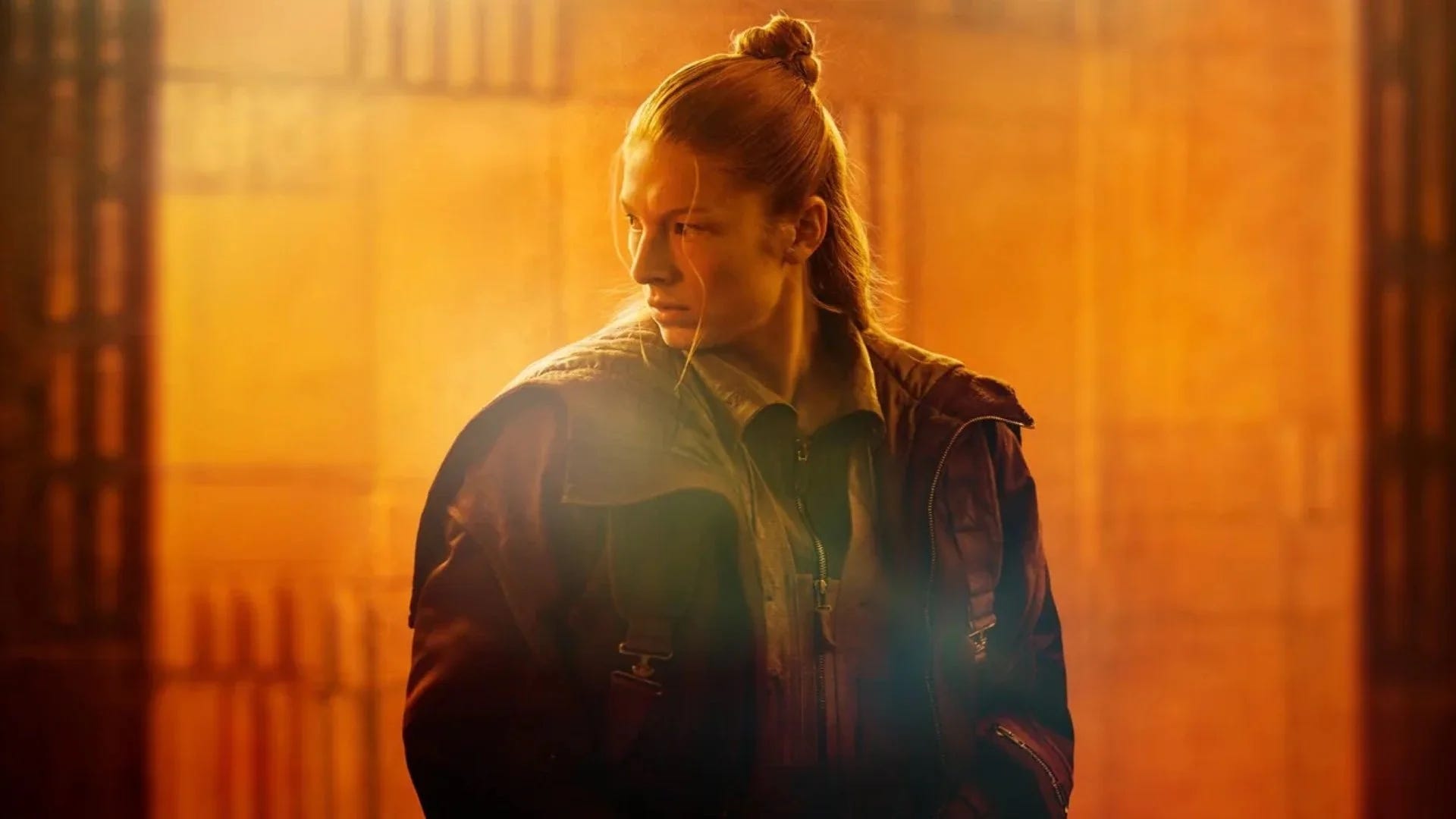
Opposite Yeoh is our co-protagonist, Schafer.
Schafer does something equally as powerful as Yeoh but in contrast to all that Olwen represents.
Cora has heart, kindness, and a will to survive in spite of her circumstances.
And Schafer holds all of Cora’s pain, suffering, hope, and desire inside like a bowstring—slowly pulling tighter and tighter until that perfect, stable breath signals when to finally unleash it all.
Blade Runner 2099 doesn’t waste time pulling audiences into Cora’s story—going undercover on a mission that could get her killed against a behemoth of an enemy who could destroy her first.
No questions asked.
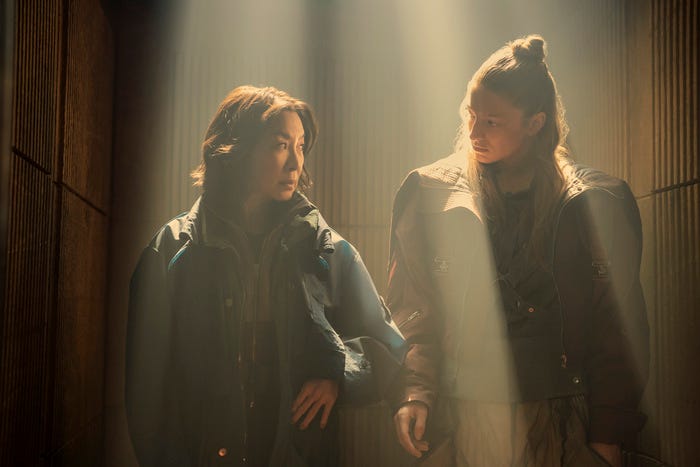
When Olwen comes face-to-face with Cora—infiltrating the replicants under an assumed name—the energy, driven by the underlying ominous musical score, is both a threat and a promise of who they will become to one another.
Their paths converge when the solution to both their problems rests upon finding Marek.
Side by side, they’re assigned as partners on a quest—neither truly aware of the other’s intentions but knowing they must rely on the other to succeed.
They watch.
They study.
They wait for the other to show a sign of weakness, a mask slip, to figure the other out before it’s too late for either of them.
But what forms between them is an unlikely bond that moves the series from an ominous cloud to one that sparks just the tiniest bit of hope.
Where There’s a Heart, There’s Hope
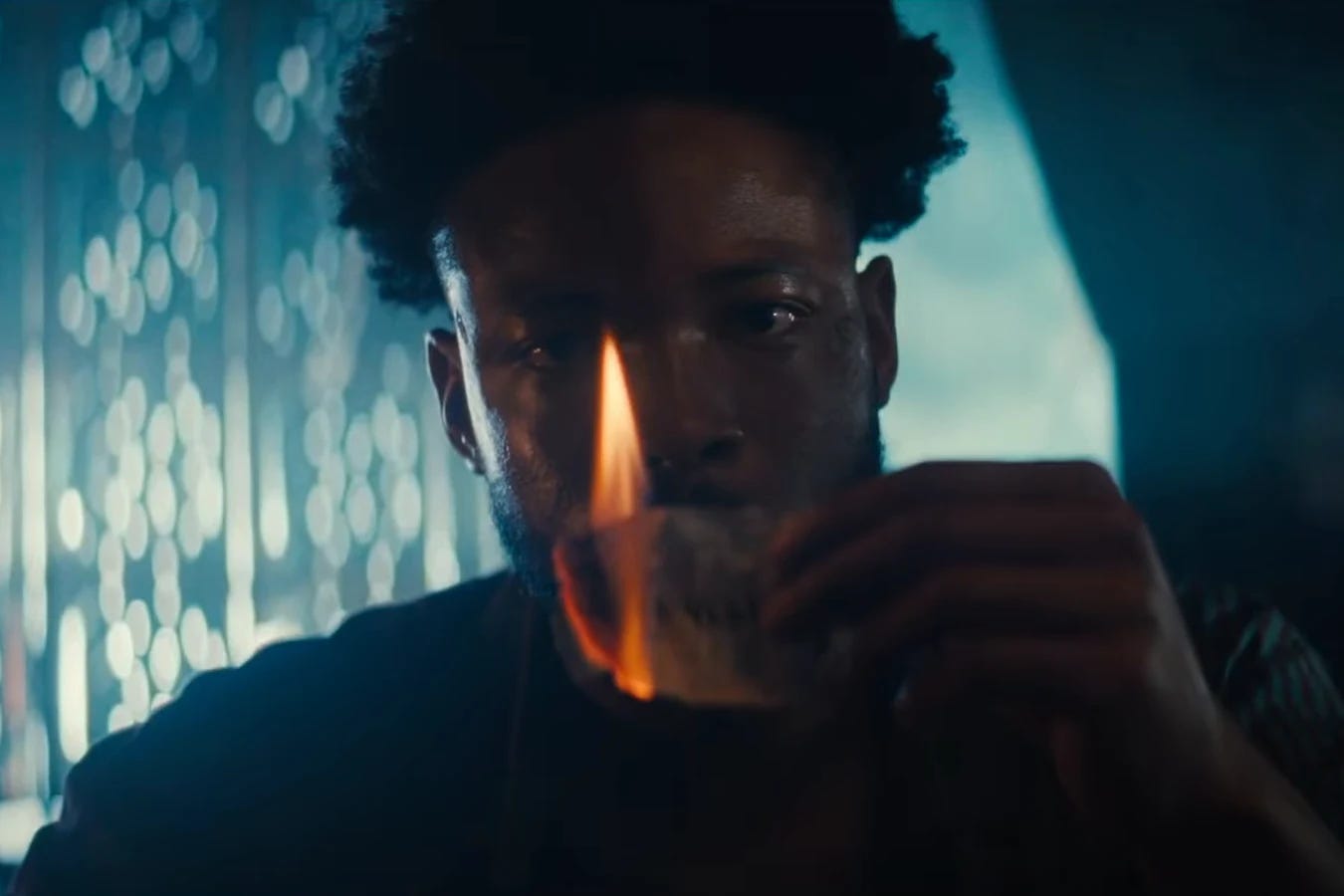
Bebeto (Abold), the man who helps humans hide by giving them another’s identity, is the emotional glue that bridges the violent energy between the replicants and the humans.
His storyline starts as one on the periphery but quickly comes into focus when he goes on a house call—placing him directly in the crosshairs of a replicant.
But Bebeto is smart, smarter than the replicants give him credit for, and he secures what he really came to retrieve.
As the stakes grow higher and more dangerous for humans, Bebeto’s role increases.
For Abold, his performance becomes one of warmth—embodying hope and humanity in every line delivery while also maintaining the strength needed to fight.
It’s a balance that requires Abold not to crumble under the weight of his responsibilities, but to thrive because of them.
His character is paramount, and what he represents is the heartbeat of Blade Runner 2099.
In a world where distrust, disloyalty, and selfishness are the primary decision drivers for many, Bebeto is a beacon of hope, grace, and revolution.
And Bebeto does just that.
He takes risks on people, hoping he can reach the good in them in order to spread that same good to the humans who remain—the healthy ones, the broken ones, and even those to whom he’s given a new name.
A Story That Lures You
The music is just as integral and instrumental to the storytelling as the performances, and Leopold Ross—credited for the series’ score—tells the story beneath what’s seen without any words needing to be uttered.
The opening theme makes you feel a longing for what was lost and a simultaneous energy to fuel the fight to get back what was taken.
It’s trippy.
Yet bold enough to make you feel like you can win.
Along with the theme song, the score within the series pulls you deep into the unspoken emotions of every character—taking you back to a time of utter destruction. It sometimes sounds like a whimper, then swells into a cry deep from the soul.
It’s sad. On both sides.
The music, coupled with the dystopian and futuristic visuals, allows Blade Runner 2099 to command the screen and your attention—delivering a high-octane eight-episode drama worth returning to again and again.
The pacing throughout the series also plays a part in why audiences will want to come back.
Each episode reveals what’s necessary in the moment and holds secrets away from the audience until it’s time for the character to uncover them.
With a lot of series beginning their first episodes with a “whodunnit,” Blade Runner 2099 trusts us—allowing the story to seduce us and to unfold piece by piece as we’re lured into captivity by the narrative construction.
Nothing is black and white nor as it seems on the surface. And as each episode begins, you think you have it figured out until the episode ends with more questions than answers.
It’s thrilling.
It’s exciting.
And it reminds us that the cycle of life doesn’t end.
It only has new beginnings.
Want more analysis for your favorite shows? Subscribe to get them directly in your inbox. Have a suggestion? Leave a comment.
Dystopian World-Building
Kivonshe—founder of So There’s That—is a film & TV critic who explores compelling storytelling, fandom relationships, character psychology, and the impact of entertainment media through film reviews, episodic recaps, and in-depth theme analysis.1
© Kivonshe | So There’s That
Original editorial commentary, criticism, and analysis. Unauthorized reproduction, republication, redistribution, or adaptation of this content, in whole or in part, is prohibited without prior express written permission from the copyright holder. Attribution alone does not constitute permission.
Discussion about this post