

The Choices We Think Are Our Own
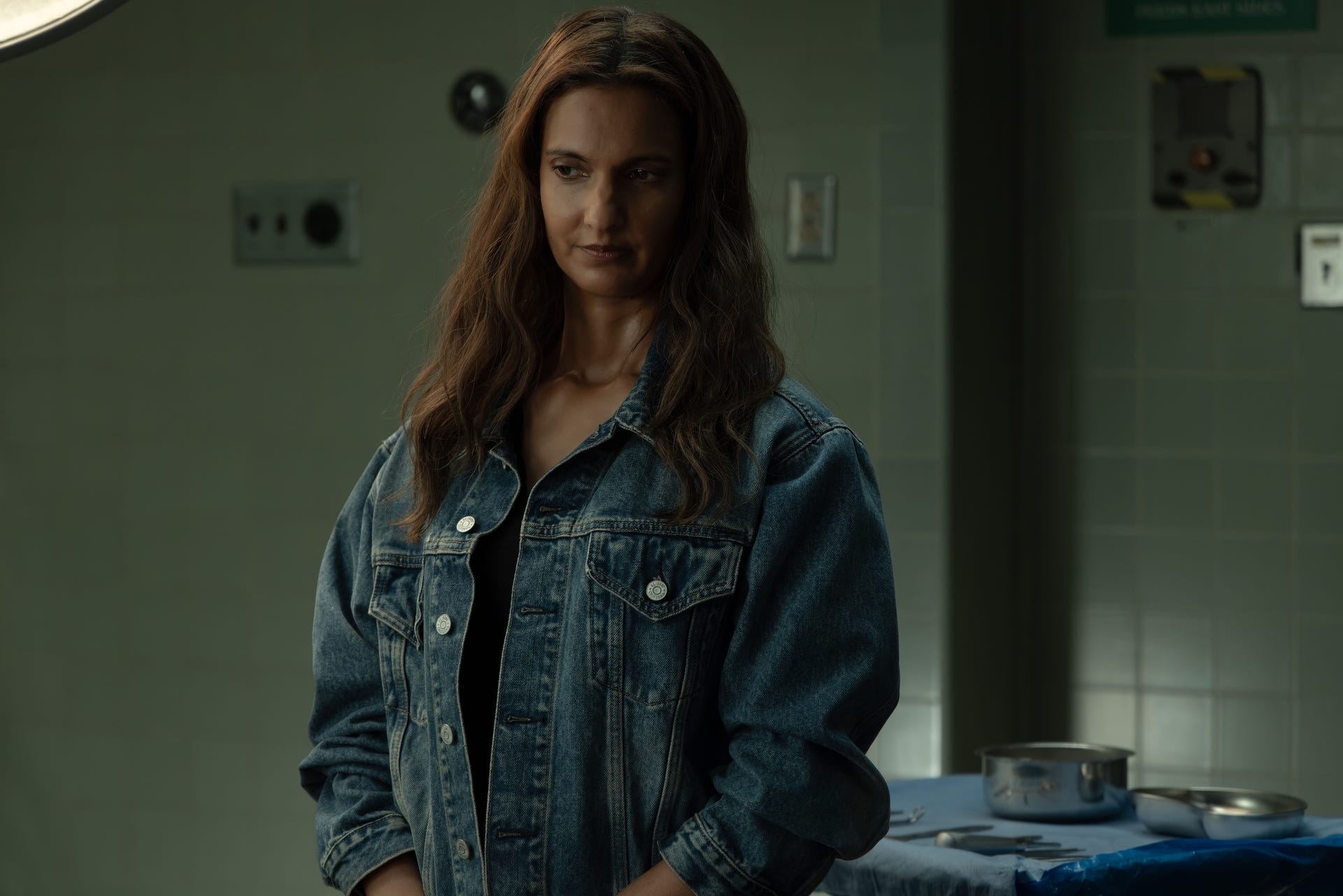
“Lights Out” opens in 2007 with Kerry Kane arriving in Rushville attempting to escape from two men who were paid to end her life.
Trapped and pleading for her life, a stranger, Zoe, intervenes--immediately disabling the men, breaking bones, and taking zero names.
In exchange for her life, Kerry cuts her pinky off as proof of death to send back home—and if they don’t get the story right, Zoe promises to kill everyone in their family as well as their employer.
If it wasn’t solidified for viewers in Episode 4, this moment leaves no room for interpretation.
“One day some people are going to come looking for me, and when that day arrives, I’m going to need someone who knows what it’s like to feel backed into a corner…someone willing to give up a piece of themselves. Can I count on you?”
In the space between life and death, Zoe offers Kerry a choice.
An opportunity to survive.
An illusion of agency wrapped in coercion that costs her both emotionally and physically.
A boon for the chance to live again so long as she protects Zoe when the time comes.
Nine years later, that time arrives along with the confirmation by Hal and John.
Zoe is the Manhunter.
“A lot of people are going to die today.”
Lanterns Episode 5 feels like a finale because it moves as if it isn’t interested in the reveal as much as how everyone moves once the truth creates a divide that forces everyone in Rushville to pick a side.
Hal makes the first move by attempting to move John from the game board entirely, leaving him trapped inside a wrecked vehicle on parting words that are neither humorous nor a threat.
Just a fact.
“You were never going to replace me. Here endeth your training.”
It’s an act that feels cruel, but after Episode 4 showed just how much Hal was aware of the Guardians’ plans, even this cruelty deserves interrogation.
But as Hal moves to bring down Zoe, life in Rushville is destroyed, and the entire town moves to protect Zoe—including Kerry, as she empties her clip while begging him to leave.
Hal makes the choice to stay.
To fight.
And the consequences are now his to bear.
John, however, finally receives answers on his own.
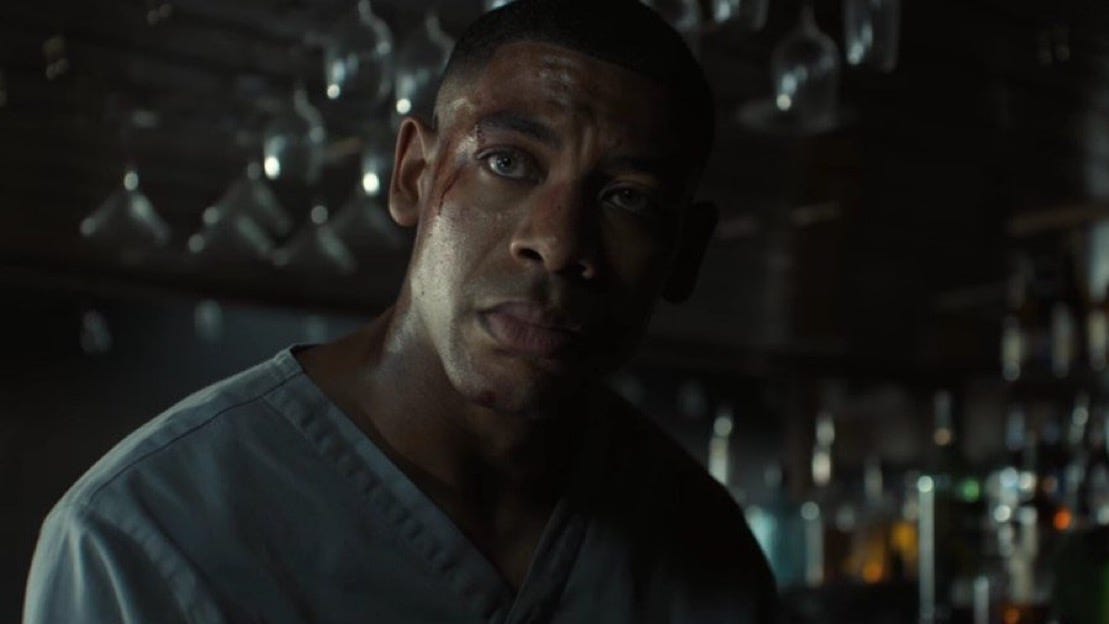
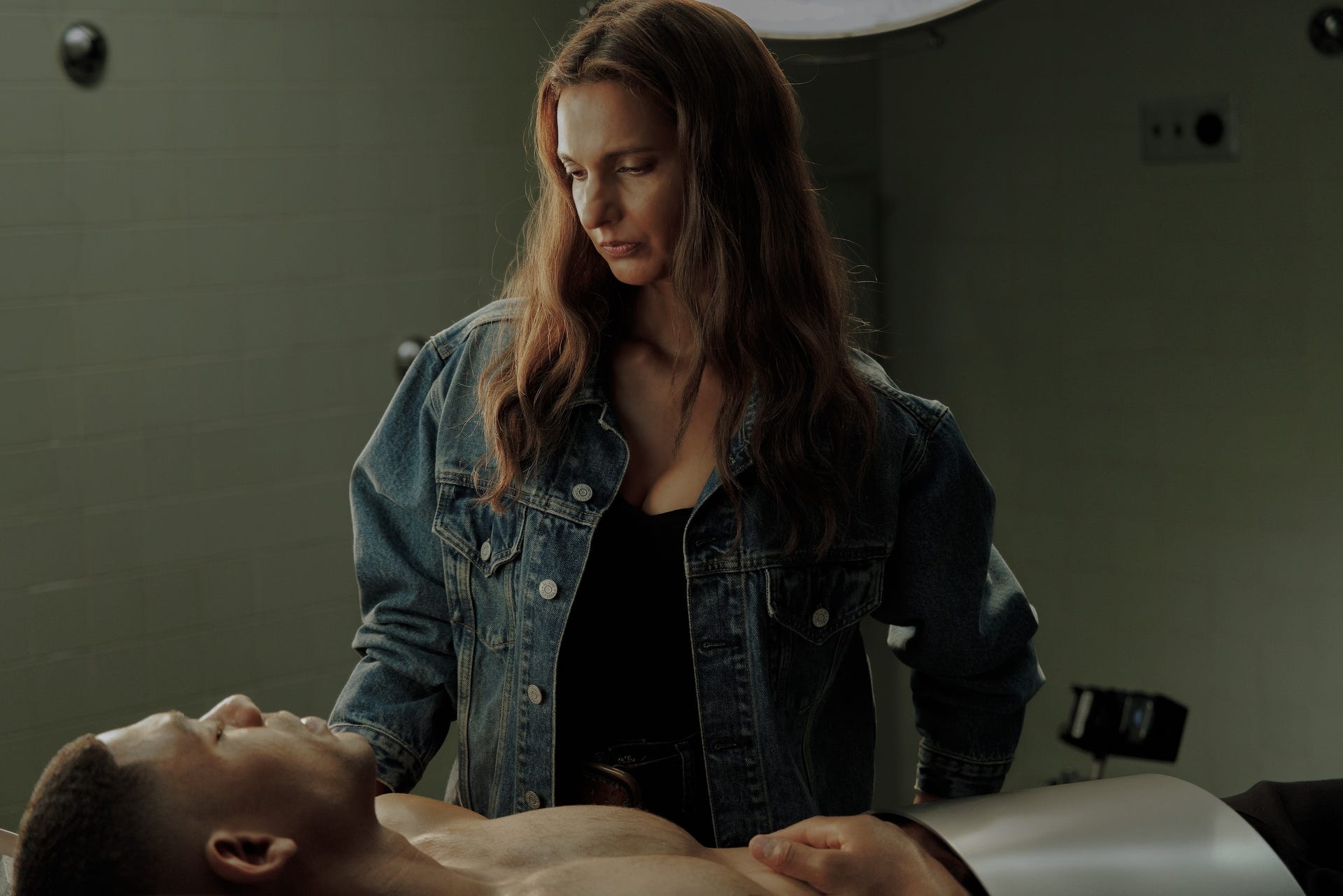
Burnt and drugged up, Zoe interrogates John in the hospital, and we learn exactly why John didn’t tell the Guardians about her.
He doesn’t trust them because they never told Hal he was being replaced. Instead, they expected him to betray his moral code by taking something promised to him from birth.
John also discloses that Antaan proclaimed the Manhunter was under the Guardians’ protection—withholding his reports from the Guardians until he could determine on his own what was the lie and what was the truth.
She is not.
They, the Guardians, created her and her kind, and now, because the Manhunters did not bring justice the way the Guardians intended, they want to destroy her.
But is the Manhunter a bringer of justice or a harbinger of destruction?
There was a reason John trusted his gut about the Guardians. But like Kerry, a cost comes from being saved by Zoe.
He must make a choice.
“If I come out white, the deal’s off.”
Even in great pain and trauma, Lanterns effectively weaves in humor—this time imbued with colorism and envy.
This moment provides a deeper peek into the childhood John endured and his relationship with his brothers that was cultivated by his parents.
This humor is matched equally by a painful truth when John asks why Zoe chose the color of her skin, and her answer is profoundly simple.
Power.
She chose the skin color and gender of people who face great adversity in the country she inhabits.
Seen as a socioeconomic barrier, she uses it to achieve a higher vantage point, to become stronger “in ways comfort never could.”
She doesn’t see disparities as a weakness but as a way to successfully infiltrate a system that takes the oppressed for granted.
Instead, she sees it as something she can use to mold herself into the disguise she needs. For John, this very adversity was used to mold him into the man everyone else needs.
As she places a single drop of blood in his eye, John is catapulted back to a life of training and endurance—a life full of adversity and a path that was never of his own choosing.
These memories echo the very upbringing we examined after Episode 3 seemingly proved why John was always built to become the Green Lantern.
But Episode 5 forces us to ask a different question.
Who did the building?
Suddenly, the choices made by the institution and his parents for his life become a burden rather than a blessing.
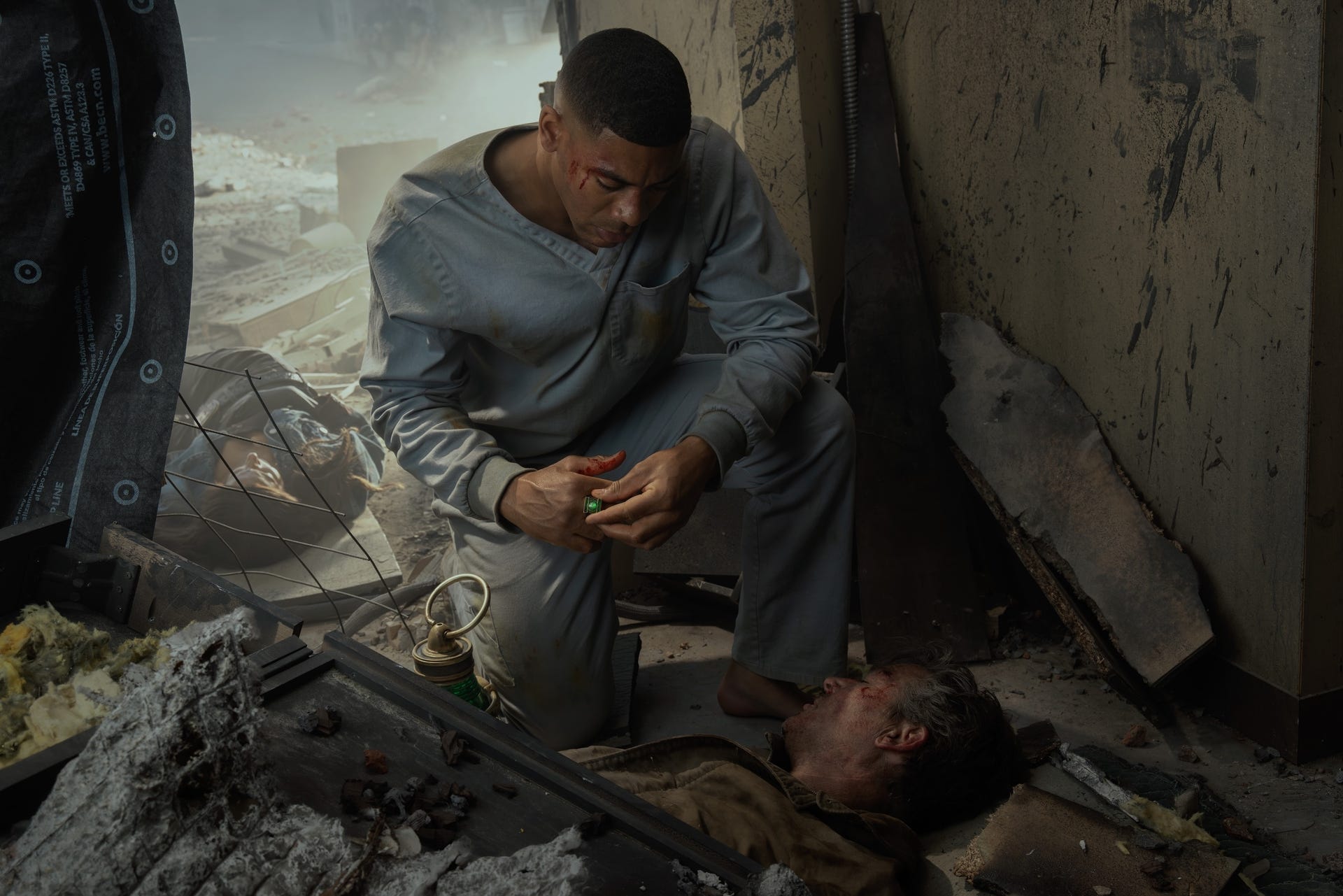
The Choices We Know We Own
John has another decision waiting for him.
As Rushville falls to destruction all around him, John calls his parents to get connected with Lianna.
However, their concern isn’t on their son’s tone of voice nor the audible violence in the background, but on the thing they chose to define his entire existence.
The ring.
And for a brief moment I questioned if John was speaking to his parents at all—the question alone showing just how intertwined, strict and expectant the Guardians and his parents are over his decisions.
A dutiful soldier.
But whether the voices belong to them becomes secondary to what it means in the larger scheme of John’s life.
His parents demand duty.
The Guardians demand loyalty.
Zoe demands connection.
But Hal all but asks that he turn away from the very thing everyone has told him belongs to him.
So John decides.
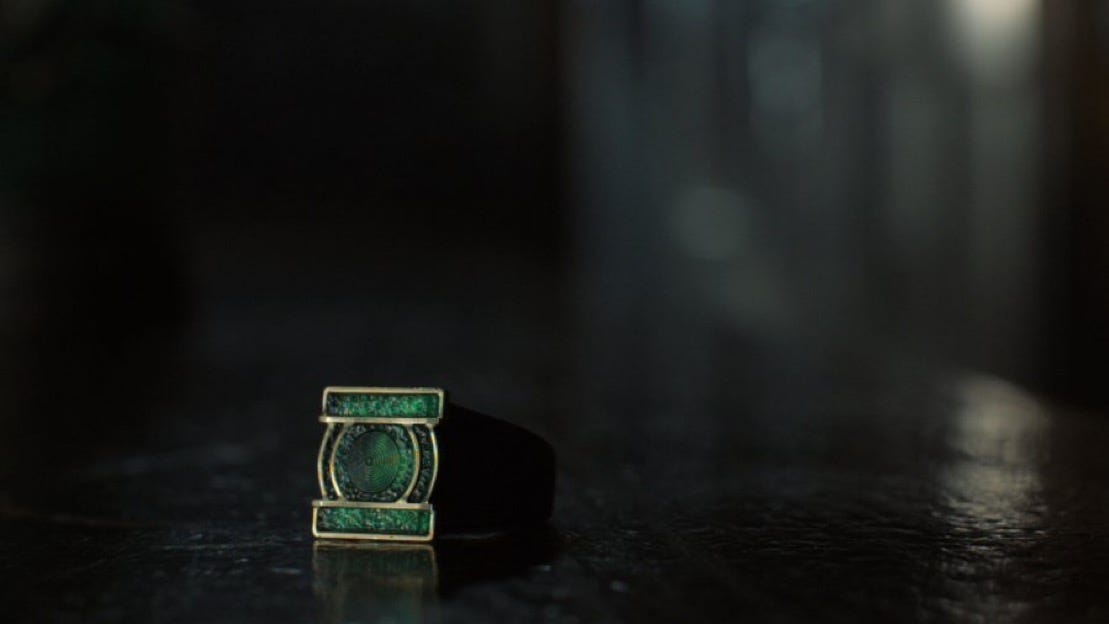
After Hal narrowly escapes with his life from the compound, he heads to the motel to charge his ring, just for John to ambush him in a fight that was long overdue, yet is a scene that is both powerful and painful to endure.
It isn’t just a fight between trainer and trainee.
It’s a fight for legitimacy.
Destiny.
Power.
Agency.
And as John gains the upper hand, something heartbreaking and beautiful happens.
Hal stops fighting.
Even as John has him in a headlock, ignoring the whirring of the laser beams that come to destroy them, Hal doesn’t use the ring to repel John and save himself.
He chooses to save him.
And as Hal lies broken and bloodied on the ground with a gun pointed to his head by Zoe, John lines her up in his sniper sights and takes her out, Hal’s choice giving John the evidence he needed to listen to his own voice.
He chose to save Hal.
He chose to see the truth.
And he chose himself.
But with every choice comes an unknown consequence.
“They replaced me; they’ll replace you.”
John takes the ring from Hal’s finger, leaving him in the rubble as Hal’s foreboding words follow John through the streets of Rushville, Zoe’s heart in a bag and the ring on his finger.
John meets Lianna at the bar—battered, bruised, but nowhere near broken.
Here, the confrontation between commander and soldier implodes.
“Hal betrayed everything to keep this ring…and it broke him.”
The thing John was trained to be and groomed to inherit suddenly becomes a symbol of a broken promise.
Emptiness.
Loss.
A cycle of lost agency that John refuses to participate in, a cycle of the tragic cost of being a hero.
John now finds himself exactly where Hal was once proud to stand.
Powerful.
Chosen.
Worthy.
And he removes the ring, making a decision that neither his parents, the military, nor the Guardians ever prepared him to make.
For five episodes, Lanterns asked whether John deserves to replace Hal.
Episode 5 finally allows John to ask a better question.
Why does either man have to accept the choice someone else made for them?
And for the first time since we met them, neither John nor Hal bears the ring.
It simply sits between them and everyone who wants it, cold and waiting for someone to choose what happens next.
Is Lanterns sending you down a rabbit hole of theories? Subscribe to keep up with the investigation here at So There’s That.
HBO’s Lanterns Investigation Continues
Kivonshe—founder of So There’s That—is a film & TV critic who explores compelling storytelling, fandom relationships, character psychology, and the impact of entertainment media through film reviews, episodic recaps, and in-depth theme analysis.
1© Kivonshe | So There’s That
Original editorial commentary on film and television. All rights reserved. Reproduction or redistribution without attribution is not permitted.