

The Mythology of Hal Jordan the Hero
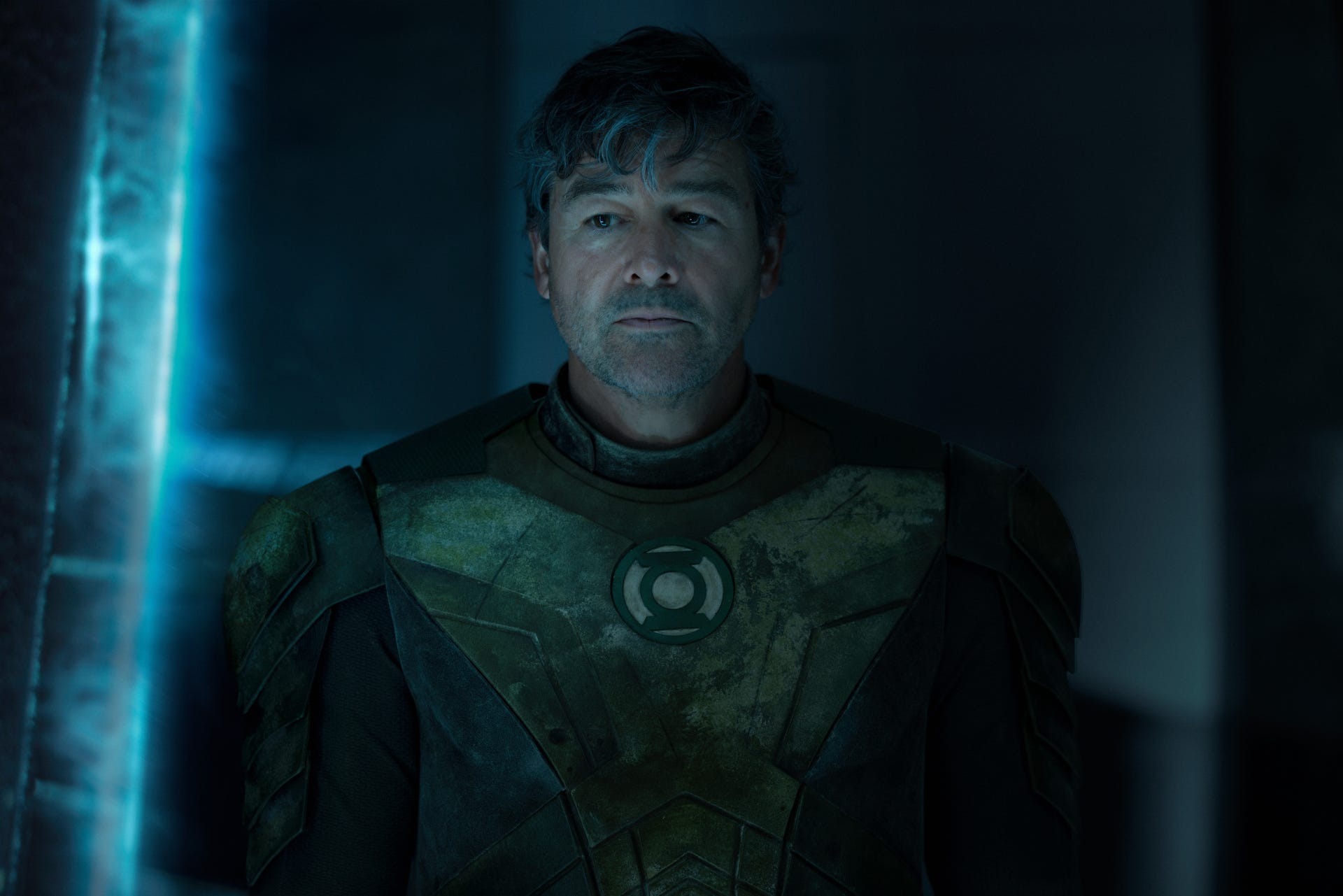
Lanterns Episode 4, “The Weenie,” may have been the funniest episode of the season, even potentially identifying who the real Manhunter is, but the greatest revelation is that Hal has known who John is all along.
Suddenly, Hal doesn’t seem so unhinged after all.
Hal’s arrogance, intelligence, and intuition continue to prove that he was chosen by his own merit.
But Bernadette tells John in Episode 3 that privilege is why Hal was selected, subconsciously shaping even how we viewed Hal’s behavior.
From the start, audiences were carefully manipulated toward John’s point of view, “OutKast,” doing an incredible job at making us challenge the legitimacy of Hal Jordan.
But “The Weenie” forces us to reconcile that privilege and worthiness can coexist.
This makes the reality of Hal and John’s current predicament as potential allies and enemies settle like an anvil in the ocean.
John was raised to believe he was different.
Better.
But maybe they are simply two sides of the same coin.


Since Episode 1, Hal appears to barrel toward death, welcoming it like a long-lost friend. But his attitude toward being a Lantern and the Guardians is only a peek into the well of loneliness he exudes.
And by the end of Episode 2, as he recites the oath to recharge the ring, something feels strange and wrong.
From John’s point of view, it looks like total disrespect to the organization and opportunity that helped make Hal one of the world’s greatest heroes.
He looks ungrateful.
However, Episode 4 flips perception and hindsight on its head.
What initially looks like a lack of gratitude can now be interpreted as Hal being a man who feels both duped and indebted to the very organization that wants to destroy him.
“The Weenie” also forces us to revisit Hal’s “fearlessness” campaign.
Young John only saw promotions that Hal was fearless. This was the baseline from which his parents began his training.
But in this episode, we learn that Hal lost both his parents, making him, essentially, an orphan.
John knew Hal Jordan the symbol.
The commercials presented Hal as the pinnacle of fearlessness and greatness.
But Episode 4 shows us Hal the man.
This immediately complicates the mythology for both John and viewers, as we now must interrogate what “fearless” actually means and how point of view reshapes the perception of its existence and its absence.
We now ponder Hal’s selection from the very beginning.
Maybe it wasn’t fearlessness that made Hal capable of saying yes, but the fact he already understood how to live with fear after suffering a devastating loss.
Suddenly, Hal and John aren’t so different from one another.
The Agency Hal Refuses to Let John Surrender
As a man whose parents are gone, it comes with a different kind of fear:
Loneliness.
And it shows up in Hal’s relationship to the ring and why he chooses to keep information from the Guardians.
His actions are now clearer, reinforcing the idea that while the Guardians positioned him as a god to civilians, he had to conquer his own fear.
Fear born from being orphaned.
Fear born from belonging to an organization that no longer sees value in him.
And still, like John, he, too, had to move.
Different circumstances created the same scenario in which they had to live with something devastating in order to become someone extraordinary.
So as we revisit Episodes 1, “The Pilot,” and Episode 2, “Trust Fall”—studying Hal’s behavior in hindsight—we see a man at the end of what the Guardians are putting John through at the beginning.
John, a man at the precipice of giving away his agency.
Hal, a man fighting to preserve what remains of his own.
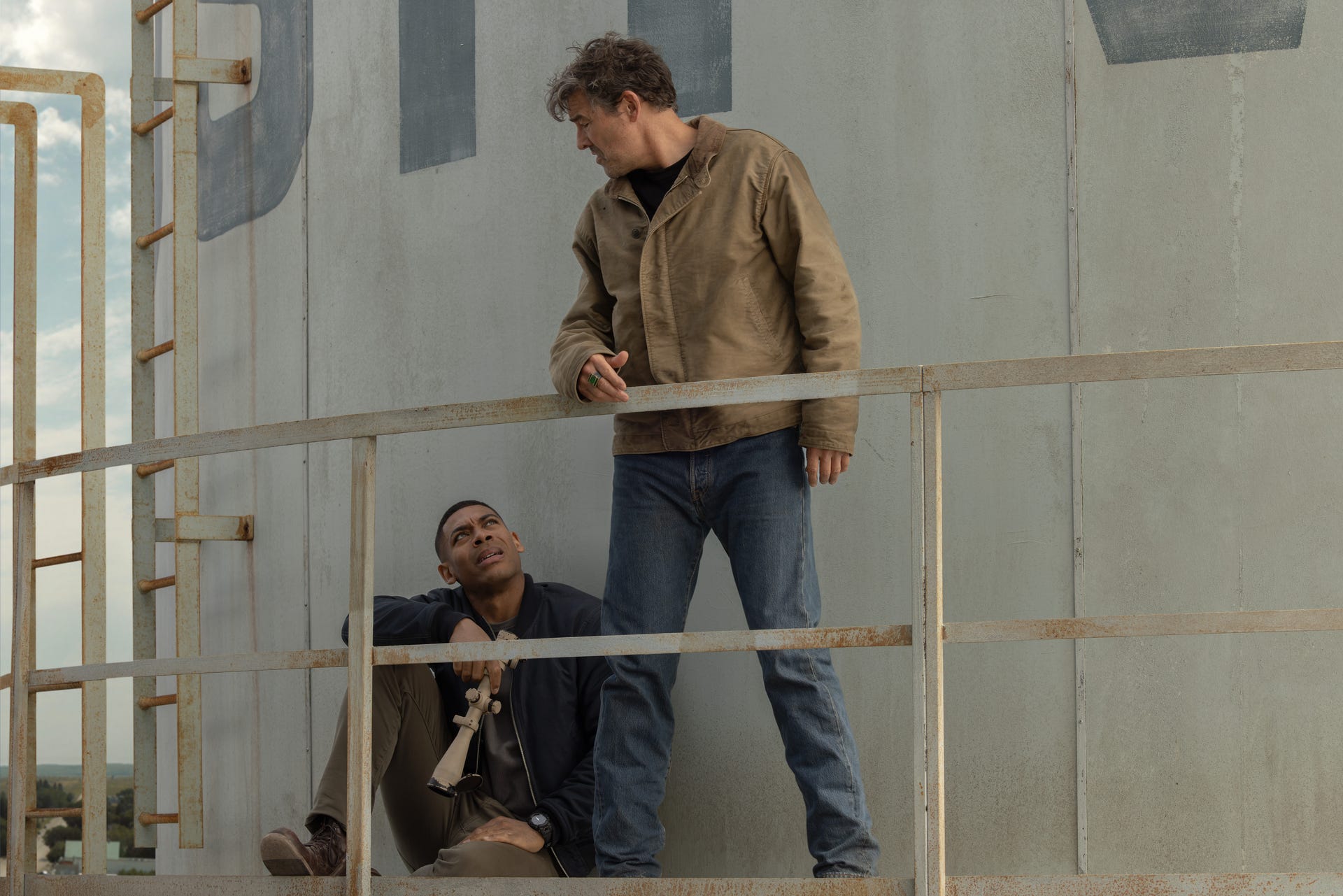
While Hal and John try to figure out what’s going on in Rushville, we now ask whether Hal is also thinking of a way to save John, not just from the Guardians but from himself?
The final conversation in the car warrants this question as Hal drops all pretense, laying his conversation with Sinestro on the table and forgiving John for what he said to the Guardians about Hal being old and washed up.
But what he can’t seem to reconcile is why John still conceals his suspicions about the Manhunter—why John still chooses to abide by the Guardians’ manipulations even when the evidence is in front of him.
He doesn’t have an answer.


This makes Hal jumping out of the car both comical and calculating.
John must choose.
To follow the Guardians’ orders by taking the Lantern title from Hal or trusting himself enough to carve his own path.
But in the time and space between Hal soaring in the sky and John heading fast toward collision, I have to now ask myself:
Did the Guardians send Hal on the mission that led to John’s dishonorable discharge—orchestrating the opportunity in the hotel room to manipulate John into being vindictive enough to take the ring?
Lanterns Episode 4 makes you evaluate every decision Hal made that felt reckless but now seems like a calculated scheme to keep John from becoming like him.
And it makes their shared moments throughout the entire episode much more important to their shared fate.
Hal wants to trust John, but now he must push John beyond the dutiful son, beyond the Marine, and beyond the machine the Guardians want him to be.
Suddenly, the unorthodox training takes shape into something complex, intentional, and purposeful, and it may be the only way John learns how to take a stand.
Want more articles like this? Subscribe to get them directly in your inbox.
HBO’s Lanterns Episodic Interrogation
Episode 3 Proves Why John Was Always Built to Be Green Lantern
Lanterns Interrogation Room: Analysis & Character Investigation
Kivonshe—founder of So There’s That—is a film & TV critic who explores compelling storytelling, fandom relationships, character psychology, and the impact of entertainment media through film reviews, episodic recaps, and in-depth theme analysis.