


It Was Never About Proving Armand Innocent
The beheading.
The kidnapping.
The apology.
It’s been two weeks since the finale of The Vampire Lestat, and many key moments linger with audiences even now. However, there’s one that stands above others that still causes viewers to question the writing and the direction of the series.
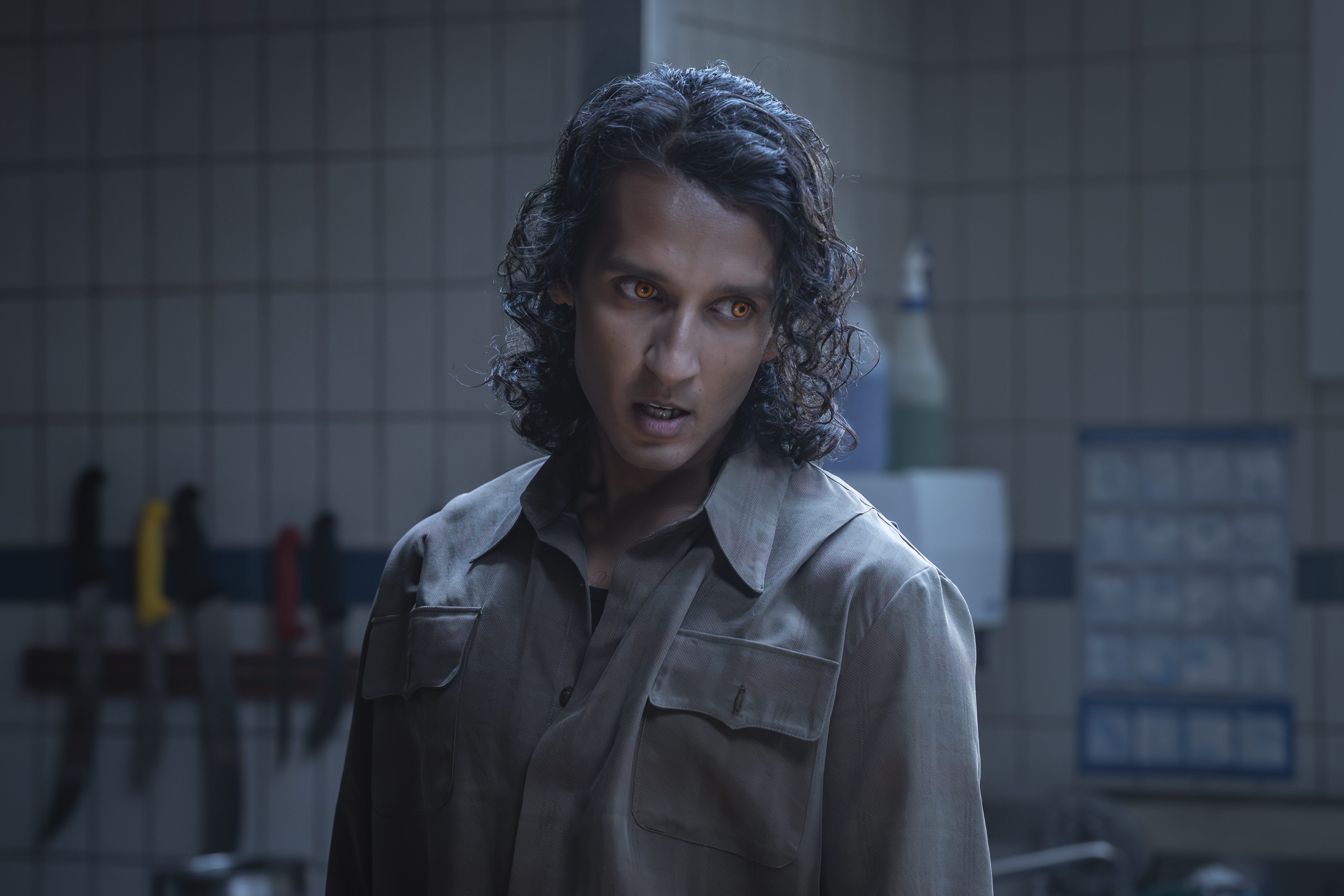
Why did Louis apologize to Armand?
For many, the apology seems forced or out of character for Louis. Given the masterful orchestration of not only the play but even the sequence of events and surveillance throughout this season, Armand is the last person or monster that deserves an apology...
Right?
I pose this as a question because I want to bring readers and viewers back to the apology itself, pulling the focus away from the “who” and showing the bird’s-eye view of the “why.”
Though Armand has many beloved followers, it is rather easy to despise him for all of his games and monstrosity. It’s what makes Louis’ apology feel like a slap in the face for Louis fans around the world.
But what did Louis actually apologize for?
“And you got some reason to be dark-sided, Armand. You were sold by...who you were sold by. What you were sold into. I saw a lot of that in New Orleans. On the opposite shore. Running houses. You and I didn’t talk about it much. With you...’cause I didn’t want to think on my own sins. Or picture you at 12...at 12. You were 12! Scared. Poor boy, Arun. You need a love that’ll cradle you. You should have that. And I was never that for you...and I’m sorry.”
Louis’ Silence Was the Wound that Festered
Despite the horrors that Armand continues to subject everyone to, “I’m sorry” came only after Louis spoke about the nature of their relationship and his hand in the fact that it was always doomed to fail because it was always, and forever would, be about Louis and Lestat.
Within their nearly eight-decade-long tolerance of the other’s presence, Louis recognized and ignored a key piece of information that shaped and still shapes how Armand relates to intimacy, affection, and love.
He knew that.
Louis knew.
Yet his silence was acid in a wound created half a millennium before he was ever born.
And for Louis, silence is his most lethal weapon.
The Vampire Lestat is not only a season that forces you to go back to seasons 1 and 2, but it’s also a season that challenges viewers and book enthusiasts to set aside internal bias and expectation—to allow trauma and redemption to exist in the same moment.
Armand is awful and has done awful things.
Louis is not sorry for loving Lestat despite denying it for 77 years.
But Armand deserves love.
He deserves a companion or a friend to help him unlearn the warped ideals surrounding love, intimacy, sex, and most importantly, consent.
He deserves his long table confrontation with Marius, the source of his vampiric nature, and even his parents, the ones who sold him into depravity.
It’s okay that those truths are evident and hold space within the narrative that is The Vampire Chronicles and the reimagined Anne Rice Universe because this is also the very essence of what makes being a human being both complex and beautiful.
And although the apology was directed toward Armand, it was also a moment for Louis to continue his journey toward accountability and self-awareness.
Claudia forced a mirror in front of him, and for the first time, he saw the true cruelty of his nature. But as she rightfully pointed out, in both life and death, Louis lives in a fog—a cloud of pheromones made up of lust and love and the singular heartbeat of his greatest love.
The beheading cut through the shroud and brought Louis face-to-face with yet another part of himself in which he must atone in order to truly move forward, to recognize his faults, cruelty, and arrogance to finally be able to live with himself.
The apology was never singular.
It was never linear.
It was simply the beginning of something greater to come.
Louis’ Accountability Arc
Kivonshe—founder of So There’s That—is a film & TV critic who explores compelling storytelling, fandom relationships, character psychology, and the impact of entertainment media through film reviews, episodic recaps, and in-depth theme analysis.
© Kivonshe | So There’s That
Original editorial commentary on film and television. All rights reserved. Reproduction or redistribution without attribution is not permitted.