

The Man We Thought We Knew
Revisiting a series you love, one that makes you question everything you thought you knew, is one of the best and lovingly frustrating feelings in the world.
Yes.
I’m talking about those vampires again.
Interview With the Vampire and The Vampire Lestat—and assuming Queen of the Damned will follow suit—are shows that are best consumed in hindsight.
Not because the show isn’t incredible to watch during the first experience.
It absolutely is.
But because the series understands the art of the unreliable narrator.
It uses the imperfections of memory to distort or misremember events while forcing the audience to experience the same uncertainties.
I recently rewatched Episode 1 of Interview With the Vampire, “In Throes of Increasing Wonder” (yes, for the millionth time, but that’s not the point), and I found myself falling in love with the story all over again.
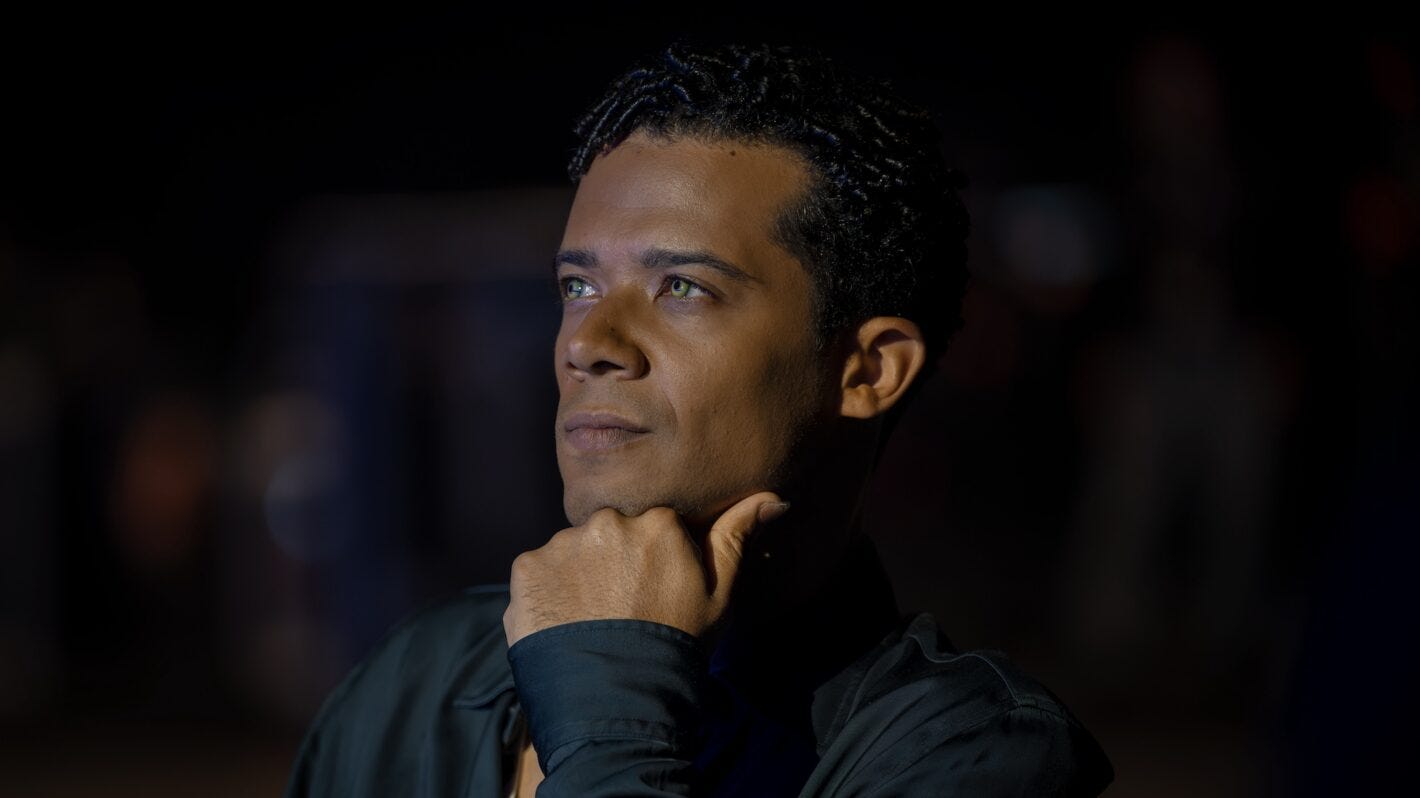
And, once again, Louis de Pointe du Lac—portrayed beautifully by Jacob Anderson—had me looking at him sideways.
Because after everything we’ve learned—memories, confessions, confrontations, and revelations—the man we knew in New Orleans feels simultaneously familiar and entirely different.
He’s still Louis.
But we’re no longer the same audience as we were when we first met him.
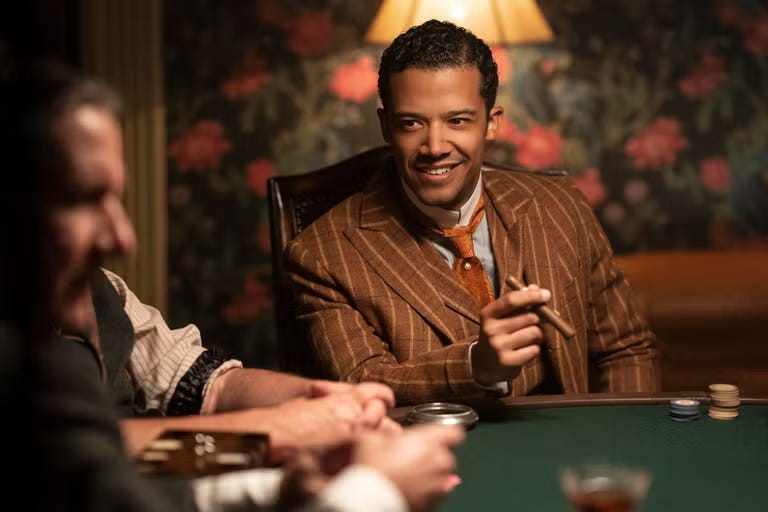
When Louis first introduces himself to the audience, he presents himself as a man who has mastered the art of being everything everyone needs him to be.
A businessman.
A provider.
A son.
A brother.
A “respectable man” in every way within a Jim Crow society that refuses to see him fully as a worthy human being.
And worse, he’s a man who cannot openly acknowledge the secrets of his heart’s desire.
But it’s through his recollection of first meeting Lestat—played gloriously by Sam Reid—that we remember the intimacy Lestat awakened within him, taking us down memory lane with the knowledge that we gained from The Vampire Lestat.
“All these roles you conform to, and none of them your true nature.”
For the first time, Louis is seen.
Romantically.
Invasively.
By a painfully perceptive vampire who sees everything Louis spent his entire life concealing.
But where hindsight invades the audience’s perception is through the added knowledge that Louis wasn’t just hiding himself from the world and his family.
He was hiding the most intimate parts of himself from himself.
And the more we explore Louis’ memories and his decisions from Season 1 of Interview With the Vampire through The Vampire Lestat, the more obvious it becomes that his suffering was shaped by more than just forces beyond his control—but also by the destructive decisions he struggled, and sometimes failed, to acknowledge as his own.
What the Heart Remembers
“The drum was my heart, and the other drum had been his.”
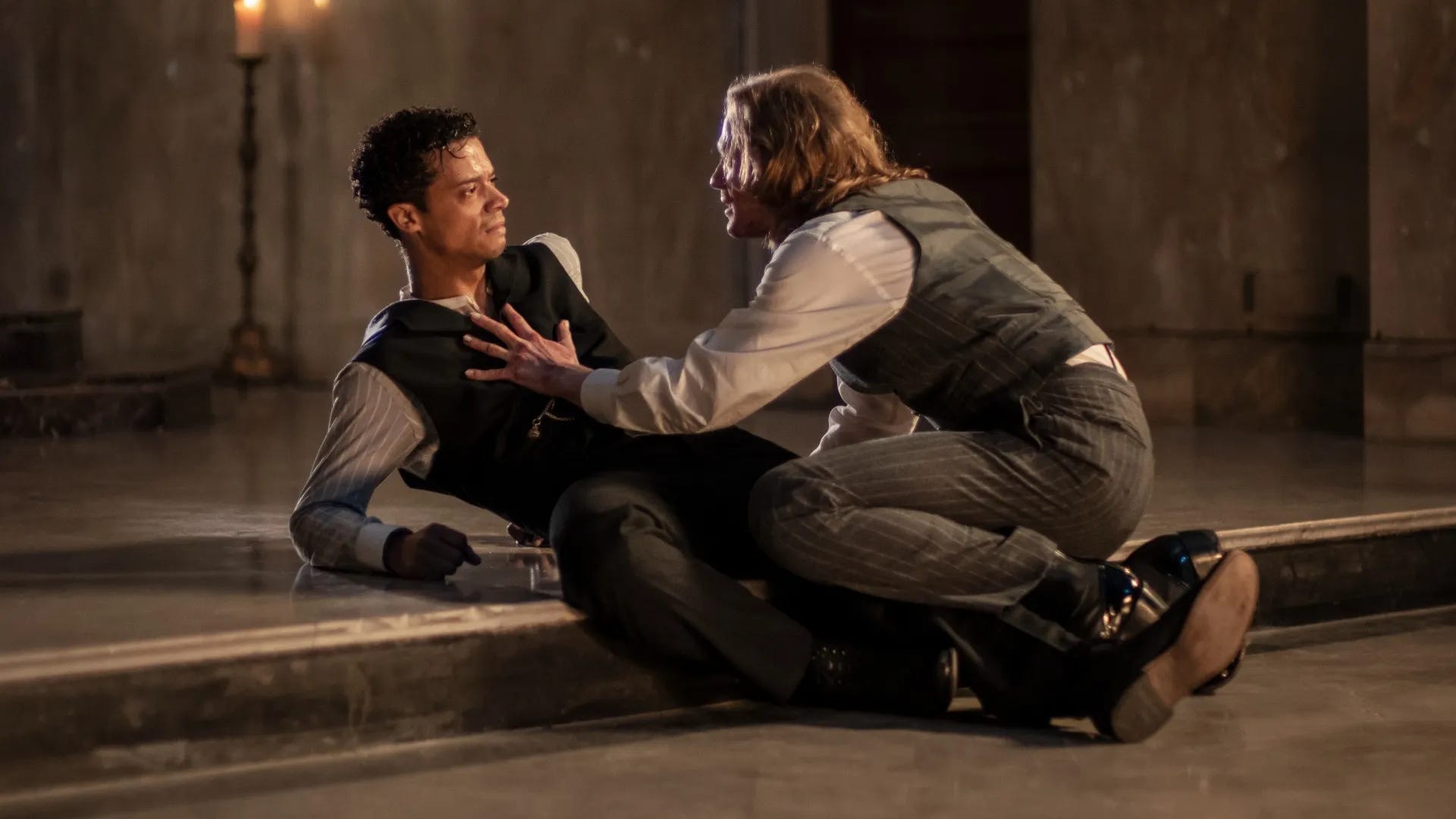
Louis’ recollection of his turning gives us a glimpse into the feelings he protects most fiercely.
There’s an intimacy to his recollection that feels sacred and pure, especially when we consider the published version of the book, Lestat’s notes in the margins (“why is Louis trying to hurt me”), and the many memories he chose not to share.
By the end of Episode 6 in The Vampire Lestat, we can surmise that some of Louis and Lestat’s most meaningful marital moments weren’t shared with anyone except the other—with both Daniel (Eric Bogosian) and the audience on the outside of their greatest love.
Even their vows, along with the Season 2 finale declarations and the soft words spoken among them during The Vampire Lestat finale, were not for us to hear.
This brings me back to a question I explored before during Episode 2 of The Vampire Lestat:
What if the motive for Louis’ omissions wasn’t about deceit but was out of pure unadulterated love for Lestat?
A possession.
Not of Lestat but of memories too personal to surrender to anyone else.
That somehow the man who struggles to admit the depths of his love, even now, also remembers when two heartbeats became one joined by a single cord.
For Louis, this makes him a beautiful ball of contradiction.
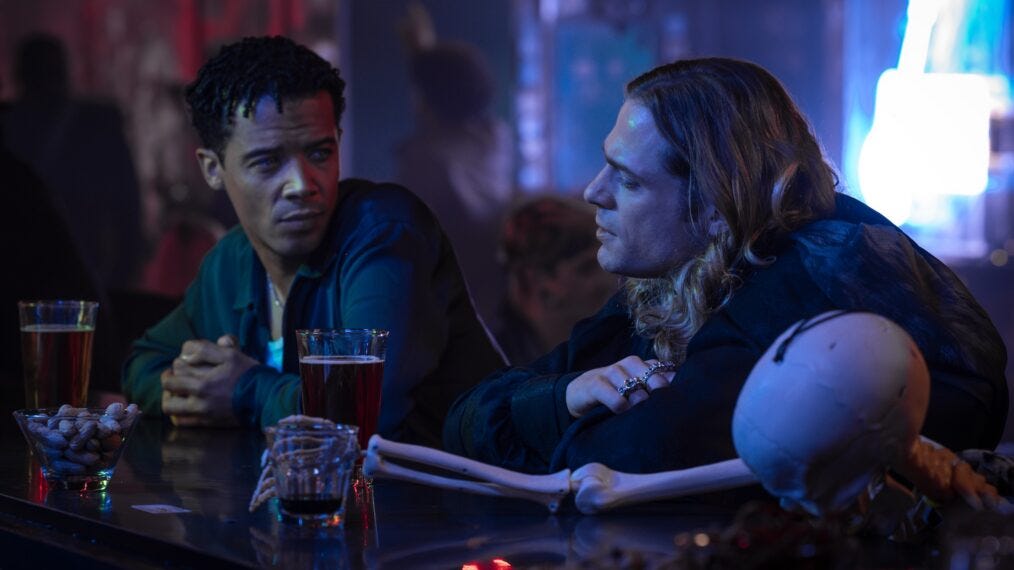
“Lestat’s blood was giggling inside me.”
There’s also something mischievous in Louis’ recollection of his early experiences of vampirism with Lestat.
His transformation held the giddiness of Claudia, the strength of Lestat, and the things he longed for that were just out of reach.
Power.
Freedom.
And the ability to finally act on decades of suppressed rage.
When Grace recognizes that something about her brother has changed, yet still wants him in her life, we’re reminded of the humanity Louis has not entirely lost.
But here’s the thing about power.
It doesn’t automatically free us from the people we used to be.
Capitalist.
Selfish.
Arrogant.
Louis begins his immortal life believing he has finally escaped the limitations of his humanity. Yet across subsequent seasons, we watch the carefully maintained façade of control crack under the weight of grief, manipulation, and his own choices.
That’s what makes returning to the early seasons a beautiful experience.
Each season informs the next but cycles back to the beginning in a way that expands the story even further than when it first was told.
And in every rewatch, we aren’t seeing a different Louis. We’re finally recognizing more of the man who was always there.
Our perspectives are also expanded, and our biases are tested in ways that encourage conversation.
As we continue to watch, read, and put the pieces together, we realize that what each character reveals, hides, misunderstands, or refuses to confront brings us closer to a collective truth—belonging to multiple narrators—rather than a single declarative one.
Perhaps that’s the true fascination in revisiting “In Throes of Increasing Wonder.”
The events haven’t changed.
The memories haven’t changed.
But what we now know gives them new meaning.
Want more analysis on our beloved vampires? Subscribe now to get new articles sent directly to your inbox.
The Layers of Louis de Pointe du Lac
Kivonshe—founder of So There’s That—is a film & TV critic who explores compelling storytelling, fandom relationships, character psychology, and the impact of entertainment media through film reviews, episodic recaps, and in-depth theme analysis.
© Kivonshe | So There’s That
Original editorial commentary, criticism, and analysis. Unauthorized reproduction, republication, redistribution, or adaptation of this content, in whole or in part, is prohibited without prior express written permission from the copyright holder. Attribution alone does not constitute permission.