

The Path Given
“It’s your blood. Just like it was in your grandpa’s and mine.”
1975 (Then)
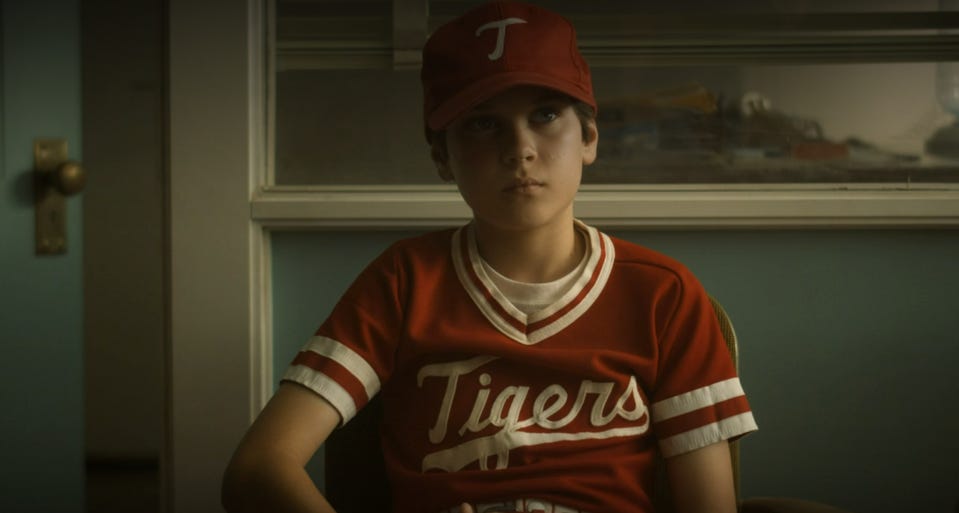
Young Hal Jordan in the coach’s office with his dad, who had to be called in because Hal wouldn’t give the baseball—nor his time to keep shining on the field—to the backup pitcher.
To his replacement.
Instead of allowing someone else the opportunity to shine, he decided to fight his whole team.
And he still never relinquished the ball.
In Lanterns Episode 7, “The Jordan Boys’ Legacy,” metaphors and symbolism take root in Hal’s backstory—painting a clearer picture of how Hal processes relationships, disappointment, and responsibility.
The first teacher of this lesson?
His father.
But instead of his father teaching him a lesson in humility, he fights the coach—telling him that being good is “all that f—matters.”
“I fought with you; I fought on your side long before you were born.”
Lyrics from “Father to Son” by Queen play in the background, bringing into the scene with them a feeling of a father saying goodbye.
A father who on the outside looks and acts tough but does everything he can to fight for his son, even when he doesn’t always win.
And while both bruised-up Jordan boys share a popsicle, the perception of the previous confrontation and everything we thought we knew about Hal changes.
Was it arrogance or was it advocacy that motivated Martin?
Or was it both?
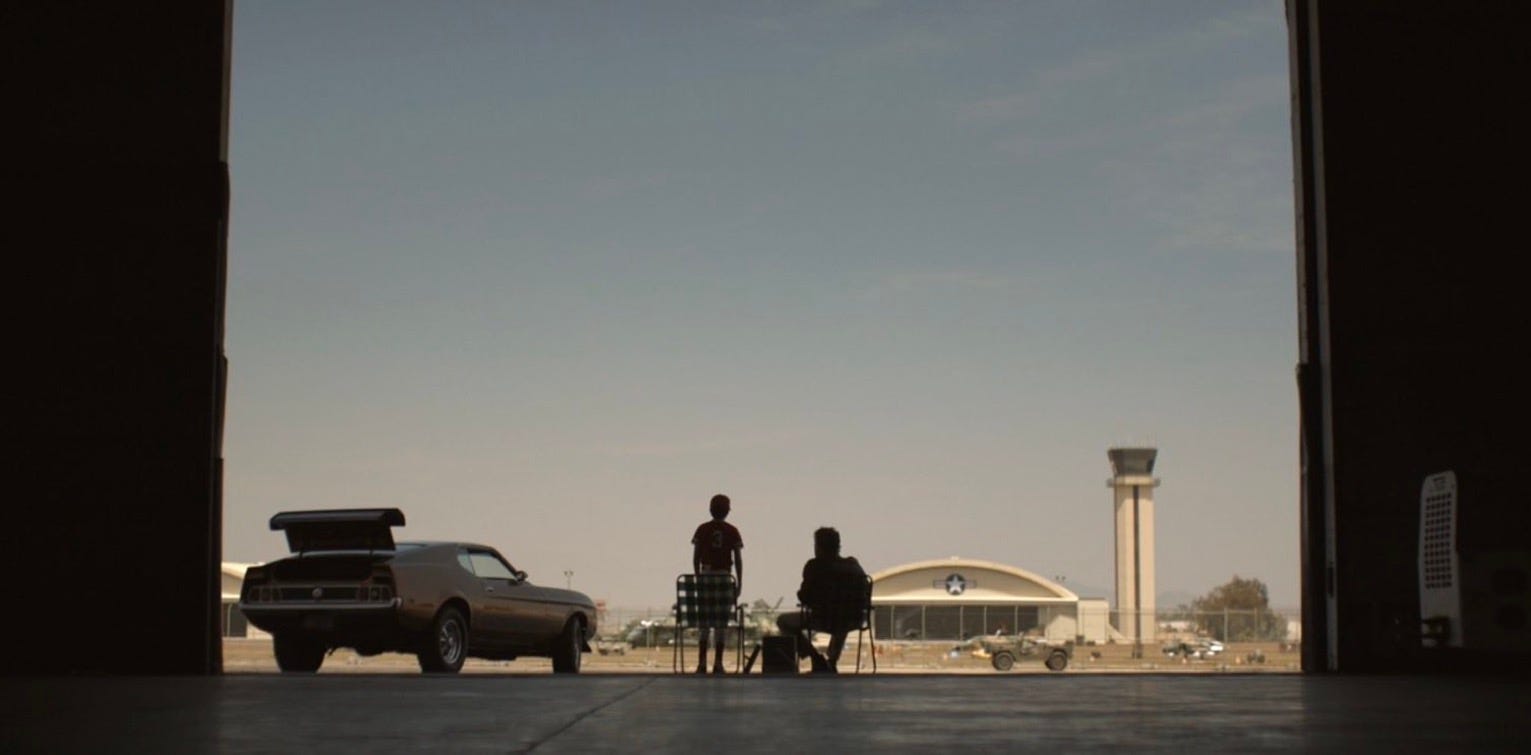
As they sit nursing their wounds, Martin hands Hal a key…
Then asks him if he’s scared, to which Hal replies, “no.”
Immediately, the passing of the key from father to son comes with a story and a lesson about fear and preparation.
When Hal’s grandfather gave the key to Martin before war, he didn’t come back.
Now Martin bestows the key upon Hal—a symbol of responsibility and maybe a foreshadowing of the moment Hal’s father knew he would embark on a mission from which he wouldn’t return.
In that moment, he speaks about that very determination that’s in the Jordan blood—their legacy of bravery and endurance, but also in knowing when to let go.
The baseball.
Hal clenches it still, and his father tells him he can simply throw it away, that he can’t hold onto it—being the only gifted one—forever “because it’s f—exhausting.”
A lesson young beat-up Hal receives after fighting for his perfect game status on the team that echoes everything we know about his fight to hold onto the Lantern title now.
The Path Taken
2026 (Now)
Halogram is stunned by his death and that it’s been ten years since he’s last been called upon.
But just like Hal, he quickly sifts through John’s lies and demands to know what the hell is going on.
John puts him back inside the ring, but it’s clear that John intends to use him to access Hal’s vault.
The key from Martin.
A key that now has a bird keychain attached to it, a symbol that Hal knows is important to John—a clue he knows he would follow.
What does Hal want John to find?
Whatever it is, Halogram won’t help until he takes him to see Kerry.
This is where the heart of the brotherhood shines.
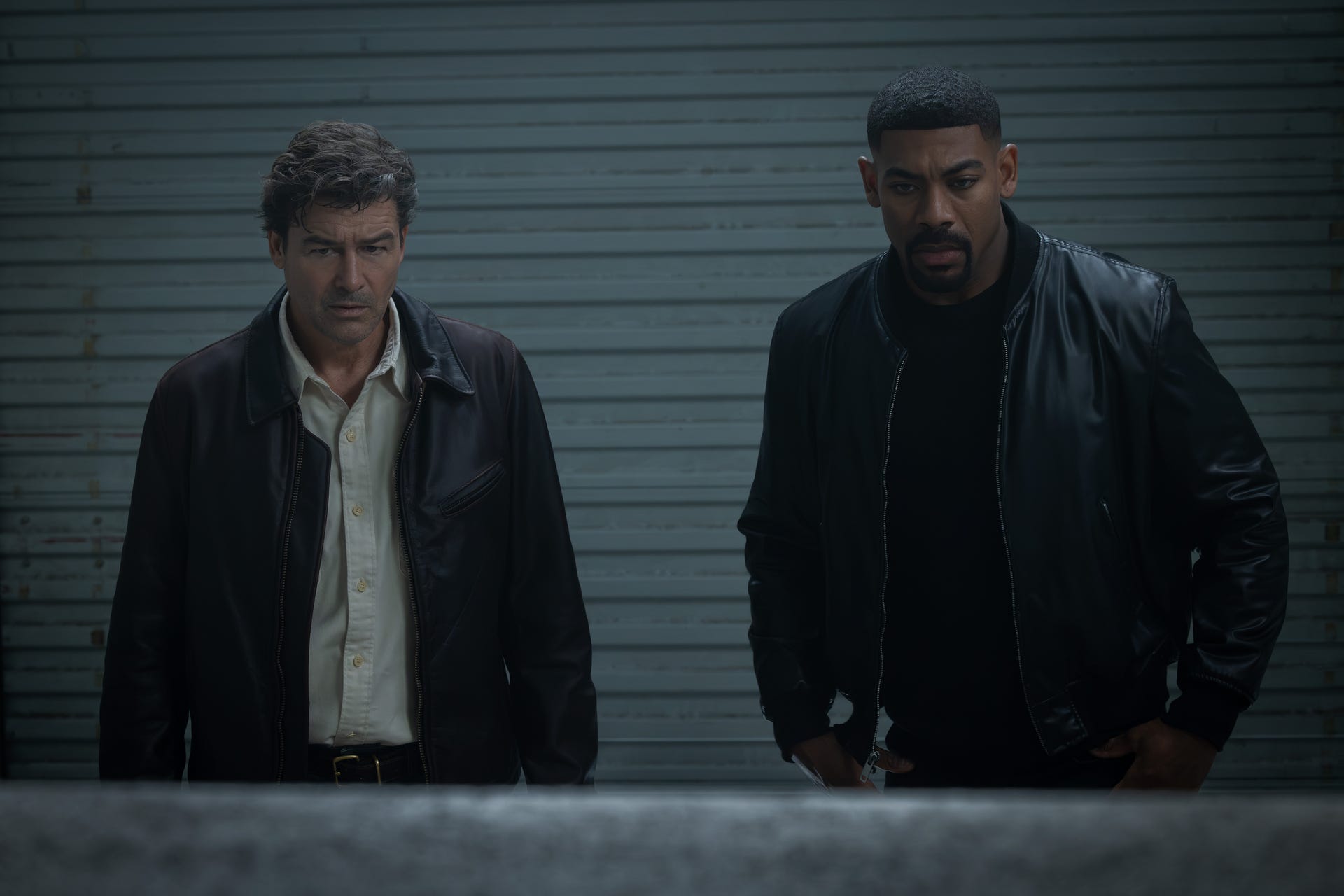
Kyle Chandler and Aaron Pierre put their biting banter on full display—digs and jabs at one another that hurt, but with enough care not to hit too far below the belt.
This relationship extends even deeper than John wants to acknowledge when he subconsciously manifests the hologram and maintains the projection even without the ring.
John thinks Halogram manifested himself into the passenger seat, but he tells him the only way he is present is if John thinks about him at all.
The sudden realization brings Halogram’s teasing to a full stop as he realizes the complete anomaly of his presence.
John isn’t wearing the ring.
Halogram is stunned and impressed, delivering a compliment about John’s talents that momentarily takes him off guard.
It’s here where John grants himself permission to wonder what his relationship with Hal would have been like had he met this version of him.
Before Hal was exhausted.
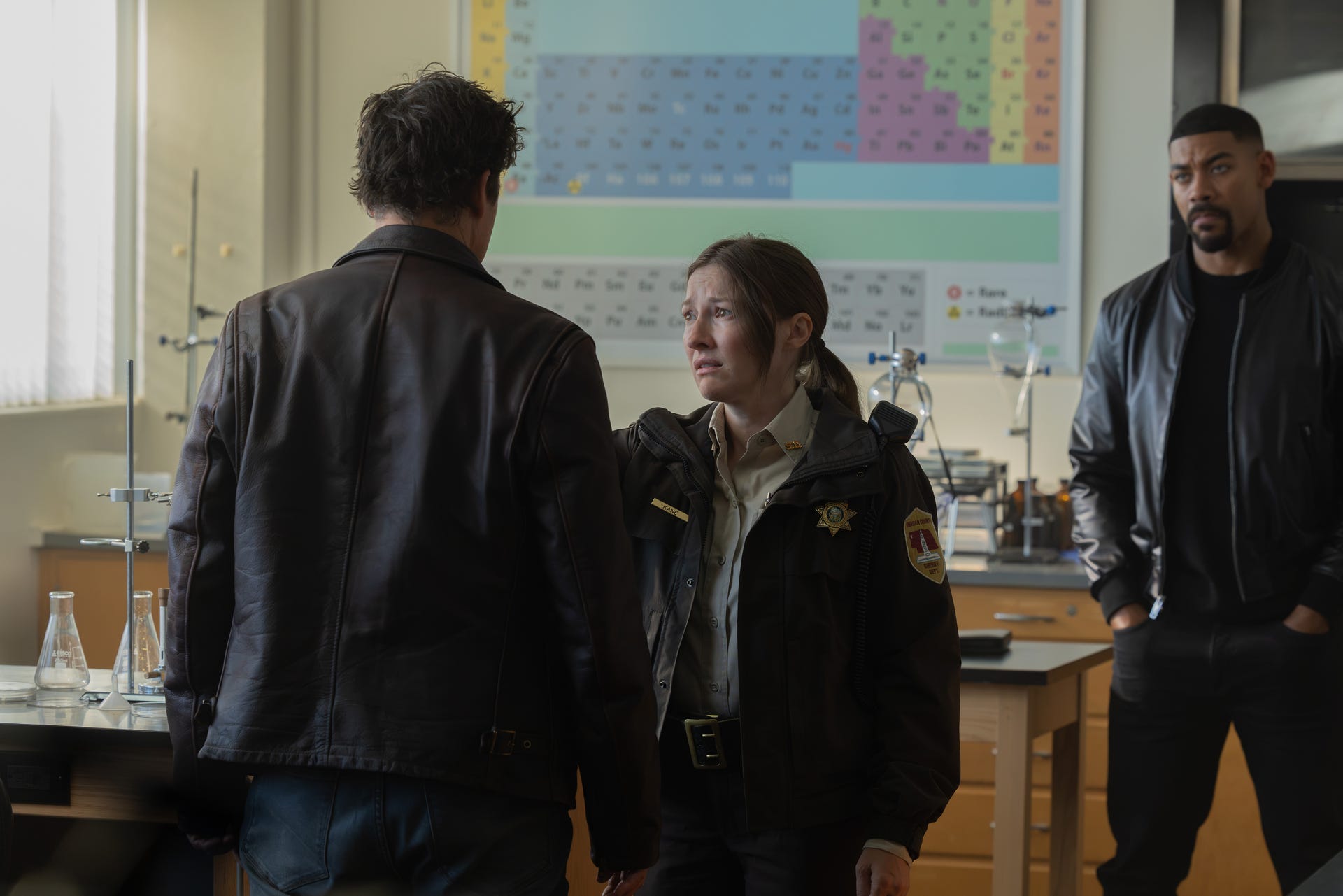
For John, this comes as a balm to all of the stress he’s experienced in the last ten years and especially the last 24 hours.
And even if just for a moment, John allows himself to accept the kindness.
A kindness that’s quickly clouded by the secret John withholds from Halogram about who actually killed the Manhunter.
While John wrestles with his new and complicated feelings about Hal, he sticks to his bargain and takes Halogram to see Kerry.
And it’s one of the most heartbreaking moments of the entire series.
“Did we talk about my father? How he died?”
Kerry nods but also discloses how Hal felt about John over the ten years they didn’t speak.
How he was “the TV he would yell at every Sunday, but he wouldn’t miss a game.”
For ten years, John knew Hal as the man who was washed up.
The man who fell.
But Kerry gives him a glimpse of the man who apparently never stopped watching John, never stopped showing up for him, even if it was from a distance.
Suddenly, the revelation washes over John, along with the guilt of learning that their estrangement may not be what he thought it was all this time.
As quickly as the truth about Hal’s true feelings about John enters the room, another potential truth shows up beside it when Halogram tells John something about Kerry.
“She killed me.”
The Path Chosen
“I wasn’t trying to keep people out. I was trying to keep something in.”
The vault is open, and Halogram pulls out a mysterious black blob while John arms up with a weapon.
Halogram asks John if Hal ever taught him Einstein-Rosen bridge theory, then quickly explains the dark matter manhole is essentially a portal.
To another planet.
And Halogram wants to get himself and John wherever they need to be before Kerry returns to the vault to find them.
John takes him to a part of town that’s still recovering from the destruction when he abruptly stops and tells Halogram to ask him if he’s afraid.
Is this to prove a point to himself or Halogram?
At the moment it’s unclear, and John bravely walks through the portal without hesitation to a place that feels to him both unsettling and familiar.
When they look up, they see what appears to be a destroyed civilization.
And Halogram quickly realizes Hal never taught John to fly.
As they walk through the deserted land, John realizes they are walking on top of bodies—the souls of a forgotten civilization.
That’s when it hits John that this place is the land where Antaan showed him.
His people’s experience.
A people destroyed by a rogue Manhunter.
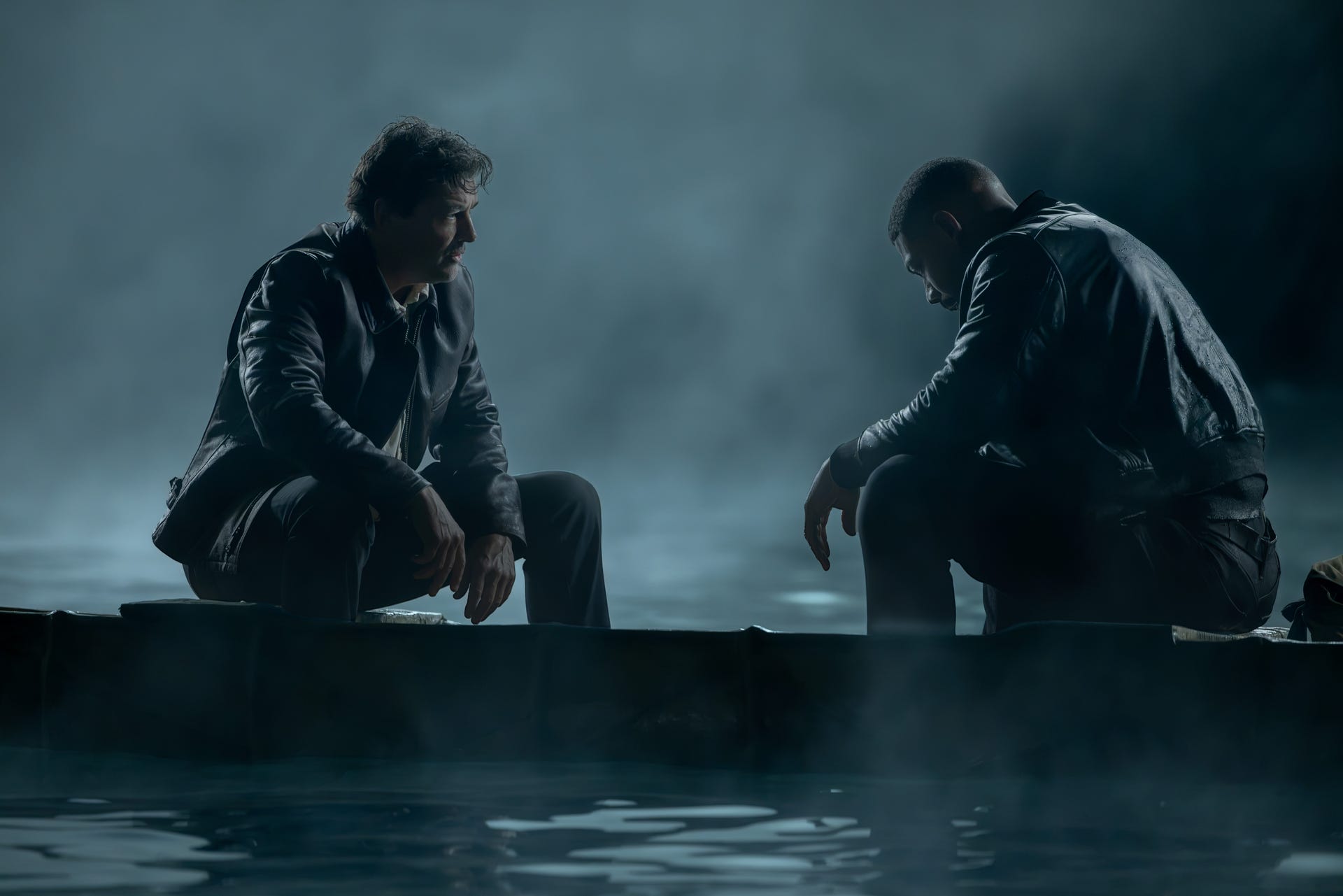
But there’s no time to linger on the gravity of where they stand, and they set out for Hal’s boat—back in a small space, yet again, with the elephant between them.
John and Hal’s relationship.
And Halogram asks him point blank:
“Why did you come back?”
But John’s answer reveals his return is deeper than Hal.
Perhaps even deeper than his mother having the power to convince him to go back in the first place.
So much of John’s life has been shaped by paths other people chose for him—the Guardians, his parents, Hal, the Marines, and the weight of responsibility attached to each identity he was expected to wear.
And it’s glaringly clear John holds a lot of anger and resentment over having no control over his own path.
But instead of just wanting an apology from Hal, maybe John came back so he could walk the path he’d finally chosen for himself.
These feelings take hold of him, coming to an explosive head in the eye of a storm—not just the one surrounding John but the one that dwells inside.
John Sr. appears with an apple atop his head.
“Are you afraid, son?!”
John pulls the gun, thrown back into a childhood lesson as he yells his answer.
No.
Young John Jr. with an apple atop his head.
John freezes.
And his younger self speaks the truth aloud that John himself was afraid to voice his entire life.
He is and has always been extremely afraid.
Before he’s completely consumed by his fears and insecurities, Halogram saves John from himself and his hallucination, the atmospheric gas playing on his mind like a fiddle.
But it reveals a truth John has never allowed himself to confront—his fears, his wants, and his needs.


John’s demons aren’t the only ones present in the boat, however, as Halogram opens up about his own father.
The test pilot story wasn’t a training accident.
He was living with a pain that was growing, one that he could no longer hide from his family.
And the note young Hal inherited about the truth of his father’s death was the very same pain Martin inherited from his father.
Depression and suicide.
The Jordan Boys’ Legacy.
And Halogram confesses what we’ve been running toward the entire season about Hal:
“I’m not fearless because I’m brave, I’m fearless because I’m broken.”
In Episode 4, “The Weenie,” we came to this very conclusion, understanding that it wasn’t fearlessness that made Hal capable of saying yes to the ring, but the fact that he already understood how to live with fear after suffering a devastating loss.
And in Episode 7, Hal confirms what we’ve been ruminating on from the start.
It’s here, within this confession, that John finally acknowledges the ring’s construct as just Hal and extends an apology to every Hal—the man he knew, the man he’s learning, and the boy he never got to meet.
When they make it to their destination, a mysterious figure surprises them and takes Hal hostage.
This time, Hal and John are no longer on opposite sides of their fear.
They’ve found kinship in one another through it.
“Trainee, they’re playing our song.”
And John uses his willpower to make Hal disappear and sucker punches the hooded figure in the face to reveal someone we didn’t see coming.
Sinestro.
“Great arm, kid.”
Hal to John.
The very same words from Martin to young Hal.
And we’re back in 1975 with different lyrics from “Father to Son” blanketing the scene.
This time, young Hal in his funeral clothes goes to retrieve the baseball he threw during the last conversation he had with his father.
The symbolism in this ending frame encapsulates a part of Hal Jordan that maybe he’d forgotten.
Yes, he was broken.
Yes, he inherited his father’s “legacy” of depression.
But young Hal goes back for the baseball—changing the meaning of an object that connects him to his father and his father’s father.
It’s a representation of the exhaustion that lives inside him, but Hal realizes that what he inherited doesn’t get to choose the path for him.
Decades later, returning to Hal and confronting everything he spent years running from, John also makes a choice.
John and Hal realize they don’t have to be defined by their inherited pain.
They can embrace it and still choose to keep going.
This time, choosing to keep going with one another.
Want to follow along with the investigation? Subscribe to get the evidence delivered right to your inbox.
The Evidence Locker
Kivonshe—founder of So There’s That—is a film & TV critic who explores compelling storytelling, fandom relationships, character psychology, and the impact of entertainment media through film reviews, episodic recaps, and in-depth theme analysis.